Japanese Maple 'Bihou'
Acer palmatum 'Bihou'
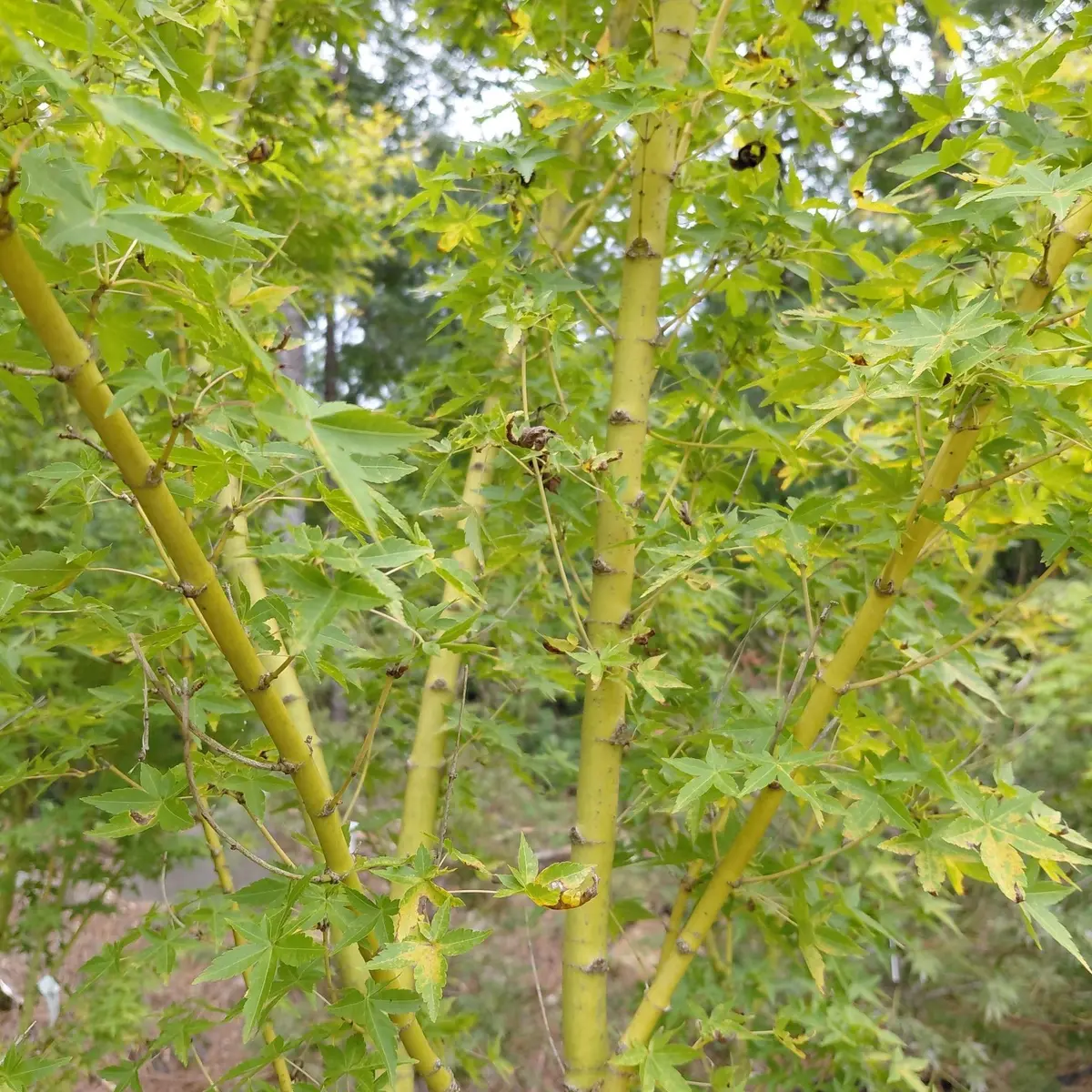
The 'Golden Bark' Japanese maple: glowing yellow-orange winter stems, pink spring foliage, and golden fall color.
Keep reading Show less
‘Bihou’, the Golden Bark Japanese maple, is an upright, broad-crowned selection of Acer palmatum grown for its bright yellow stems with an orange tinge. It grows about 20 ft tall and 15 ft wide.
Through the seasons
New leaves emerge pink in spring, turn light yellow-green, and mature to a fresh emerald green in summer. Fall turns the canopy gold, and once the leaves drop the bright branches are revealed for winter.
Care tips
Plant in dappled sun or part shade in evenly moist, well-drained soil, sheltered from drying winds. Protect young leaves from frost, and water during dry spells to help prevent leaf scorch.
Care sources: Iseli Nursery, NC State Extension.
Pet-safety sources: Gardeners’ World, Dogs Trust.
Fun Fact
'Bihou' is Japanese for "beautiful mountain range," and its yellow bark with an orange tinge is most striking in winter, once the leaves have dropped.
Habitat & form
Where it's from and what to expect.
- Native range
- Japan, Korea and eastern China (species); cultivated selection
- Plant type
- Tree · Perennial
- Mature size
- About 20 ft tall and 15 ft wide at maturity, growing roughly 12–15 in. per year; broad, upright habit.
- Bloom
- Not grown for flowers; ornamental value is the bark, spring leaf color, and fall color.
- Hardiness
- USDA zone 5.
Care
How to keep it happy.
- Sunlight
- Sun to part shade; afternoon shade and shelter from drying wind help prevent leaf scorch.
- Water
- Even, moderate moisture; not drought tolerant. Mulch and water deeply in dry spells.
- Soil
- Evenly moist, well-drained, organically rich soil.
- Fertilizer
- No routine fertilizer for healthy, established plants.
- Planting distance
- About 15 ft wide at maturity, so allow 12–15 ft from other trees or structures.
- Propagation
- Cultivars are normally grafted; seed-grown plants do not come true.
- Pruning
- Prune lightly in late fall or winter while dormant to remove dead or crossing branches and to show off the colorful stems.
- Pet safety
- Unknown
Keep pets from chewing.