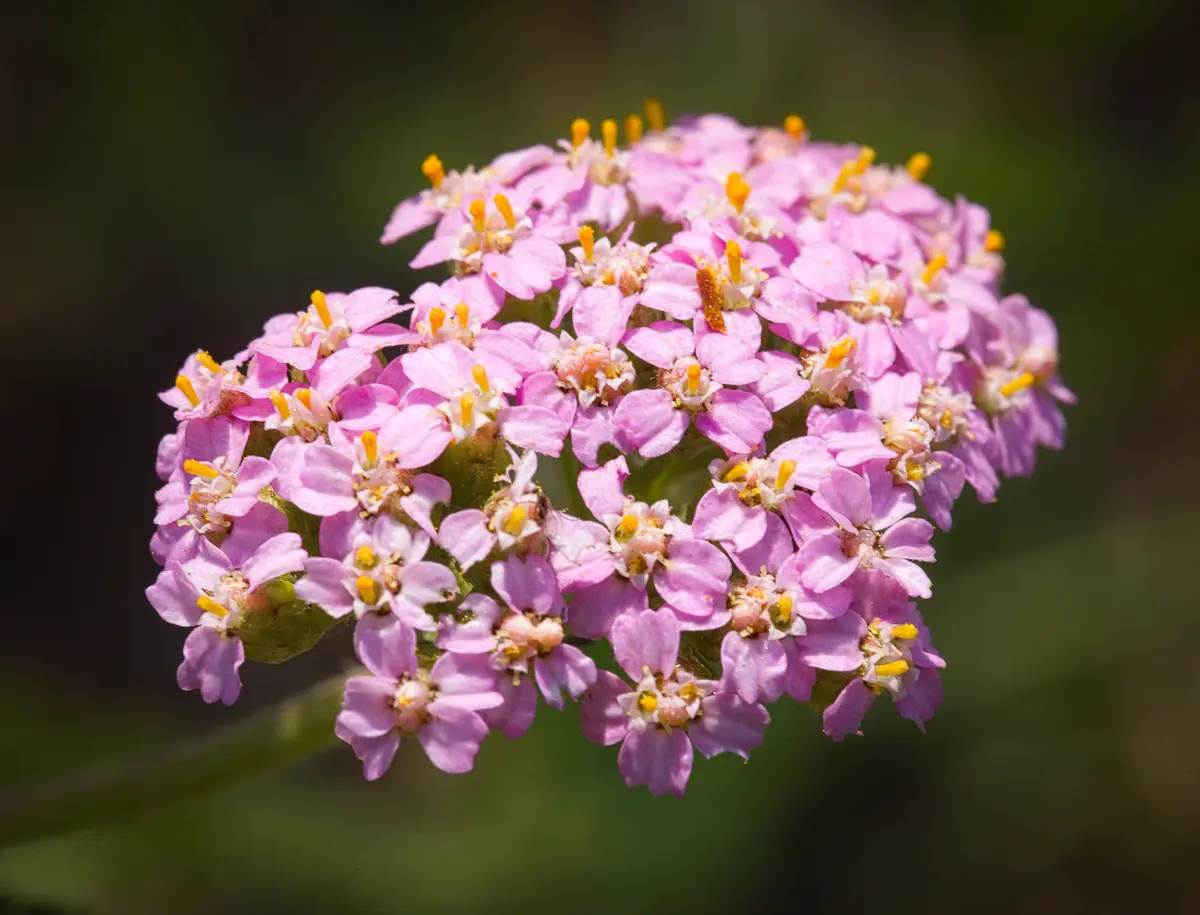
Yarrow 'Tutti Frutti'
Achillea millefolium 'Tutti Frutti'
A colour-shifting yarrow series whose big flat flower heads open one fruity shade and age to another — apricot, pink, cherry and red all at once — above aromatic, fern-like foliage.
Keep reading Show less
Achillea millefolium ‘Tutti Frutti’ belongs to a series of common-yarrow selections (Takii / Blooms of Bressingham breeding) chosen for vivid, fruit-toned blooms and a sturdy, uniform habit. Like all yarrows it forms a low mat of soft, aromatic, fern-like foliage and sends up sturdy stems carrying broad flat-topped flower heads that bees and butterflies cover all summer.
Colour that changes by the day
The signature trait of the Tutti Frutti series is its shifting colour. Each large cluster opens one shade — apricot, grapefruit pink, pomegranate or cherry, depending on the cultivar — and gradually matures to another, so the plant looks like a bowl of mixed fruit. The flowers are superb for cutting and dry well for arrangements.
Care tips
Yarrow is the definition of an easy, drought-tolerant perennial: give it full sun and lean, well-drained soil and otherwise leave it alone. Avoid rich soil and overwatering, which cause floppy growth. Shear the plant back hard after the first flush to keep it tidy and trigger a second round of bloom, deadhead to limit self-seeding, and divide every few years. Deer and rabbits pass it by, while pollinators flock to it. The genus name honours Achilles, who, legend says, used yarrow to staunch his soldiers’ battle wounds.
Fun Fact
The Tutti Frutti yarrows are bred to be chameleons: each flat flower cluster opens in one shade and matures to another, so a single plant can show a whole fruit-salad of colours at the same time.
Habitat & form
Where it's from and what to expect.
- Native range
- Species native to Europe, Asia and North America; this is a garden series
- Plant type
- Perennial
- Mature size
- Flat flower heads on sturdy stems about 22–29 in. tall above a low mat of ferny foliage; roughly 24 in. wide.
- Bloom
- Large flat-topped clusters that change colour as they mature — apricot, pink, cherry and red tones together — from early summer into late summer. Deadhead to prolong bloom.
- Hardiness
- USDA zones 4–8.
Care
How to keep it happy.
- Sunlight
- Full sun.
- Water
- Low. Drought tolerant once established and happiest kept on the dry side; soggy soil rots the crown.
- Soil
- Lean, average, well-drained soil. Rich ground makes the stems floppy. Tolerates poor, dry and salty soils.
- Planting distance
- 18–24 in apart.
- Propagation
- Divide in spring
- Pruning
- Shear hard after the first flush for a tidy rebloom; cut to the ground in late winter. Divide every 2–3 years to keep clumps vigorous.
- Pet safety
- Mildly toxic
Leaves, stems, and flowers—all above-ground parts—are toxic