Black Cohosh
Actaea racemosa
An upright native woodland perennial that sends tall, candle-like spires of fluffy white flowers high above attractive ferny foliage.
Keep reading Show less
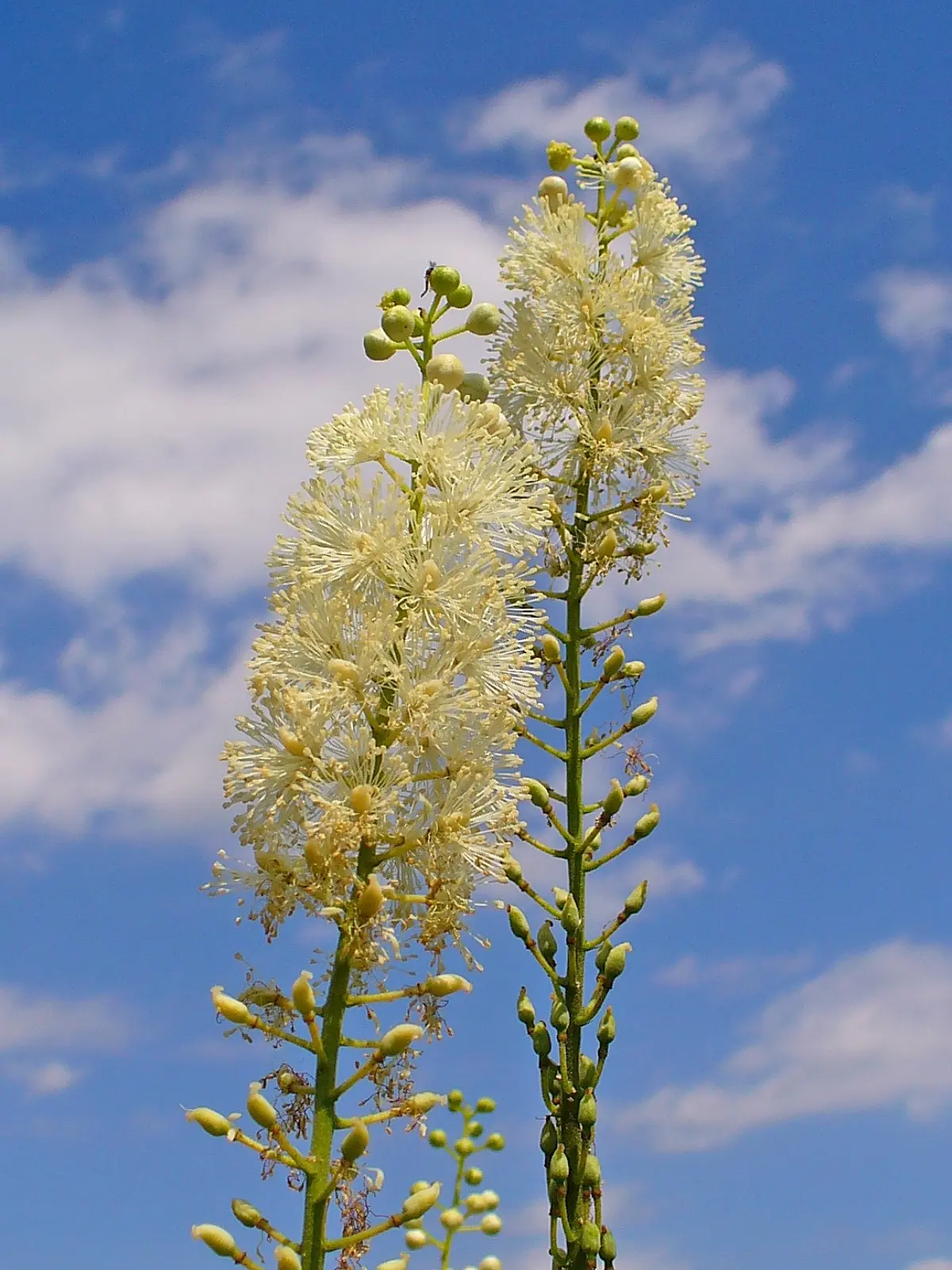
Actaea racemosa — black cohosh, also called black snakeroot, bugbane, or fairy candles — is an upright rhizomatous perennial native to the woodlands of eastern North America. It grows to 6 feet or more, sending tall, candle-like spires of fluffy creamy-white flowers high above large, deeply divided, fern-like leaves.
Vertical accent
Black cohosh adds a striking vertical note to the back of a shady border, a cottage garden, or a woodland planting. The showy summer flowers are followed by interesting seedheads that are often used in arrangements. It’s a host plant for Spring Azure, Holly Blue, and Appalachian Azure butterflies, and is highly resistant to deer.
Care tips
Give it rich, moisture-retentive soil in partial to full shade with a couple of hours of morning sun, and shelter it from strong winds. It can be slow to establish, so be patient — and note that the flowers carry an unpleasant, medicinal scent up close.
Fun Fact
The word 'cohosh' comes from the Algonquin language and means 'rough' — a reference to the plant's knobbly, irregularly shaped roots. Indigenous peoples across eastern North America used those roots medicinally for centuries before European settlers encountered the plant.
Habitat & form
Where it's from and what to expect.
- Native range
- Eastern North America
- Plant type
- Perennial
- Mature size
- 4–6 ft tall (foliage mound; flower spikes to 7 ft) and 2–4 ft wide.
- Bloom
- Tall racemes of hundreds of tiny, fluffy creamy-white flowers from early to late summer, followed by dry seed pods.
- Hardiness
- USDA zones 3–8.
Care
How to keep it happy.
- Sunlight
- Dappled to partial or deep shade; ideally 2–3 hours of morning sun. Too little light and it may not flower.
- Water
- Prefers rich, moisture-retentive soil that stays evenly moist.
- Soil
- Rich soil high in organic matter; acidic to neutral pH with good drainage.
- Planting distance
- 2–3 ft apart, based on mature spread.
- Propagation
- Divide rhizomes in spring
- Pruning
- Maintenance: low — leave or remove the spent flower spikes as you like, then cut the foliage back after frost. It resents disturbance, so divide only occasionally to renew.
- Pet safety
- Mildly toxic
All parts toxic, especially berries and roots