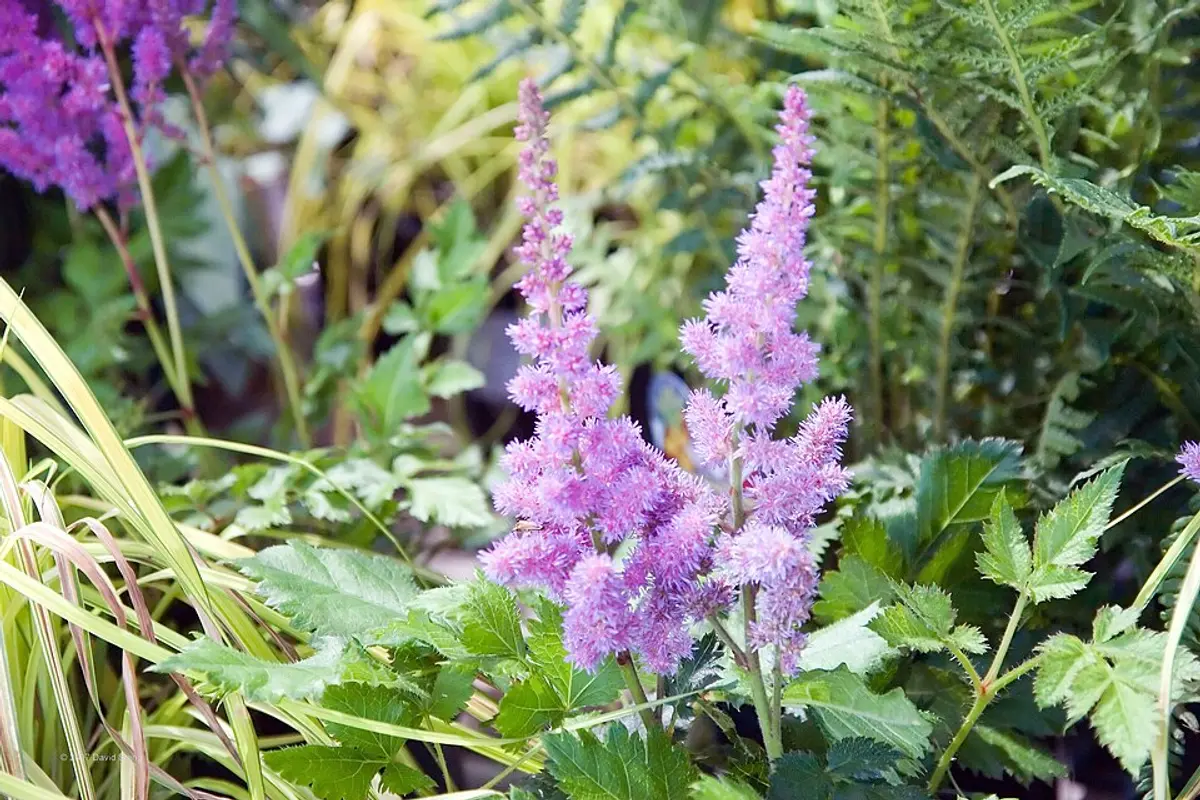
Astilbe 'Visions'
Astilbe chinensis 'Visions'
A compact, fragrant astilbe with dense raspberry-pink to purple plumes over finely cut, deep green foliage — one of the few astilbes with a noticeable scent.
Keep reading Show less
Astilbe chinensis ‘Visions’ brings dense, upright plumes of raspberry-pink to purple flowers over finely cut, deep green foliage — a compact astilbe that fits neatly into smaller shade gardens or the front of a border. It’s also one of the few fragrant astilbe selections, adding a light scent to its summer display.
Compact and reliably moist-loving
‘Visions’ stays tidier than many astilbes, making it a good choice where space is limited. Like the rest of the genus, though, it needs steady moisture — plant it in rich, humus-rich soil and keep it from drying out, especially during its summer bloom period.
Care tips
Site in partial to full shade with consistently moist, well-drained soil. Mulch helps conserve moisture through dry spells. Deadhead or leave the spent plumes standing for winter interest, and divide clumps every two to three years in early spring to keep the planting vigorous.
Fun Fact
'Visions' is one of the few astilbe cultivars bred with a noticeable fragrance — most astilbes are scentless, but this one's dense plumes carry a light, sweet perfume on warm summer days.
Habitat & form
Where it's from and what to expect.
- Native range
- Garden cultivar of the species native to China, Japan, and Korea
- Plant type
- Perennial
- Mature size
- Compact habit, roughly 12–18 in. tall and wide.
- Bloom
- Dense, upright plumes of raspberry-pink to purple flowers in mid- to late summer, notably fragrant for an astilbe.
- Hardiness
- USDA zones 4–8.
Care
How to keep it happy.
- Sunlight
- Partial to full shade; tolerates more sun where soil stays consistently moist.
- Water
- Keep evenly moist; does not tolerate drought.
- Soil
- Rich, humusy, well-drained soil with good moisture retention.
- Planting distance
- 12–18 in apart.
- Propagation
- Divide in spring or fall
- Pruning
- Deadhead or leave spent plumes for winter texture; divide congested clumps every 2–3 years in early spring.
- Pet safety
- Non-toxic