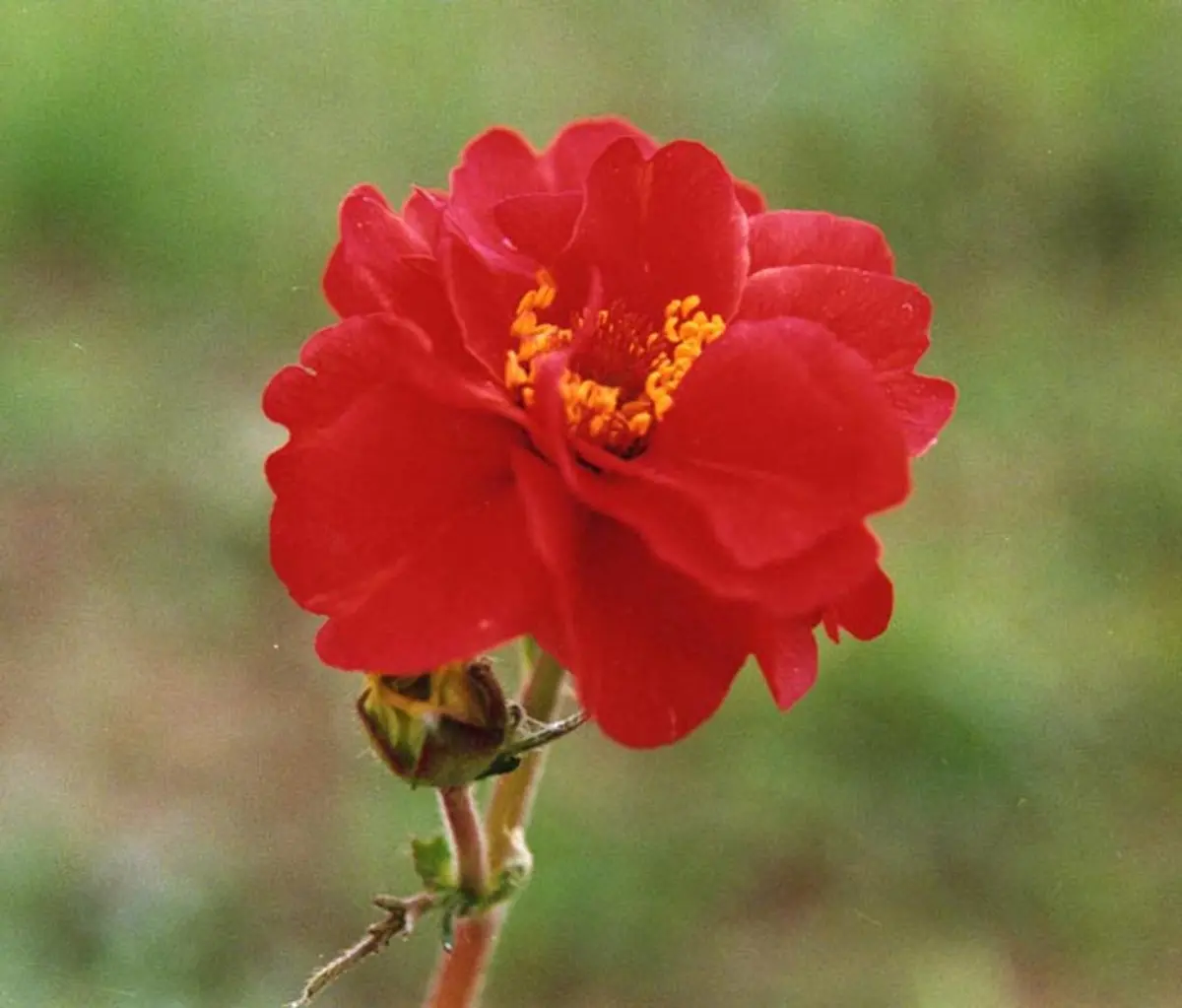
Avens 'Mrs. Bradshaw'
Geum chiloense 'Mrs. Bradshaw'
A cheerful, low-maintenance perennial with semi-double scarlet-orange flowers on wiry stems above mounding rosettes of dark green leaves from late spring through summer.
Keep reading Show less
Geum chiloense ‘Mrs. Bradshaw’ — commonly called Avens — is a rhizomatous herbaceous perennial in the rose family (Rosaceae), native to Chile. It forms a neat, mounding rosette of large, hairy, pinnately divided dark green leaves that provides attractive ground cover even when not in flower.
Prolific summer blooms
From late spring through summer, branching wiry stems rise 12–18 inches above the foliage and carry semi-double to double scarlet-orange blooms roughly an inch across. ‘Mrs. Bradshaw’ is one of the most popular cultivars for its vivid color and reliable repeat-flowering, especially when deadheaded. After the petals drop, the feathery plumed seed heads extend ornamental interest through fall.
Care tips
Avens performs best in cool climates with good drainage. It tolerates some drought but cannot sit in wet soil over winter — root rot is the most common problem. In hot, humid regions, give it afternoon shade and divide clumps every year or two to prevent die-out and keep the display lush. A low-maintenance perennial once established, it is ignored by deer and draws bees and butterflies throughout its long blooming season.
Fun Fact
The cultivar name 'Mrs. Bradshaw' was given around 1900 and honours a real woman — a contemporary of the English nurseryman who introduced it. Over 125 years later it remains one of the most widely sold named geums in the world, remarkable staying power in a hobby driven by novelty.
Habitat & form
Where it's from and what to expect.
- Native range
- Chile (South America)
- Plant type
- Perennial
- Mature size
- Foliage mound to 12–15 in. tall; reaches 24–30 in. in bloom; spreads 12–18 in. wide.
- Bloom
- Semi-double to double scarlet-orange flowers on branching wiry stems from late spring through summer. Feathery seed heads are ornamental after bloom.
- Hardiness
- USDA zones 5–7.
Care
How to keep it happy.
- Sunlight
- Full sun to partial shade. Afternoon shade helps in hot, humid summers.
- Water
- Regular; prefers moist but well-drained soil. Tolerates brief dry spells but will rot in waterlogged winter soils.
- Soil
- Loamy or sandy, well-drained; pH 6.0–8.0. Avoid heavy clay — root rot can occur in poorly drained sites.
- Planting distance
- 12–18 in apart.
- Propagation
- Divide in spring
- Pruning
- Low maintenance. Deadhead spent flowers to prolong bloom. Divide clumps every 1–2 years in early spring to keep plants vigorous.
- Pet safety
- Non-toxic