Wild Indigo 'Lemon Meringue'
Baptisia Decadence® 'Lemon Meringue'
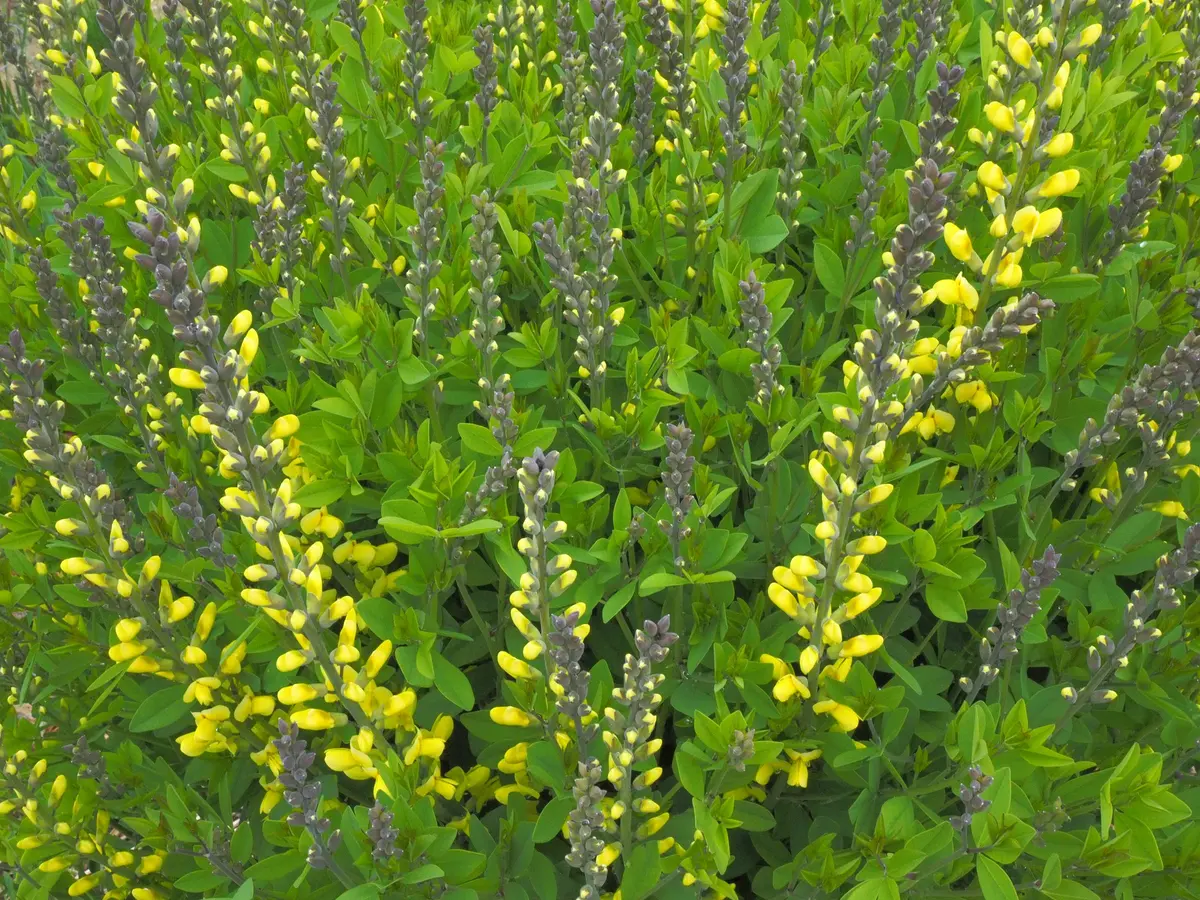
A long-lived wild indigo with lemon-yellow flower spikes, charcoal stems, and mounded blue-green foliage.
Keep reading Show less
Baptisia Decadence® ‘Lemon Meringue’ is a wild indigo prized for its soft lemon-yellow flower spikes, held on near-black stems above a lush, rounded mound of blue-green, clover-like foliage. It’s a long-lived, low-drama perennial: once its deep taproot is established, it shrugs off drought, poor soil, deer, and rabbits, and asks for almost nothing in return.
A faster-maturing wild indigo
Baptisias are famous for taking their time to bulk up, but ‘Lemon Meringue’ was specifically bred to reach a full, floriferous clump faster than most cultivars in the genus. In late spring, tall spires of soft yellow, lupine-like flowers open from charcoal-gray buds, drawing bees and other pollinators for several weeks. As the blooms fade, plump seed pods take over, rattling in the wind and holding their good looks well into fall — leave them standing rather than deadheading.
Care tips
Give it full sun and average, well-drained soil; it tolerates sand, clay, and rocky ground alike and needs no staking once established. Because of its deep taproot, site it where it can stay put — established plants resent being moved. The only real maintenance is an annual cutback to the ground in late fall or early spring; otherwise, simply enjoy the flowers, the seed pods, and the deer- and rabbit-proof foliage.
Fun Fact
Wild indigos develop deep roots and can take several years to reach their full flowering size.
Habitat & form
Where it's from and what to expect.
- Native range
- Garden hybrid (the genus is native to eastern and central North America)
- Plant type
- Perennial
- Mature size
- Reaches about 3 ft tall and 3–4 ft wide in a broadly vase-shaped mound.
- Bloom
- Lemon-yellow flower spikes on dark stems in late spring to early summer; seed pods persist into fall.
- Hardiness
- USDA zones 4–9.
Care
How to keep it happy.
- Sunlight
- Full sun to part sun (6+ hours ideal) for the sturdiest stems and best flowering; tolerates light shade but may flop and bloom less.
- Water
- Average water while establishing; deeply drought-tolerant once its taproot is established. Avoid soggy or poorly drained sites.
- Soil
- Average, well-drained soil, slightly acidic to neutral. Deep roots make established plants difficult to transplant.
- Fertilizer
- No routine fertilizer for healthy, established plants.
- Planting distance
- 3–4 ft apart, based on mature spread.
- Propagation
- Softwood cuttings in late spring
- Pruning
- Maintenance: very low. No deadheading needed — let seed pods stand for fall interest. Cut the whole clump back to the ground in late fall or early spring.
- Pet safety
- Unknown
Prevent chewing; contact a veterinarian after ingestion.