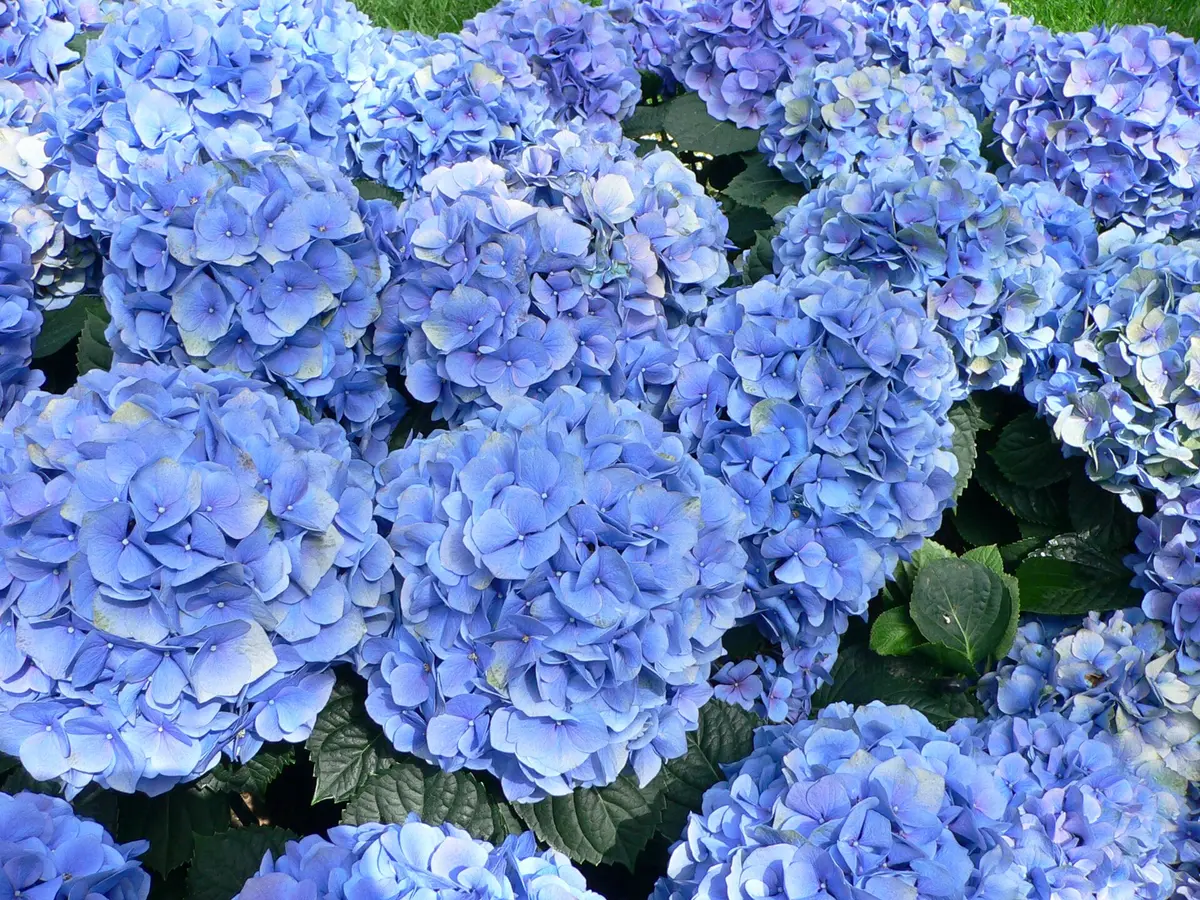
Bigleaf Hydrangea
Hydrangea macrophylla
The classic mophead hydrangea, prized for its huge rounded flower clusters in summer that turn blue in acidic soil or pink in alkaline soil. A shade-friendly shrub that blooms on old wood.
Keep reading Show less
Hydrangea macrophylla, the bigleaf hydrangea, is the quintessential garden hydrangea — a multi-stemmed deciduous shrub native to the coastal woodlands of Japan and beloved worldwide for its romantic, oversized summer flower heads. Also called mophead, French, or (in its flat-flowered forms) lacecap hydrangea, it carries glossy, coarsely toothed leaves and rounded clusters of bloom that can reach the size of a softball or larger.
Flowers that change color
The most famous trait of bigleaf hydrangea is its color-shifting bloom. In acidic soils the flowers turn shades of blue and purple; in alkaline soils they come out pink and red. Gardeners can nudge the color by amending the soil — adding aluminum sulfate to push blue, or lime to push pink — though white-flowered cultivars stay white no matter what. The big heads start in early summer and often dry attractively on the plant, lasting well into fall and making excellent cut or dried flowers.
Care tips
Plant bigleaf hydrangea in rich, moist, well-drained soil in a spot with morning sun and afternoon shade. Its large leaves lose water fast, so consistent moisture and a layer of mulch are key — it will wilt dramatically when thirsty. The most important rule is pruning: this species blooms mostly on old wood (buds formed the previous year), so prune right after it finishes flowering in summer. Cutting it back in late winter or early spring removes the flower buds and is the most common reason a healthy plant fails to bloom. In colder zones, protect the buds over winter or choose a reblooming cultivar that also flowers on new wood.
Fun Fact
Bigleaf hydrangea is one of the few garden plants that acts as a living soil-pH indicator: its flowers turn blue in acidic soil and pink in alkaline soil. The trick is aluminum — in acidic soil the plant can take up aluminum ions, which bind with a pigment to produce blue, while alkaline soil locks the aluminum away and leaves the blooms pink. White cultivars, lacking the pigment, stay white regardless of soil.
Habitat & form
Where it's from and what to expect.
- Native range
- Japan (coastal regions of Honshu)
- Plant type
- Shrub
- Mature size
- Typically 3–6 ft tall and wide, though dwarf and large cultivars range from about 1 to 10 ft.
- Bloom
- Large rounded mophead (or flat lacecap) clusters in early to mid summer, in blue, purple, pink, or white depending on cultivar and soil pH. Blooms can persist and dry on the plant into fall.
- Hardiness
- USDA zones 6–9 (some cultivars hardy to zone 5).
Care
How to keep it happy.
- Sunlight
- Part shade. Best with morning sun and afternoon shade; too much hot sun scorches leaves and fades blooms, while deep shade reduces flowering.
- Water
- High. Keep soil consistently moist — the large leaves wilt quickly in heat and dry spells. Mulch to conserve moisture and avoid prolonged drought.
- Soil
- Rich, moist, well-drained soil high in organic matter. Soil pH controls flower color: acidic soil (pH below ~6) yields blue flowers, alkaline soil (pH above ~7) yields pink.
- Planting distance
- 4–6 ft apart for typical cultivars; adjust to the mature spread of your specific variety.
- Propagation
- Layering
- Pruning
- Blooms mostly on old wood. Prune immediately after flowering in summer — do NOT cut back in late winter or spring or you remove the season's flower buds. Remove only dead or weak stems in early spring.
- Pet safety
- Mildly toxic
All parts toxic, especially flower buds and young leaves