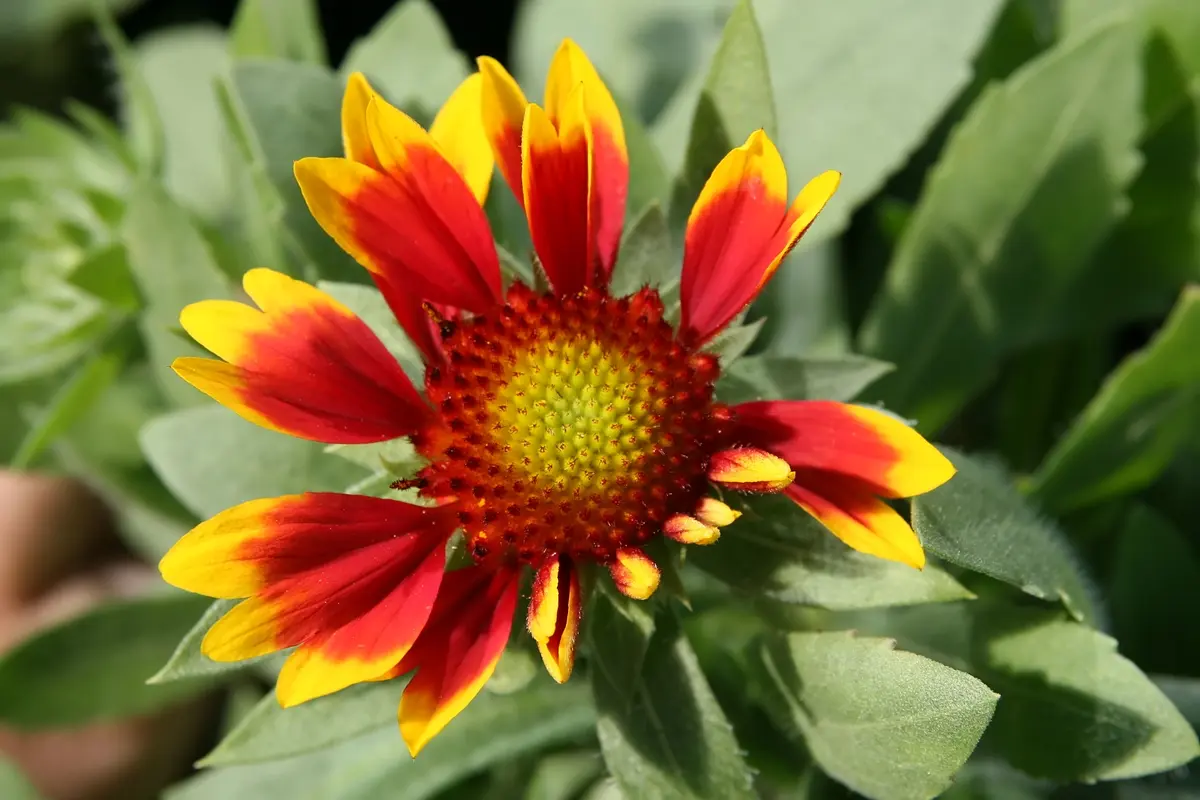
Blanket Flower 'Goblin'
Gaillardia x grandflora 'Goblin'
A compact, drought-tough blanket flower with fiery red-and-yellow bicolor daisies that bloom non-stop from early summer to fall, standing up to heat and poor soil with ease.
Keep reading Show less
Gaillardia x grandiflora ‘Goblin’ is a dwarf blanket flower bred for a tidy, ground-hugging habit and nonstop red-and-yellow daisies from early summer clear through to fall — all on a plant that thrives on neglect.
Bred to be tough and tidy
Blanket flowers are native to the harsh, sun-baked prairies of central and southern North America, and ‘Goblin’ inherits that toughness in a much more compact package than the wild species. Its low mounding habit and long bloom season have earned it a long-standing RHS Award of Garden Merit.
Care tips
Plant in full sun in average, well-drained soil — it thrives in sandy or rocky spots and needs little supplemental water once established. Good drainage matters more than fertility; heavy, wet clay is its main enemy, especially over winter. Deadhead through the season to keep the blooms coming, cut the clump back by about half in late summer to help it survive winter, and divide every couple of years to keep it vigorous.
Fun Fact
'Goblin' has held the RHS Award of Garden Merit for decades — a rare distinction for a blanket flower cultivar, earned for its reliably compact habit and season-long bicolor blooms.
Habitat & form
Where it's from and what to expect.
- Native range
- Garden hybrid of species native to central and southern North American prairies
- Plant type
- Perennial
- Mature size
- Compact dwarf habit, 10–12 in. tall and 15 in. wide.
- Bloom
- Red-and-yellow bicolor daisy flowers with dark centers from early summer to early fall.
- Hardiness
- USDA zones 3–10.
Care
How to keep it happy.
- Sunlight
- Full sun.
- Water
- Low water needs; drought-tolerant once established. Avoid overwatering.
- Soil
- Average, well-drained soil; does well in sandy or rocky ground. Avoid heavy, poorly drained clay.
- Planting distance
- 12–15 in apart, based on mature spread.
- Propagation
- Readily grown from seed
- Pruning
- Deadhead to prolong bloom; cut clumps back to about 6 in. in late summer to improve winter survival, and divide every 2–3 years.
- Pet safety
- Non-toxic