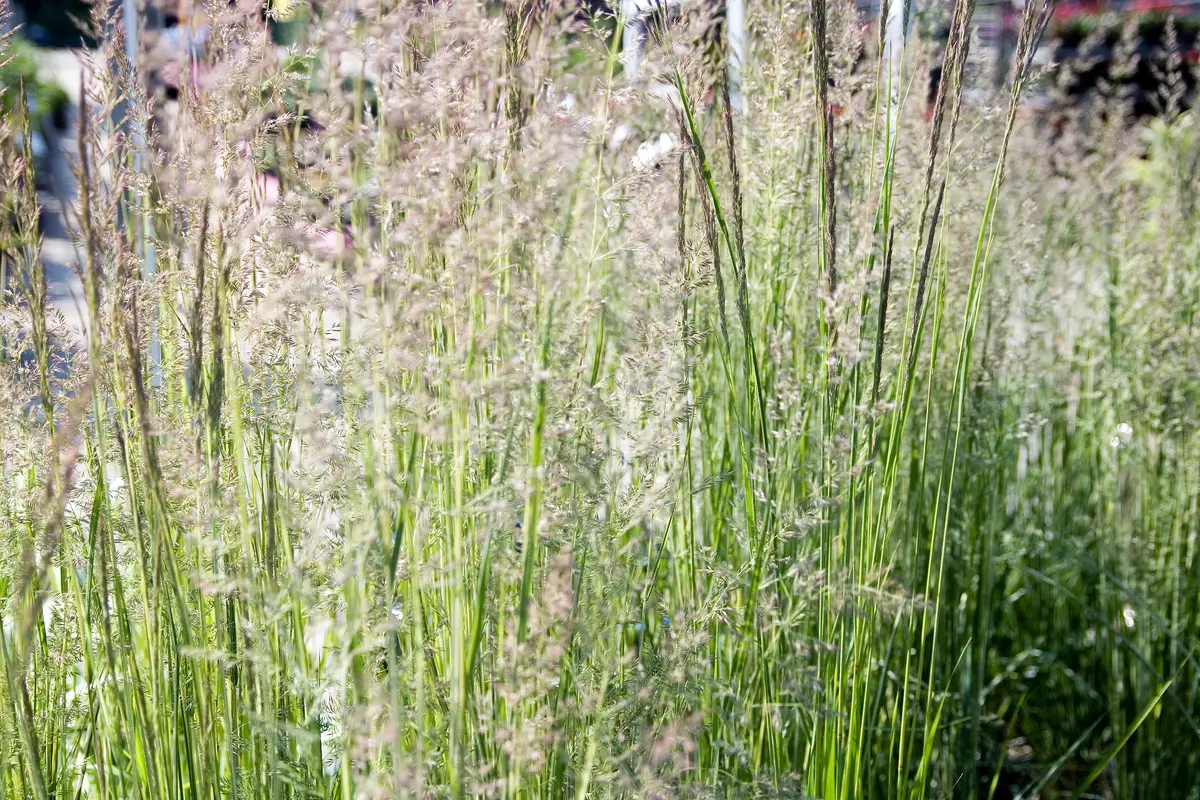
Feather Reed Grass 'Karl Foerster'
Calamagrostis x acutiflora 'Karl Foerster'
A narrow, upright ornamental grass with airy summer plumes that fade to tawny gold and remain standing into winter.
Keep reading Show less
Feather reed grass ‘Karl Foerster’ is a tidy, upright clump-forming grass. Its narrow green leaves make a vertical accent in the border, followed by slender, feathery plumes that catch the light from early summer into winter.
Upright summer plumes
The flower stems rise above the foliage in early summer, opening pink-purple before drying to a warm straw color. Unlike many ornamental grasses, the stems stay upright after flowering, adding texture to the garden through fall and winter. This cultivar is sterile and will not spread by seed.
Care tips
Grow it in full sun for the strongest flowering, though it tolerates some shade. It adapts to a range of ordinary garden soils, including clay, and handles both moist conditions and some drought once established. In late winter or early spring, cut back the previous year’s stems before new growth starts.
Sources: NC State Extension, ASPCA Poison Control.
Fun Fact
The cultivar is sterile, so its wheat-like plumes will not produce volunteer seedlings; the dried stems also hold their shape through winter.
Habitat & form
Where it's from and what to expect.
- Native range
- Garden hybrid of feather reed grasses native to Europe and Asia
- Plant type
- Perennial · Ornamental grass
- Mature size
- 3–5 ft tall and 1–1.5 ft wide.
- Bloom
- Pink-purple plumes appear in early to midsummer, then fade to tan and persist into winter.
- Hardiness
- USDA zones 5–9.
Care
How to keep it happy.
- Sunlight
- Full sun to part shade; flowering is best in full sun.
- Water
- Average water; tolerates moist soil and some drought once established.
- Soil
- Adaptable to most well-drained soils, including clay.
- Fertilizer
- No routine fertilizer for healthy, established plants.
- Planting distance
- 12–18 in. apart, based on mature spread.
- Propagation
- Divide clumps in spring; this cultivar is sterile.
- Pruning
- Cut back old stems to a few inches above the ground in late winter or early spring before new growth begins.
- Pet safety
- Unknown
Prevent chewing.