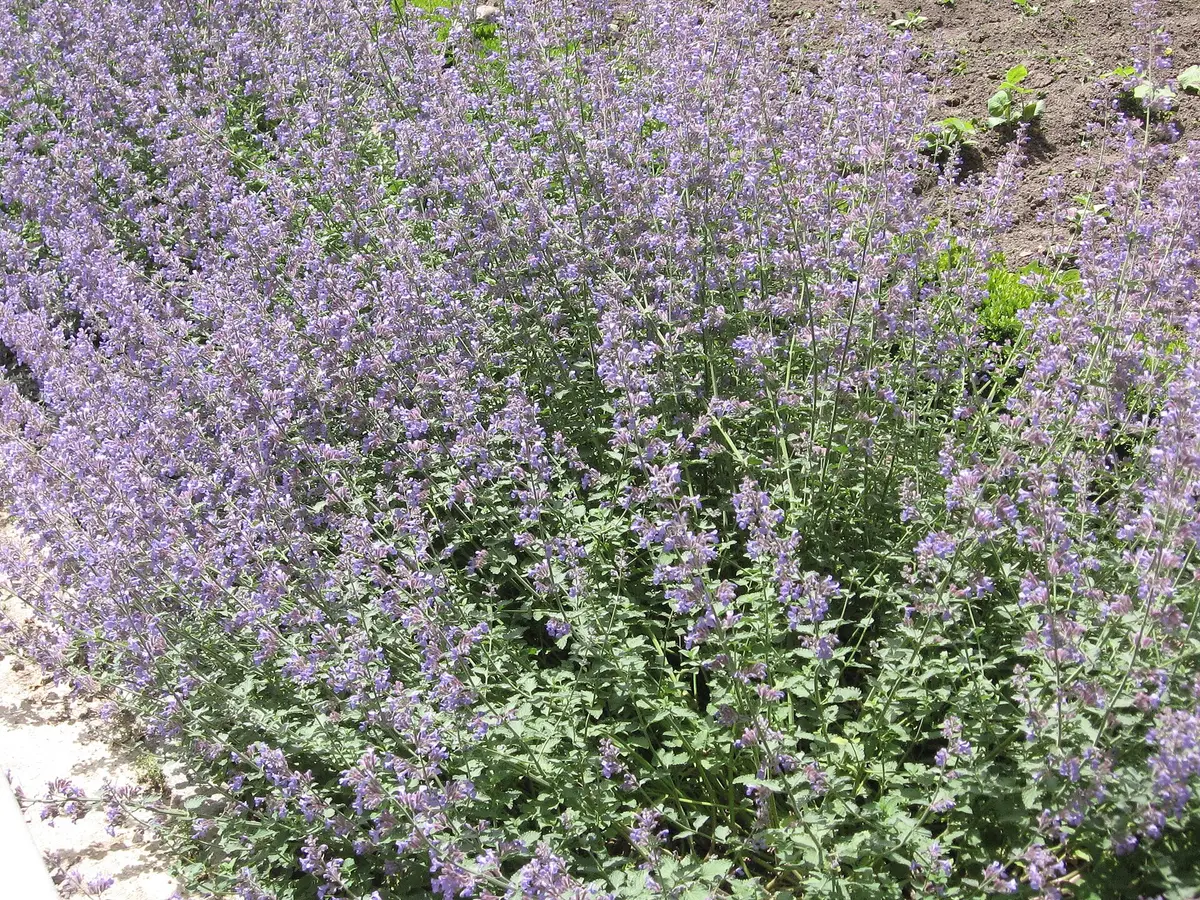
Catmint 'Junior Walker'
Nepeta x faassenii 'Junior Walker'
A compact, drought-tolerant catmint with aromatic gray-green leaves and lavender-blue flower spikes visited by bees.
Keep reading Show less
‘Junior Walker’ is a compact, sterile catmint for sunny borders, path edges, and containers. Its low, spreading mound stays smaller than ‘Walker’s Low’ and does not spread by seed.
Fragrant foliage, long-season color
Aromatic gray-green leaves soften the edge of a bed, while lavender-blue flowers attract bees from late spring into summer. Some cats investigate the foliage, but this is not the catnip species.
Care tips
Provide full sun and freely draining soil; established plants tolerate drought. Shear back by one-third to one-half after the first bloom to encourage fresh growth and repeat flowers. Avoid wet winter soil, which can cause crown rot.
Fun Fact
'Junior Walker' is a compact alternative to 'Walker's Low'; neither is the catnip species, Nepeta cataria.
Habitat & form
Where it's from and what to expect.
- Native range
- Garden hybrid (sterile cross of European Nepeta species)
- Plant type
- Perennial
- Mature size
- 'Junior Walker' grows 1–1.5 ft tall and 1.5–2 ft wide; compact, low, and mounding (smaller than the related 'Walker's Low').
- Bloom
- Lavender-blue flower spikes from late spring into summer; shearing encourages repeat bloom.
- Hardiness
- USDA zones 5–9.
Care
How to keep it happy.
- Sunlight
- Full sun preferred; tolerates partial shade, especially in the South where afternoon shade reduces heat stress.
- Water
- Low to moderate; drought tolerant once established. Good drainage is essential — the plant tolerates dry conditions far better than wet winter soils.
- Soil
- Adaptable to clay, loam, sandy, or shallow rocky soils; good drainage is the key requirement. Tolerates poor, dry soils well.
- Planting distance
- 18–24 in apart.
- Propagation
- Divide in spring
- Pruning
- Shear by one-third to one-half after the first bloom. Remove dead growth in early spring.
- Pet safety
- Unknown
Prevent chewing.