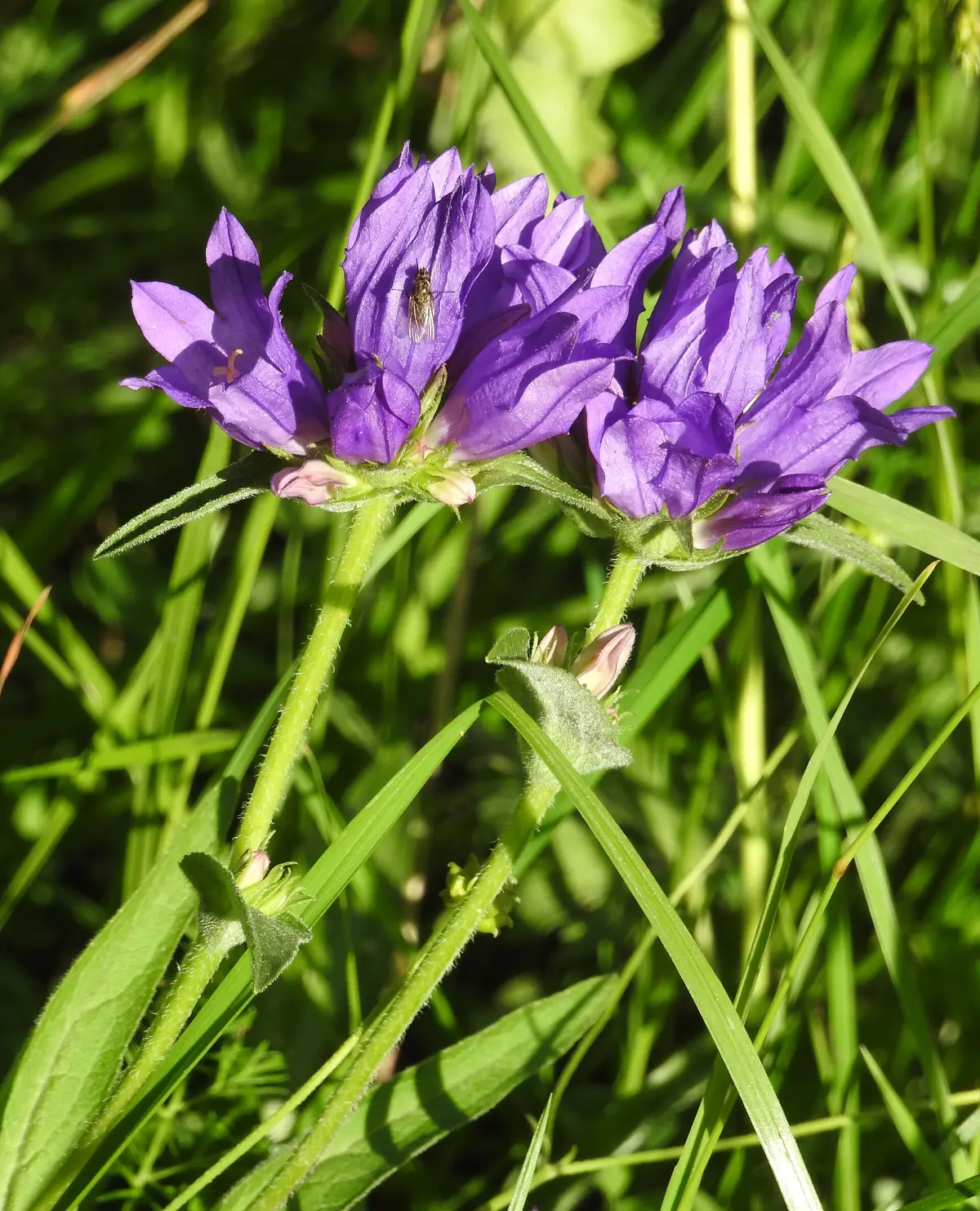
Clustered Bellflower 'Superba'
Campanula glomerata 'Superba'
An upright perennial with dense clusters of violet-purple bell flowers in late spring and early summer.
Keep reading Show less
‘Superba’ is an upright clustered bellflower with rich violet-purple flowers on stems reaching 2–3 feet. It suits cottage gardens and mixed borders where it has room to spread.
Strikingly clustered blooms
Bell-shaped flowers gather in tight clusters at the stem tips, with smaller clusters below. Bees visit the blooms from late spring into early summer.
Care tips
Provide moist, well-drained soil in sun or part shade, with afternoon shade in hot climates. Deadhead to encourage more bloom. Rhizomes and self-seeding can spread aggressively; divide clumps and remove unwanted growth to keep the planting contained.
Fun Fact
The species name glomerata means 'clustered', describing its tightly packed flower heads.
Habitat & form
Where it's from and what to expect.
- Native range
- Europe and temperate Asia
- Plant type
- Perennial
- Mature size
- 'Superba' reaches 2–3 ft tall and 1–2 ft wide in bloom; basal foliage mound is lower.
- Bloom
- Dense spherical clusters of up to 15 upward-facing, violet-purple bell-shaped flowers at stem tips and in upper leaf axils from late spring to early summer. Good for cutting.
- Hardiness
- USDA zones 3–8.
Care
How to keep it happy.
- Sunlight
- Full sun to partial shade. In hot, humid summers, afternoon shade prolongs bloom and prevents stress.
- Water
- Regular; prefers average, consistently moist, well-drained soil. Not drought tolerant — keep it moist, especially in summer heat.
- Soil
- Loamy or sandy, well-drained; neutral to slightly alkaline pH (6.0–8.5). Avoid waterlogged sites where it can rot.
- Planting distance
- 12–18 in apart.
- Propagation
- Divide in spring or fall
- Pruning
- Deadhead spent flower stems promptly to encourage rebloom. Divide clumps every 3–5 years in fall to keep plants vigorous and prevent aggressive spread.
- Pet safety
- Unknown
Prevent chewing.