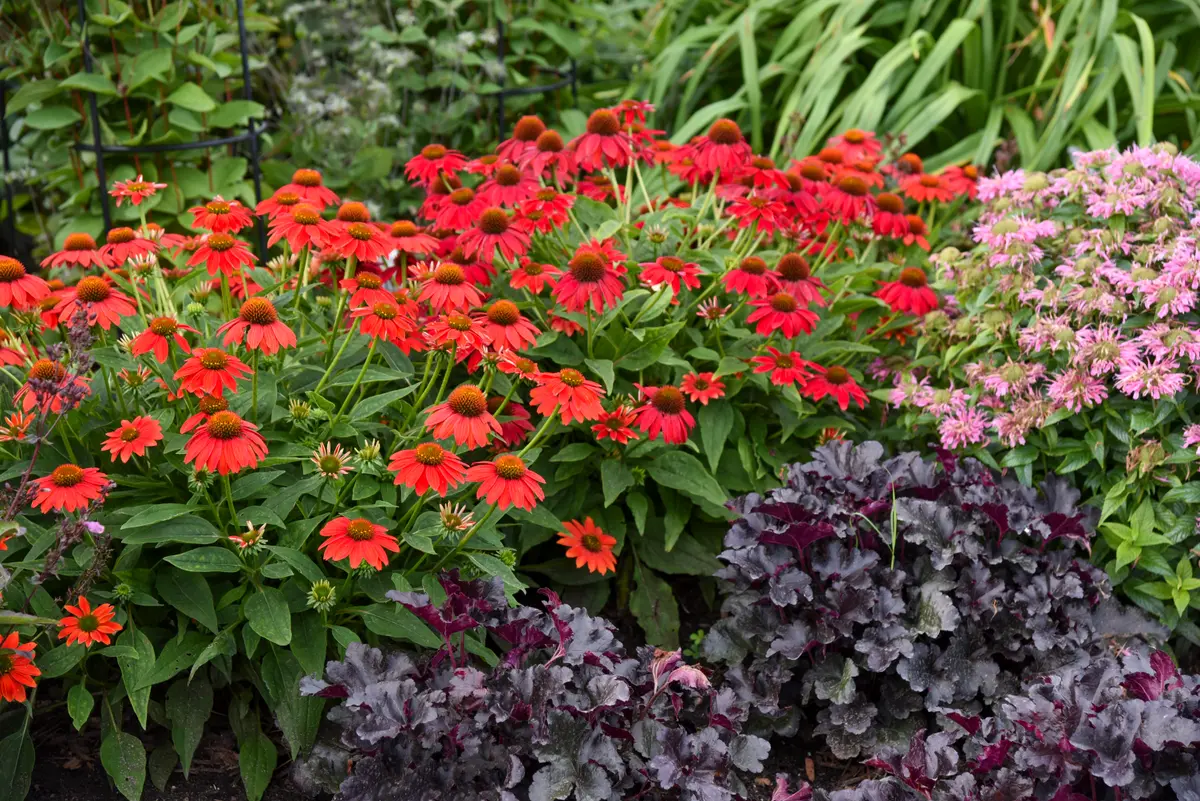
Coneflower 'Firefinch'
Echinacea 'Summersong™ Firefinch™'
A compact coneflower with fiery reddish-orange to pinkish-red blooms, bred for heavy branching and a long summer-into-fall show that draws bees, butterflies, and finches.
Keep reading Show less
Echinacea Summersong™ Firefinch™ brings a warm reddish-orange to the classic prairie coneflower, on a compact plant bred for heavier branching than older varieties. That extra branching means far more flowers over a longer season, from early summer clear through to frost.
Bred for bold color and more blooms
The Summersong® series was one of the first breeding programs to expand coneflower color beyond the usual pinks, purples, and whites into true reds and oranges. Firefinch keeps that vivid color coming non-stop thanks to its branching habit, which produces many more flowering stems than a typical seed-grown coneflower.
Care tips
Plant in full sun in average, well-drained soil — it tolerates poor and rocky ground once established. Water regularly through the first season to help it root in, after which it shrugs off drought with ease. Deadhead through summer to keep new blooms coming, then leave the seed heads standing through fall and winter as a food source for goldfinches and other birds before cutting back in late winter or early spring.
Fun Fact
Firefinch is part of Proven Winners' Summersong® series, one of the first coneflower breeding programs to push the genus's color range into true reds and oranges instead of the usual pinks and purples.
Habitat & form
Where it's from and what to expect.
- Native range
- Garden hybrid of the species native to central and eastern North American prairies
- Plant type
- Perennial
- Mature size
- Compact habit, 12–16 in. tall and 16–18 in. wide.
- Bloom
- Reddish-orange to pinkish-red daisy flowers from early summer through fall, often to frost.
- Hardiness
- USDA zones 4–8.
Care
How to keep it happy.
- Sunlight
- Full sun; tolerates part sun with somewhat reduced flowering.
- Water
- Water regularly to establish; drought-tolerant once rooted in. Good drainage is essential.
- Soil
- Adaptable to poor, average, or fertile soil; tolerates clay if drainage is good.
- Planting distance
- 16–18 in apart, based on mature spread.
- Propagation
- Divide in spring
- Pruning
- Deadhead to encourage more flowers; leave seed heads standing through fall and winter for goldfinches, then cut back in late winter or early spring.
- Pet safety
- Non-toxic