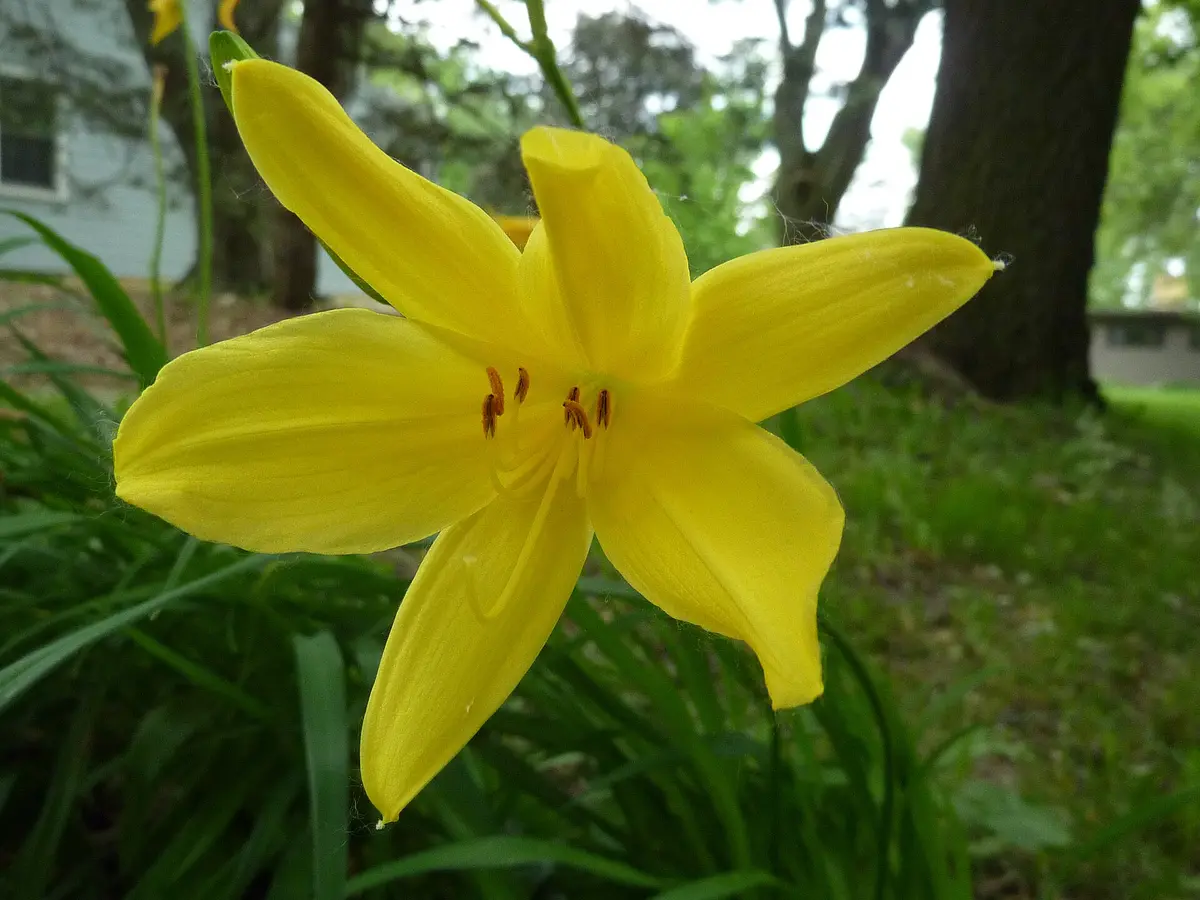
Daylily
Hemerocallis lilioasphodelus
An easy, fragrant species daylily with clear lemon-yellow trumpet flowers in early summer, held on slender scapes above arching clumps of strap-shaped foliage.
Keep reading Show less
Hemerocallis lilioasphodelus — commonly called the lemon daylily or yellow daylily — is a clump-forming herbaceous perennial in the family Asphodelaceae. Native across temperate Eurasia, it forms tidy mounds of arching, strap-shaped green leaves and is one of the earliest daylilies to flower each year.
Fragrant early-summer blooms
In late spring and early summer, slender scapes rise 2–3 feet above the foliage carrying clear lemon-yellow, trumpet-shaped flowers roughly 3–4 inches across. Unlike most modern hybrids, this species is sweetly fragrant — the scent is most noticeable in the evening. Each bloom lasts only a single day, but each scape carries many buds, so the plant stays in flower for several weeks.
Care tips
The lemon daylily is famously easygoing. It thrives in full sun to part shade and in almost any well-drained soil across a wide pH range. Young plants appreciate regular water while establishing, after which clumps tolerate drought well; the main thing to avoid is soggy winter soil, which can rot the crown. Deadhead spent scapes to keep things tidy, tidy up dead foliage in early spring, and divide congested clumps every few years to keep the display vigorous. It draws bees and butterflies, and its slow rhizomatous spread makes it a reliable choice for cottage borders and naturalistic plantings.
Fun Fact
The genus name Hemerocallis comes from the Greek hemera ('day') and kallos ('beauty') — a nod to the fact that each gorgeous flower opens for just one day. Carl Linnaeus formally named this species in 1753, and it was one of the very first daylilies grown in European gardens. In China its young flower buds are eaten as a traditional vegetable known as 'golden needles' (黄花菜).
Habitat & form
Where it's from and what to expect.
- Native range
- Temperate Eurasia (central/eastern Europe to Siberia and China)
- Plant type
- Perennial
- Mature size
- Foliage clump 18–24 in. tall; flower scapes reach 2–3 ft; spreads 18–24 in. wide, slowly forming colonies by rhizomes.
- Bloom
- Fragrant, clear lemon-yellow flowers about 3–4 in. across in late spring to early summer. Each flower lasts a single day, but many buds per scape extend the display for weeks.
- Hardiness
- USDA zones 3–9.
Care
How to keep it happy.
- Sunlight
- Full sun to part shade. Best bloom with at least 6 hours of direct sun; afternoon shade helps in hot climates.
- Water
- Medium. Water deeply during dry spells in the first season to establish; mature clumps are quite drought tolerant. Avoid waterlogged soil, especially in winter.
- Soil
- Average, medium, well-drained soil. Adapts to a wide pH range (about 4.8–8.0) and to loamy or sandy soils; dislikes heavy, wet clay.
- Planting distance
- 18–24 in apart.
- Propagation
- Divide in late summer or early fall
- Pruning
- Low maintenance. Deadhead spent flowers and cut back finished scapes to keep plants tidy. Remove ragged or dead foliage in early spring; divide congested clumps every few years.
- Pet safety
- Non-toxic