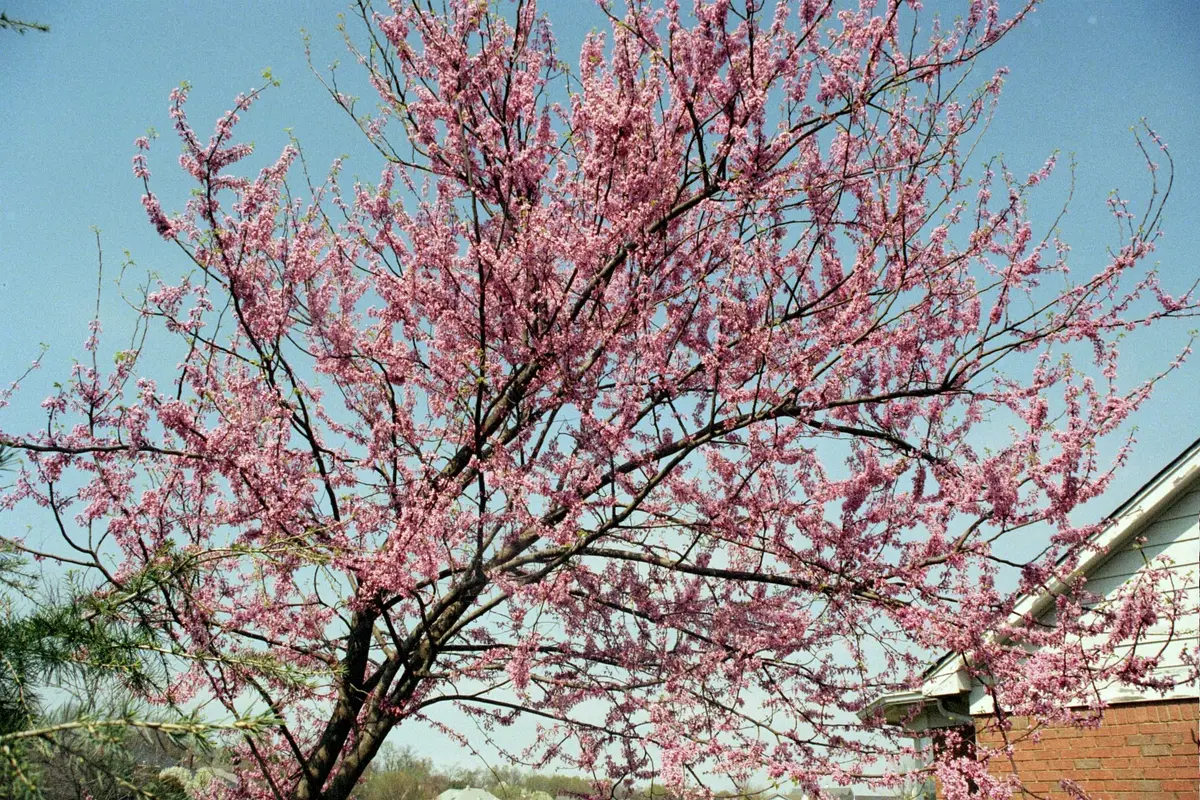
Eastern Redbud
Cercis canadensis
- Spring bloom
- Pollinator friendly
- Cold hardy
- Native plant
- Woodland edge
A small native understory tree that erupts in clouds of rosy pink-purple flowers along its bare branches in early spring, followed by heart-shaped leaves.
Keep reading Show less
Cercis canadensis — the eastern redbud — is a small, graceful tree native to the woodlands of eastern and central North America. It is one of the most beloved harbingers of spring, lighting up the still-bare landscape with a haze of rosy pink-purple flowers before almost anything else has leafed out.
A spring spectacle
In early spring, clusters of small, pea-like flowers burst directly from the bare branches — and even straight from the trunk and older limbs, a charming trait called cauliflory. The blossoms are a magnet for early bees and other pollinators. As the flowers fade, large heart-shaped leaves unfurl, often emerging reddish-bronze before settling into green, then turning yellow in fall. Flat, bean-like seed pods follow and can persist into winter.
Care tips
Redbud is an easygoing, adaptable understory tree. Give it full sun to part shade and well-drained soil, and water it regularly while it establishes a deep root system. It naturally grows as a spreading, sometimes multi-stemmed small tree, so prune only lightly — just after flowering — to shape it and remove any dead or crossing branches.
Fun Fact
Eastern redbud is a cauliflory tree — its magenta flowers bloom directly on the trunk and older branches, not just at the branch tips. The flowers are edible (mildly sweet-tart) and were harvested fresh by some Indigenous peoples; today they make a vivid salad garnish.
Habitat & form
Where it's from and what to expect.
- Native range
- Eastern and central North America
- Plant type
- Tree
- Mature size
- 20–30 ft tall and 25–35 ft wide, with a graceful, often multi-stemmed spreading crown.
- Bloom
- Rosy pink-purple, pea-like flowers cover the bare branches and even the trunk in early spring, before the leaves emerge.
- Hardiness
- Cold-hardy — USDA zones 4–9.
Care
How to keep it happy.
- Sunlight
- Full sun to part shade — a classic woodland-edge tree that flowers well in dappled light.
- Water
- Average moisture; water regularly while establishing, then tolerates occasional dry spells once its roots are deep.
- Soil
- Adaptable to most well-drained soils across a range of pH; dislikes constantly wet or compacted ground.
- Pruning
- Maintenance: low. Prune lightly to shape and remove dead or crossing wood right after flowering.