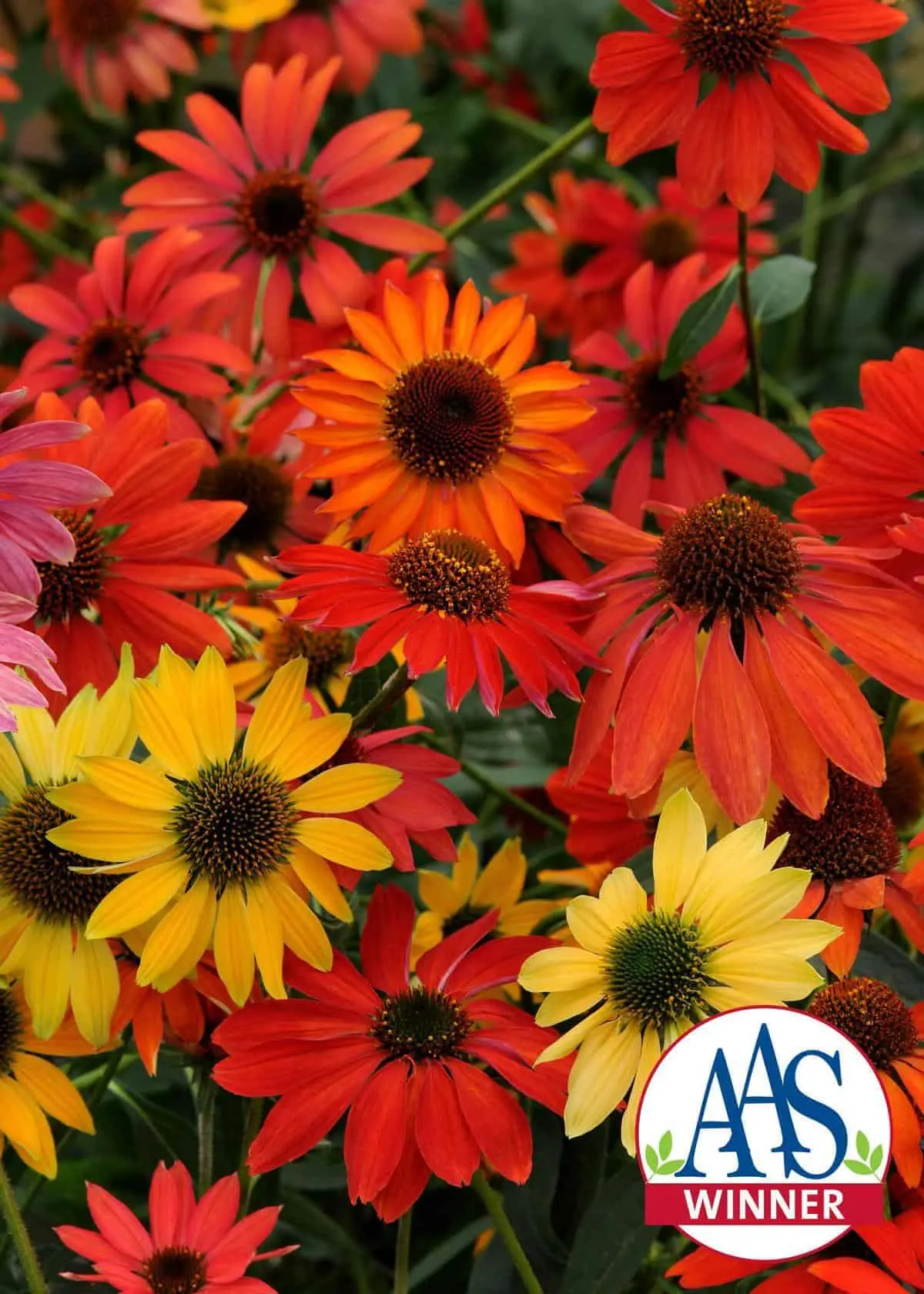
Coneflower 'Cheyenne Spirit'
Echinacea purpurea 'Cheyenne Spirit'
A first-year-flowering coneflower strain with sturdy stems and a lively mix of red, orange, yellow, cream, pink, and purple blooms.
Keep reading Show less
Echinacea purpurea ‘Cheyenne Spirit’ takes the toughness of the native purple coneflower and turns it into a color festival. Instead of blooming in one fixed shade, each seed-grown planting opens in a shifting mix of red, orange, yellow, cream, pink, and purple, all on sturdy, well-branched plants.
What makes it especially useful is that it flowers in its first year from seed instead of making gardeners wait a second season for the show. Butterflies and other pollinators work the blooms all summer, and if a few seed heads are left standing, goldfinches and other birds will visit them later on.
Treat it like a classic coneflower: plenty of sun, good drainage, and only moderate watering once established. It tolerates heat, humidity, and ordinary garden soils well, but it dislikes sitting wet in winter. Deadhead if you want the longest display, or leave some of the cones in place for fall and winter interest.
Fun Fact
'Cheyenne Spirit' won an All-America Selections award in 2013.
Habitat & form
Where it's from and what to expect.
- Native range
- Central and eastern North America (species); 'Cheyenne Spirit' is a cultivated seed strain
- Plant type
- Perennial
- Mature size
- 2–2.5 ft tall and 1–2 ft wide.
- Bloom
- Single coneflowers in a shifting mix of red, orange, yellow, cream, pink, and purple from early summer into early fall.
- Hardiness
- USDA zones 4–9.
Care
How to keep it happy.
- Sunlight
- Full sun for the best flowering; tolerates part shade with a lighter bloom show.
- Water
- Medium water while establishing; drought tolerant once rooted in.
- Soil
- Average, well-drained soil. Adaptable to clay, loam, or sand as long as it does not stay soggy.
- Planting distance
- 18–24 in apart.
- Propagation
- Usually grown from seed; established clumps can also be divided in spring.
- Pruning
- Deadhead to encourage continued bloom, or leave seed heads for birds and cut stems back in late winter or early spring.
- Pet safety
- Unknown
Prevent chewing.