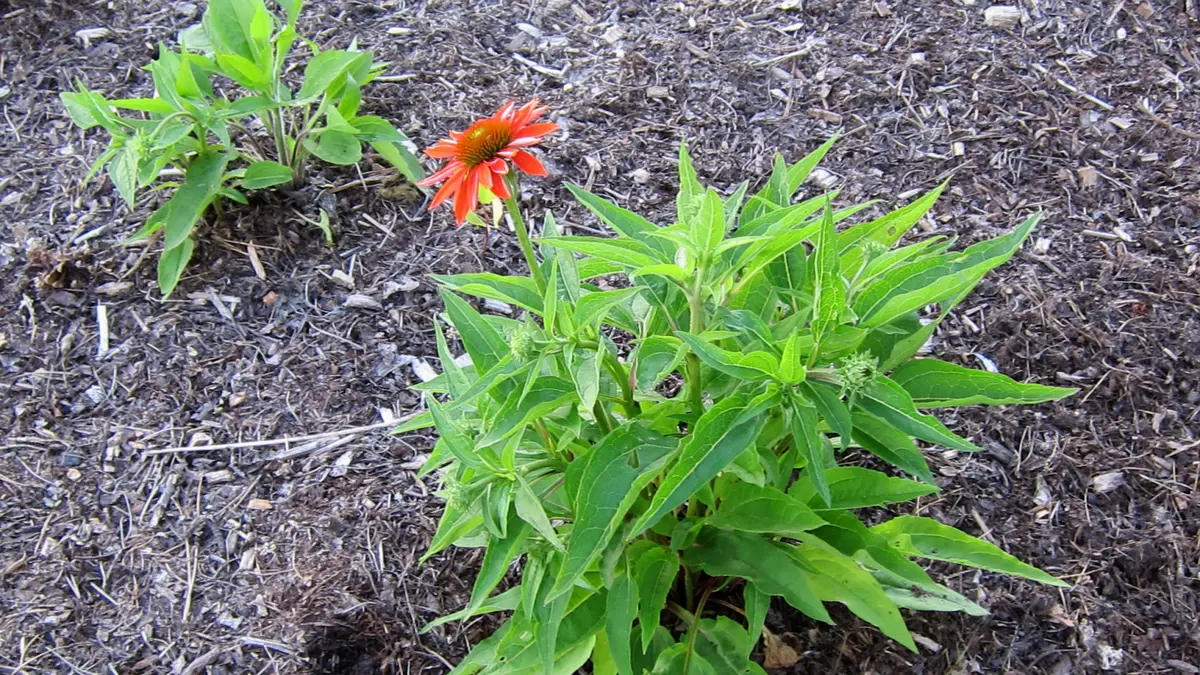
Coneflower 'Adobe Orange'
Echinacea 'Sombrero® Adobe Orange'
A vividly orange, heavily branched coneflower bred for cold hardiness and a long summer bloom season, standing up to heat and drought while drawing in pollinators.
Keep reading Show less
Echinacea Sombrero® Adobe Orange packs an intensely saturated orange onto a compact, heavily branched coneflower — bred to hold its color and shape through a long summer season without the flopping that plagues older coneflower varieties.
Bred for hardiness and heavier branching
The Sombrero® series improved on earlier coneflower cultivars by breeding in extra cold hardiness and a much bushier growth habit. Adobe Orange branches freely from the base, producing far more flowering stems than a typical seed-grown coneflower, all while standing up to summer heat and dry spells.
Care tips
Plant in full sun in well-drained soil — it tolerates poor and rocky ground once established, though it appreciates regular water through its first season. Deadhead through summer to keep fresh blooms coming, then leave the seed heads standing through fall and winter as a food source for goldfinches and other birds before cutting back in early spring.
Fun Fact
Sombrero® coneflowers were bred by Walters Gardens specifically for extra cold hardiness and heavier branching than older coneflower varieties — meaning more flowers per plant and a sturdier, less floppy habit.
Habitat & form
Where it's from and what to expect.
- Native range
- Garden cultivar of the species native to central and eastern North American prairies
- Plant type
- Perennial
- Mature size
- Grows 18–20 in. tall and 18–24 in. wide, with a compact, upright, well-branched habit.
- Bloom
- Vivid orange daisy flowers with matching cones from early to late summer.
- Hardiness
- USDA zones 4–9.
Care
How to keep it happy.
- Sunlight
- Full sun; tolerates part sun with less prolific bloom.
- Water
- Water deeply to establish, then reduce; drought-tolerant once rooted in. Avoid consistently soggy soil.
- Soil
- Well-drained soil is essential; tolerates poor, average, or fertile soils and a range of pH.
- Planting distance
- 18–24 in apart, based on mature spread.
- Propagation
- Divide in spring
- Pruning
- Deadhead to prolong bloom; cut back old foliage in early spring, leaving some seed heads through winter for birds.
- Pet safety
- Non-toxic