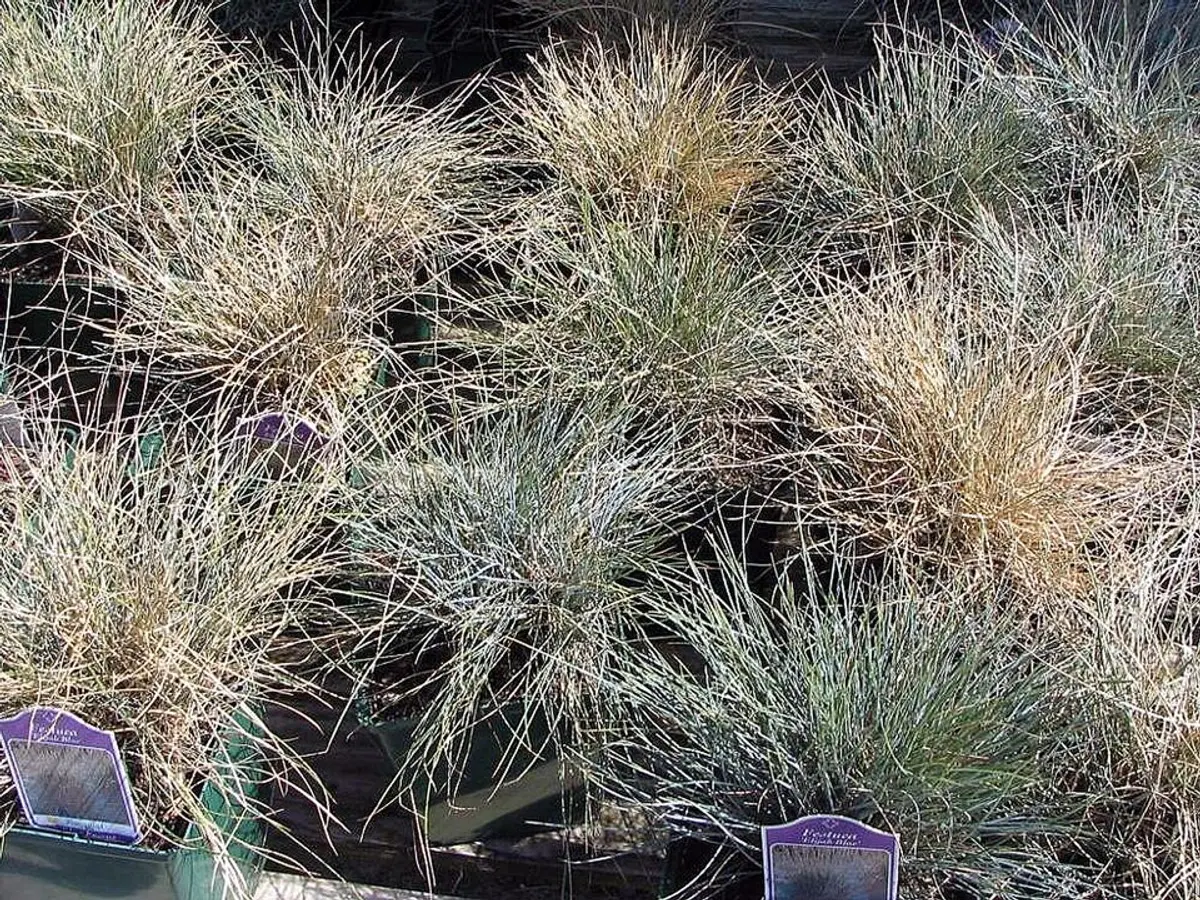
Blue Fescue 'Elijah Blue'
Festuca glauca 'Elijah Blue'
A tidy little ornamental grass with intensely silvery-blue, needle-fine foliage, forming neat mounds that make a striking edging or accent all season.
Keep reading Show less
Festuca glauca ‘Elijah Blue’ is a compact ornamental grass grown for its intensely silvery-blue, needle-fine foliage, which forms neat, tidy mounds year-round. It’s a favorite for edging paths and borders, or as a repeating accent in a sunny bed, adding cool color and fine texture with very little fuss.
A tough, low-maintenance grass
‘Elijah Blue’ thrives on neglect once established, tolerating heat, drought, and lean soil without complaint. Its main requirement is good drainage — soggy, heavy clay is the surest way to lose it, especially over winter.
Care tips
Plant in full sun in average or lean, well-drained soil for the most vivid blue foliage color. Water regularly the first season, then let established plants ride out dry spells on their own. In early spring, shear the whole plant back by a third to two-thirds to remove tired old growth before fresh blue blades emerge, and divide any clumps that die out in the center.
Fun Fact
The silvery-blue color of 'Elijah Blue' comes from a waxy coating on the needle-fine leaves that also helps the plant conserve moisture — one reason this compact grass shrugs off heat and drought so easily.
Habitat & form
Where it's from and what to expect.
- Native range
- Garden cultivar of the species native to Europe
- Plant type
- Perennial
- Mature size
- Compact mounds, about 8–12 in. tall and wide.
- Bloom
- Airy, tan flower spikes rise above the foliage in early summer, though the plant is grown mainly for its foliage color.
- Hardiness
- USDA zones 4–8.
Care
How to keep it happy.
- Sunlight
- Full sun for the best blue color.
- Water
- Drought-tolerant once established; average water needs while young.
- Soil
- Average to lean, well-drained soil; dislikes wet, heavy clay.
- Planting distance
- 8–12 in apart.
- Propagation
- Divide in spring
- Pruning
- Shear back by about a third to two-thirds in early spring to remove old growth and encourage fresh blue color; divide clumps every few years if the center dies out.
- Pet safety
- Non-toxic