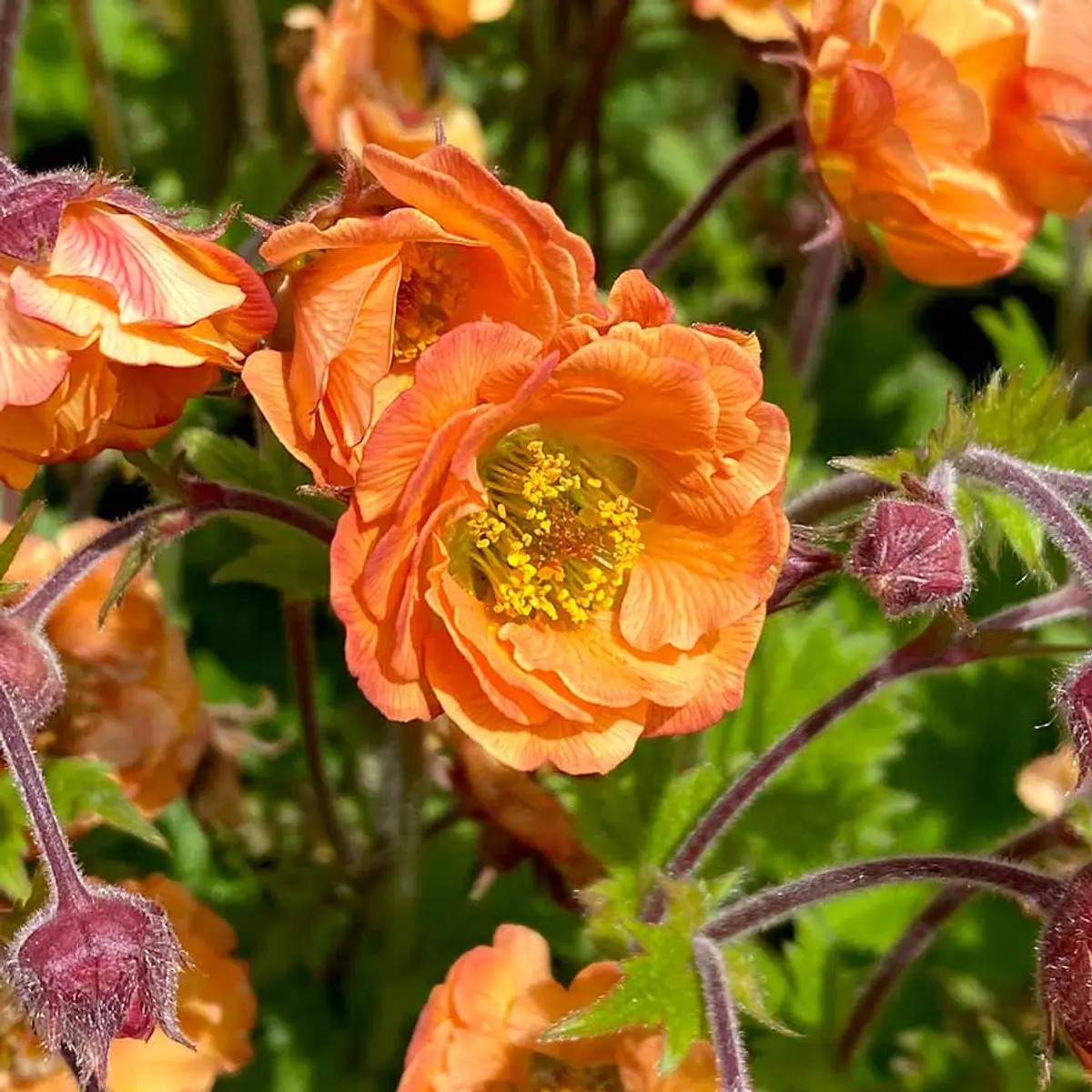
Avens 'TEMPO™ Orange'
Geum 'TEMPO™ Orange'
A compact, clump-forming avens with double, ruffled flowers in warm cream-peach-orange tones, blooming over a low, tidy mound of green foliage in early spring.
Keep reading Show less
Geum TEMPO™ ‘Orange’ is a compact, clump-forming avens bred by Terra Nova Nurseries, producing double to single ruffled flowers in warm cream-peach-orange shades over a low, tidy mound of green foliage — the smallest and lowest-growing of the TEMPO™ series.
A low, warm-toned bloomer
Flowering begins in early spring and can carry into early summer, with the compact scale keeping every bloom held well above the foliage rather than sprawling. Bees and other pollinators visit readily.
Care tips
Grow in full sun to part shade in moist, loamy, well-drained soil, watering at an average rate and letting the soil dry somewhat between waterings. Deadhead to prolong bloom, feed with a balanced fertilizer each spring after the first year, and cut the plant back in fall ahead of winter. It is low maintenance and generally left alone by deer, making it an easy, early splash of color at the front of a border.
Fun Fact
'Orange' is the smallest member of Terra Nova's TEMPO™ avens series, staying under 15 in. tall — a scale bred deliberately so it holds its ruffled double blooms upright without flopping, unlike many older geum varieties.
Habitat & form
Where it's from and what to expect.
- Native range
- Garden hybrid bred by Terra Nova Nurseries
- Plant type
- Perennial
- Mature size
- Compact mounding habit; flowering stems 9–15 in. tall and 13–18 in. wide.
- Bloom
- Double to single flowers in cream-peach-orange shades, blooming in early spring, sometimes into early summer.
- Hardiness
- USDA zones 5–9.
Care
How to keep it happy.
- Sunlight
- Full sun to part shade.
- Water
- Average water; prefers moist, well-drained soil. Let the soil dry moderately between waterings.
- Soil
- Moist, loamy, well-drained soil.
- Planting distance
- 12–18 in apart.
- Propagation
- Divide in spring
- Pruning
- Maintenance: low. Deadhead spent blooms to encourage more flowering, feed with a balanced fertilizer in early spring after the first year, and cut back all growth in fall.
- Pet safety
- Non-toxic