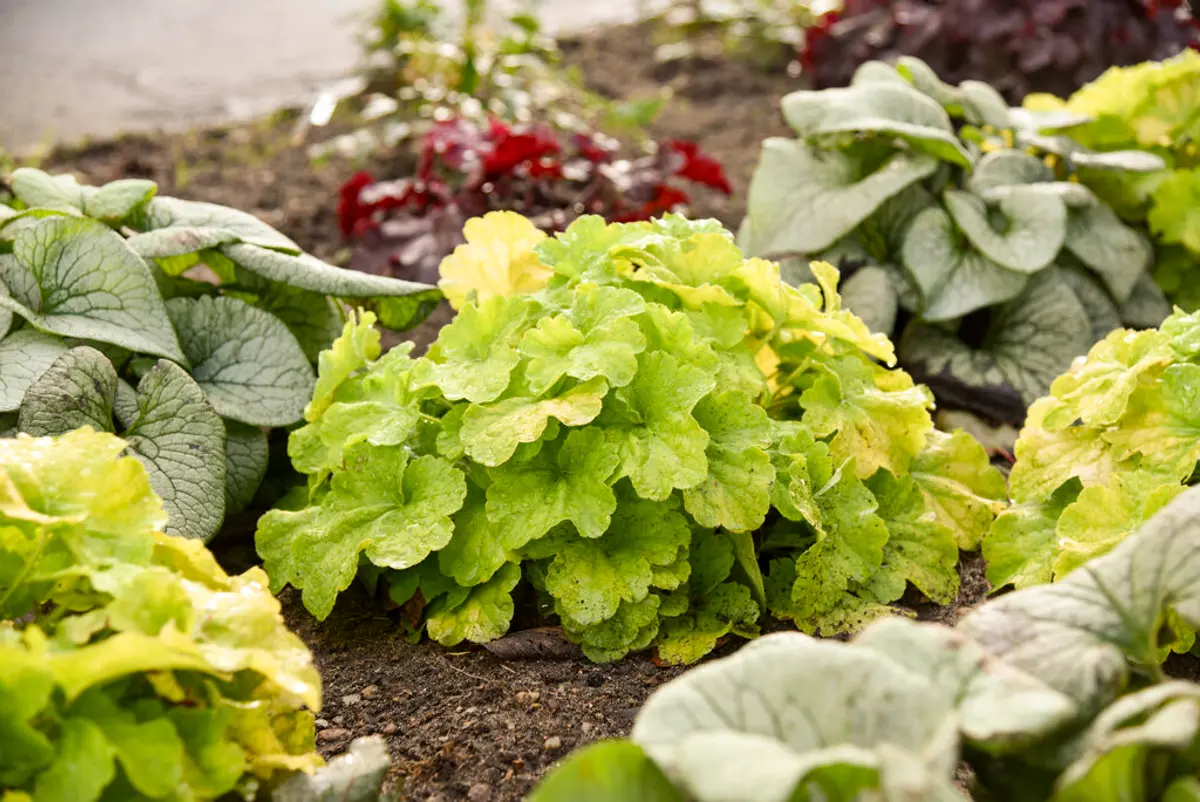
Coral Bells 'Pistachio Ambrosia'
Heuchera Primo® 'Pistachio Ambrosia'
A vigorous coral bells with big, well-rounded chartreuse leaves that brighten shade, topped through summer with pink flowers loved by pollinators.
Keep reading Show less
Heuchera Primo® ‘Pistachio Ambrosia’ is a big, bold coral bells whose large, well-rounded leaves glow a fresh chartreuse — a color that lights up shady corners where darker foliage would simply disappear. The leaves take on warmer amber and pink tones as the seasons turn, giving it interest from spring well into fall.
It is one of the largest heucheras available, building a broad mound that can spread nearly three feet across, so give it room to fill out. Color is best in filtered shade or with a little morning sun; protect it from hot afternoon light, which can scorch the bright leaves. In midsummer tall stems of soft pink flowers rise above the foliage for the bees, butterflies, and hummingbirds. Plant in rich, well-drained soil, tidy it in early spring, and it returns dependably each year.
Fun Fact
An improvement on the older 'Pretty Pistachio', this Primo® selection is one of the largest coral bells you can grow — a single plant can spread nearly three feet, making it a true foliage anchor for the shade garden rather than just an edging plant.
Habitat & form
Where it's from and what to expect.
- Native range
- Garden hybrid (the genus is native to North America)
- Plant type
- Perennial
- Mature size
- 10–12 in. tall in leaf and up to 2.5–3 ft wide; flower scapes reach 28–32 in.
- Bloom
- Tall scapes of soft pink flowers appear in midsummer above the foliage, attracting bees, butterflies, and hummingbirds.
- Hardiness
- USDA zones 4–9.
Care
How to keep it happy.
- Sunlight
- Part shade to full shade. Leaf color is brightest in filtered shade or with gentle morning sun; hot afternoon sun can scorch the chartreuse foliage.
- Water
- Average; keep the soil evenly moist and well-drained. Avoid soggy ground, particularly in winter.
- Soil
- Humus-rich, fertile, well-drained soil amended with organic matter (leaf compost or pine-bark fines); slightly acidic to neutral pH. Dislikes heavy clay. Salt tolerant.
- Planting distance
- 30–36 in apart, based on mature spread.
- Propagation
- Divide in spring
- Pruning
- Maintenance: easy. Trim tattered or winter-worn leaves in early spring; remove faded flower stems to keep the clump neat. Divide every few years to maintain vigor.
- Pet safety
- Non-toxic