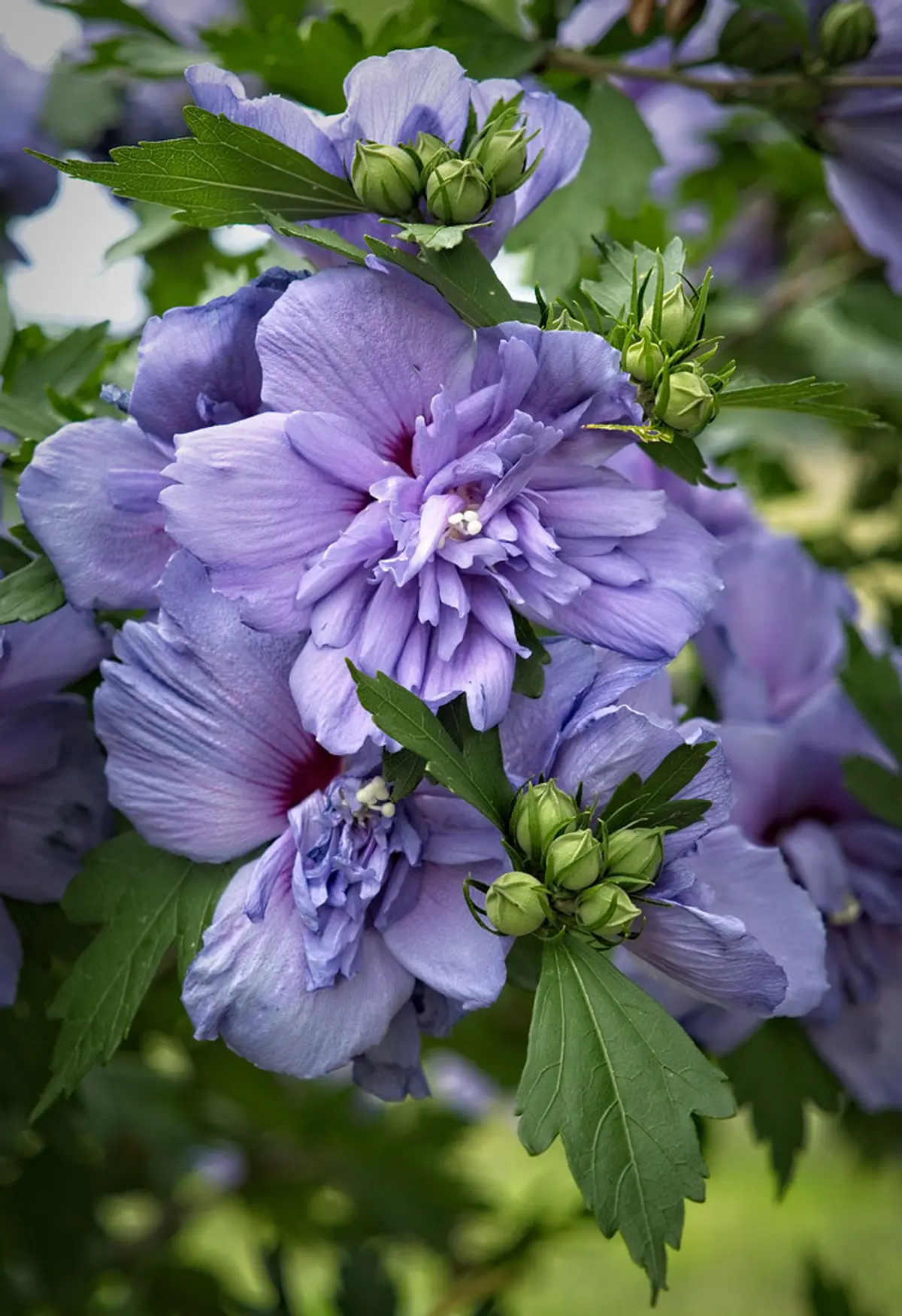
Rose of Sharon
Hibiscus syriacus 'Notwoodthree'
A deciduous shrub with large blue flowers and ruffled centers from summer into fall, sold as Blue Chiffon®.
Keep reading Show less
Rose of Sharon is a hardy, upright member of the mallow family that brings a tropical look to temperate gardens. The cultivar ‘Notwoodthree’ — sold as Blue Chiffon® — produces large, five-petaled blue flowers with a lacy center from spring into summer. Each bloom lasts a single day, but the shrub keeps producing new ones over a long season.
A summer showpiece
Despite its exotic appearance, it is tough and forgiving — heat tolerant, drought tolerant once established, and adaptable to many soils. Butterflies, bees, and hummingbirds all visit the flowers.
Care tips
Grow it in full sun to part shade. Pruning in early spring encourages larger flowers on the new growth.
Heads up: Hibiscus syriacus is reported as invasive in some U.S. states, including Virginia and Kentucky. Check local guidance before planting.
Fun Fact
Hibiscus syriacus is the national flower of South Korea, where it is called Mugunghwa.
Habitat & form
Where it's from and what to expect.
- Native range
- South-central and southeastern China
- Plant type
- Shrub · Perennial
- Mature size
- 8–12 ft tall and 6–10 ft wide.
- Bloom
- Large single blue blooms with a lacy center, 2–4 in. across, from spring into summer; modest yellow fall foliage.
- Hardiness
- USDA zones 5–9.
Care
How to keep it happy.
- Sunlight
- Full sun to partial shade.
- Water
- Best in moist, well-drained soil; tolerates everything but extreme wet or dry. Drought tolerant once established.
- Soil
- Adaptable to a wide range of pH with good drainage. Moderately salt tolerant.
- Fertilizer
- No routine fertilizer for healthy, established plants.
- Planting distance
- 6–10 ft apart as a specimen, based on mature spread (3–5 ft for a hedge).
- Propagation
- Softwood cuttings in late spring
- Pruning
- Prune in late winter or early spring; it flowers on new wood. Remove suckers and crossing stems; overgrown plants tolerate hard renewal pruning.
- Pet safety
- Non-toxic
Discourage chewing.