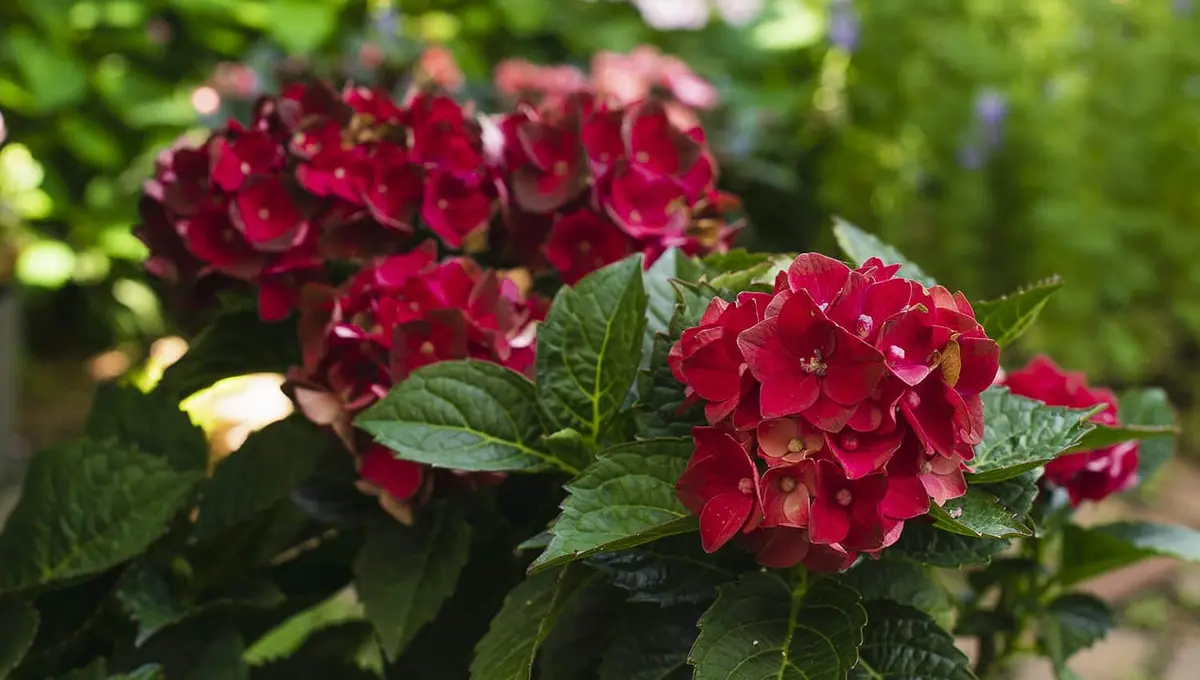
Bigleaf Hydrangea 'Heart Throb'
Hydrangea macrophylla 'Heart Throb'
A compact reblooming bigleaf hydrangea with dark cherry-red mophead blooms edged and marbled in green, then aging greener with red highlights.
Keep reading Show less
Bigleaf hydrangea ‘Heart Throb’ combines dark cherry-red flowers with a compact, rounded habit for small borders and roomy containers.
Dramatic color on a compact shrub
The rounded mopheads develop green edging and marbling as they age. Flowers form on both old and new growth, extending the summer display, and the sturdy stems work well for cutting.
Care tips
Provide rich, evenly moist, well-drained soil and afternoon shade. Prune sparingly: remove dead or weak stems in spring and shape lightly after flowering only if needed.
Fun Fact
Unlike the familiar pink-or-blue mopheads that shift with soil chemistry, 'Heart Throb' was selected for an unusually dark red flower color that keeps its drama even as the blooms age green.
Habitat & form
Where it's from and what to expect.
- Native range
- Japan, Korea, China, and Southeast Asia (species); cultivated selection
- Plant type
- Shrub · Perennial
- Mature size
- Compact, about 3 ft tall and 3 ft wide at maturity.
- Bloom
- Rounded mophead blooms open deep cherry red to wine red with green edging and marbling, then age greener with red highlights from summer into early fall.
- Hardiness
- USDA zones 5–9. In colder zone 5 gardens, a sheltered site helps protect early buds, though this reblooming cultivar can also flower on new wood.
Care
How to keep it happy.
- Sunlight
- Part sun to part shade. Give it morning sun and afternoon shade; in hotter southern gardens, protect it from harsh afternoon sun.
- Water
- Moderate but consistent. Keep the soil evenly moist, especially in summer heat — bigleaf hydrangeas wilt quickly when too dry, but resent soggy roots.
- Soil
- Rich, well-drained soil with plenty of organic matter. Like other bigleaf hydrangeas, it performs best in moisture-retentive soil that still drains well.
- Fertilizer
-
Use slow-release shrub fertilizer only when soil is nutrient-deficient.
As spring growth begins
- Planting distance
- 3–4 ft apart, based on its 3 ft mature spread.
- Propagation
- Layering or stem cuttings
- Pruning
- Usually little to none. It blooms on old and new wood, so if shaping is needed, do it lightly after the first flush; in early spring remove only winter-killed or weak stems.
- Pet safety
- Mildly toxic
Keep pets from eating leaves or flowers.