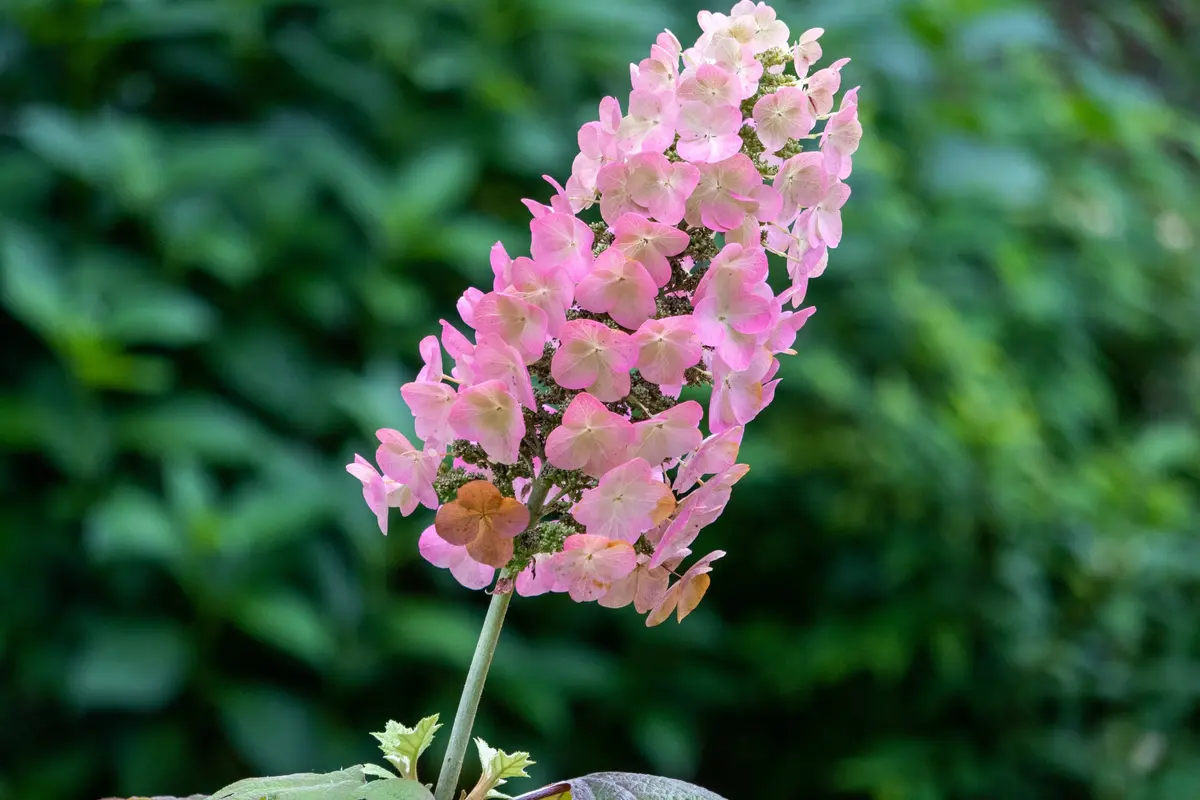
Oakleaf Hydrangea 'Alice'
Hydrangea quercifolia 'Alice'
A big, bold native shrub with oak-shaped leaves, foot-long cone-shaped flower panicles that age from white to pink, and rich maroon fall color.
Keep reading Show less
Hydrangea quercifolia ‘Alice’ is a University of Georgia selection of our native oakleaf hydrangea, grown for its oversized, cone-shaped flower panicles and bold, oak-shaped foliage. It’s a big shrub that earns its space as a specimen or informal hedge, with three seasons of interest: early-summer bloom, deep fall color, and exfoliating winter bark.
A native with presence
The deeply lobed leaves resemble oak leaves (hence the name) and can reach 8–12 inches long. In early to midsummer, dense pyramidal flower clusters open creamy white and gradually age through pink to tan, often persisting on the plant well into fall. Come autumn, the foliage turns a rich bronze-maroon to purple before dropping to reveal attractive cinnamon-colored, peeling bark for winter interest.
Care tips
Give it morning sun and afternoon shade for the best flowering without leaf scorch, and consistently moist, well-drained, organically rich soil. Because it blooms on old wood, prune only immediately after flowering — cutting in late winter or spring sacrifices that year’s blooms. Established plants are quite drought tolerant and largely trouble-free, with occasional aphids or powdery mildew being only minor issues.
Fun Fact
Oakleaf hydrangea is the only hydrangea native to North America. 'Alice' is a University of Georgia introduction prized for its extra-large flower panicles and reliably vivid maroon-purple fall foliage.
Habitat & form
Where it's from and what to expect.
- Native range
- Southeastern United States (species); cultivated selection
- Plant type
- Shrub
- Mature size
- 'Alice' is a large selection, typically 6–8 ft tall and wide, though it can reach 10–12 ft in ideal conditions.
- Bloom
- Large, cone-shaped (pyramidal) flower panicles 10–14 in long, opening creamy white in early-mid summer and aging to pink and tan by late summer.
- Hardiness
- USDA zones 5–9. Reliably hardy, but flower buds can be damaged by hard late freezes below about -10°F, so give it a sheltered spot in colder parts of its range.
Care
How to keep it happy.
- Sunlight
- Full sun to part shade. Best flowering and fullest habit with morning sun and afternoon shade; hot afternoon sun can scorch the large leaves.
- Water
- Consistent moisture, about 1 inch per week once established. Mulch to keep roots cool and even out soil moisture — avoid letting it dry out or sit soggy.
- Soil
- Organically rich, well-drained soil. Tolerates clay better than most hydrangeas once established, but performs best with added organic matter.
- Planting distance
- 6–8 ft apart, based on mature spread (allow more room if it reaches its full 10–12 ft size).
- Propagation
- Stem cuttings in summer
- Pruning
- Blooms on old wood — prune only right after flowering if shaping is needed. Pruning in late winter or spring removes the coming season's flower buds.
- Pet safety
- Mildly toxic
All parts toxic, especially flower buds and young leaves