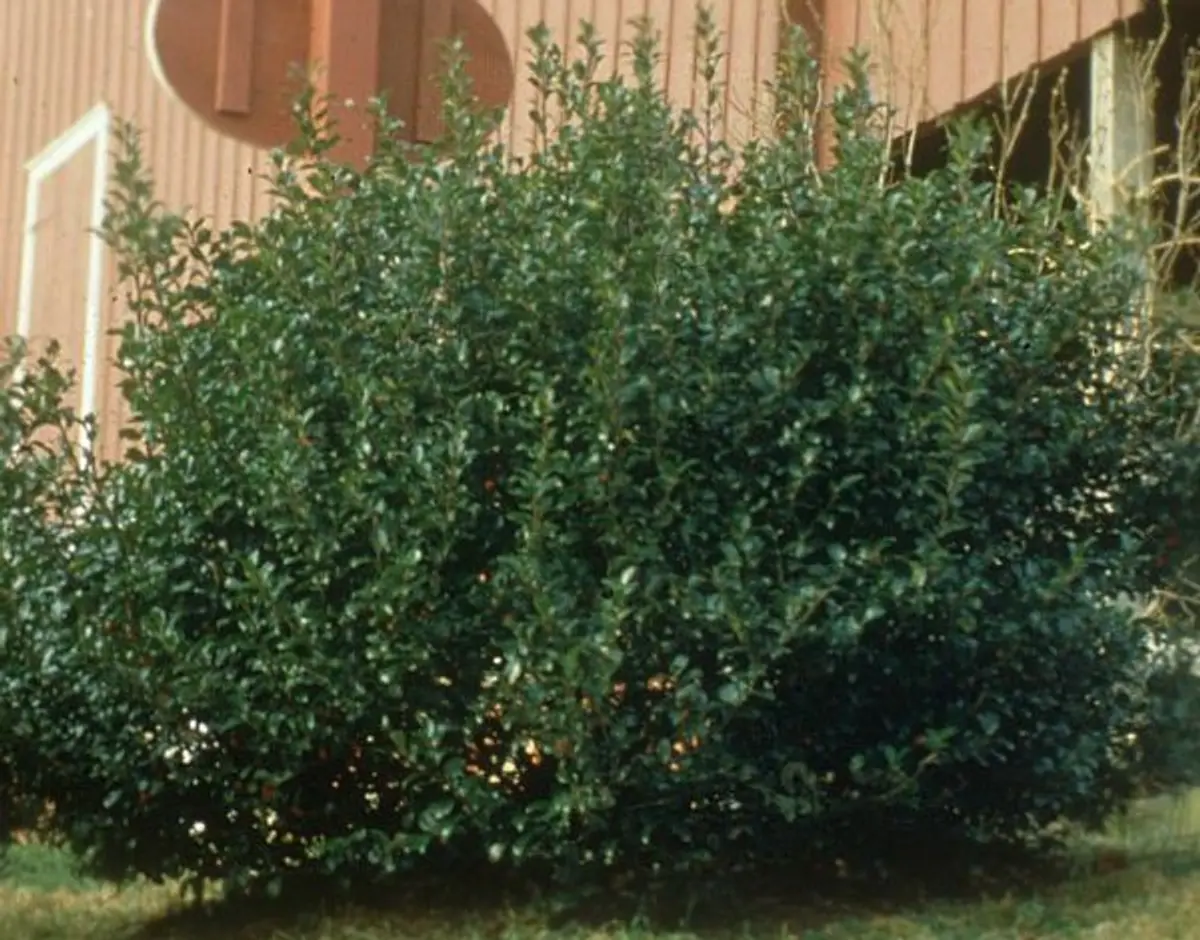
Blue Holly 'Blue Prince'
Ilex × meserveae 'Blue Prince'
A hardy, dense evergreen holly with glossy blue-green spiny leaves and purple stems; a male clone that pollinates female blue hollies.
Keep reading Show less
‘Blue Prince’ is a male Meserve (blue) holly, a dense, bushy evergreen shrub with purplish stems and dark blue-green leaves with spiny-toothed margins. It grows 8–12 ft tall and wide.
Through the seasons
The glossy evergreen foliage holds its color through winter. Tiny greenish-white flowers appear in April–May; they are not showy, but they produce abundant pollen over a long period, making ‘Blue Prince’ an excellent pollinator for female blue hollies such as ‘Blue Princess’. Being male, it produces no berries itself.
Care tips
Grow in average, slightly acidic, moist, well-drained soil in full sun to part shade, in a spot protected from cold winter winds. Plant one male for every three to five females if you want berries. Potential problems include holly leaf miner, spider mites, scale and leaf spot.
Care sources: Missouri Botanical Garden, NC State Extension.
Pet-safety source: Pet Poison Helpline.
Fun Fact
Meserve hollies were bred by Kathleen K. Meserve of St. James, New York, who crossed English holly with the cold-hardy Tsuru holly to make an English-style holly that could survive harsh Northeastern winters.
Habitat & form
Where it's from and what to expect.
- Native range
- Garden hybrid of English holly (Ilex aquifolium) and Tsuru holly (I. rugosa), bred in New York in the 1950s
- Plant type
- Shrub · Perennial
- Mature size
- 8–12 ft tall and 8–12 ft wide.
- Bloom
- Tiny greenish-white flowers in April–May, inconspicuous but pollen-rich. 'Blue Prince' is male and will not set berries.
- Hardiness
- USDA zones 4–7; may need a sheltered site and winter protection in zone 5.
Care
How to keep it happy.
- Sunlight
- Full sun to part shade; afternoon shade is best in hot summer climates.
- Water
- Medium moisture; keep evenly moist, especially while establishing.
- Soil
- Average, slightly acidic, moist, well-drained soil.
- Fertilizer
-
Use Espoma Holly-tone only when soil is nutrient-deficient.
Late winter to early spring
- Planting distance
- 4–6 ft apart as a hedge; plant one male for every 3–5 female hollies.
- Propagation
- Take semi-hardwood cuttings in summer.
- Pruning
- Responds well to shearing and shaping; prune in late winter to early spring before new growth.
- Pet safety
- Mildly toxic
Keep pets from chewing the spiny leaves; this male cultivar has no berries.