Japanese Holly
Ilex crenata
- Evergreen
- Pollinator friendly
- Hedging
- Shade tolerant
- Low maintenance
A dense, fine-textured evergreen shrub with small glossy leaves and black berries — an easygoing, shearable boxwood alternative for hedges and foundation plantings.
Keep reading Show less
Ilex crenata — Japanese holly — is a small-leaved evergreen shrub from eastern Asia that looks far more like boxwood than a traditional spiny holly. Its dense, fine-textured foliage and willingness to be clipped make it a favorite for hedges, edging, foundation plantings, and topiary.
A boxwood look without the spines
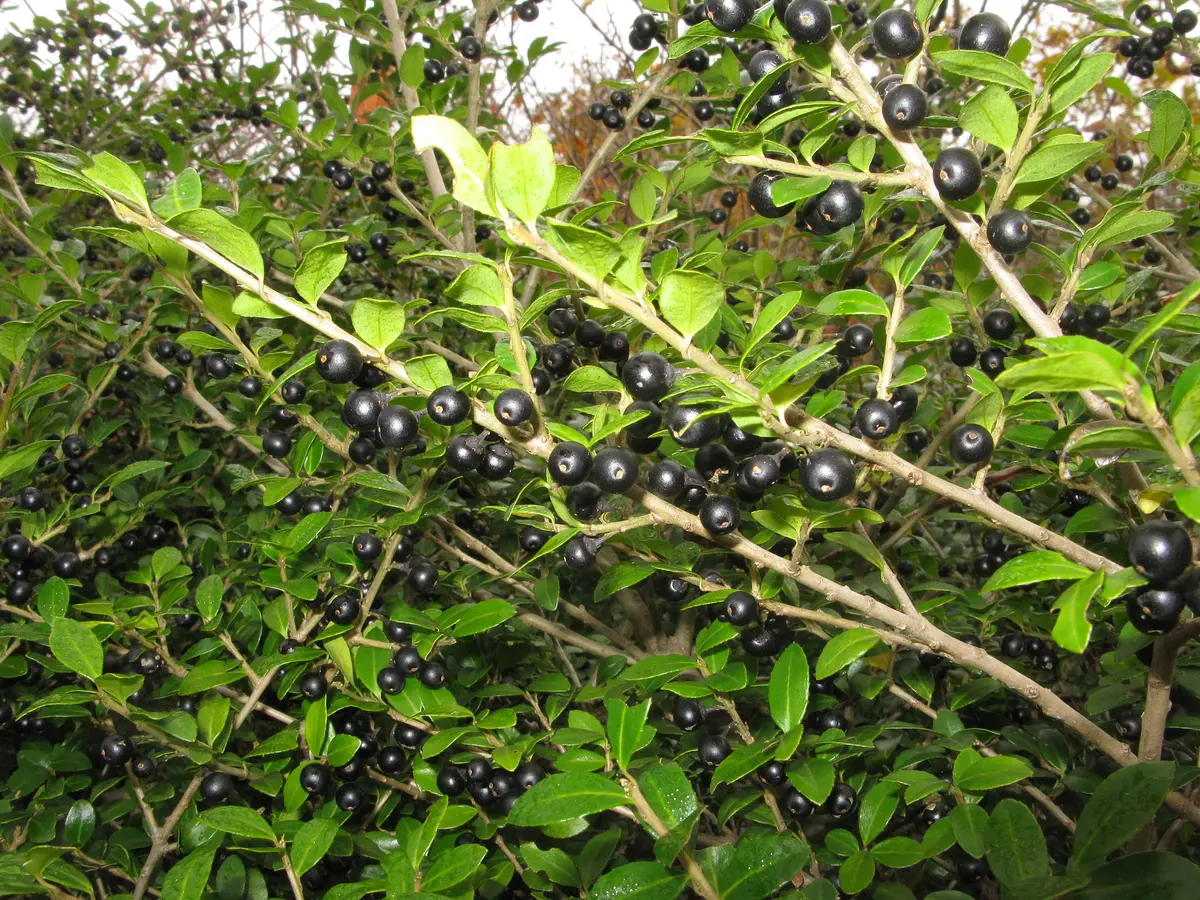
Unlike the prickly American and English hollies, Ilex crenata has small, smooth, glossy leaves and a tidy, twiggy habit. Tiny white flowers appear in late spring; on female plants these give way to small, shiny black berries that nestle among the leaves. It is widely planted as a boxwood substitute, particularly where boxwood blight is a concern.
Care tips
Plant it in moist, well-drained, slightly acidic soil and keep it watered while it establishes — it dislikes both drought and waterlogging, and yellows in strongly alkaline ground. It takes full sun to part shade and responds well to shearing, so trim it to shape in early summer after the flowers fade. An occasional feed and a layer of mulch keep it dense and healthy.
Fun Fact
Japanese holly looks so much like Boxwood (Buxus) that it's widely used as a drop-in substitute — especially as Boxwood blight has become a growing concern. An easy way to tell them apart: Japanese Holly produces small, jet-black berries; Boxwood has none.
Habitat & form
Where it's from and what to expect.
- Native range
- Eastern Asia — Japan, Korea, eastern China, and the Russian Far East
- Plant type
- Shrub
- Mature size
- Typically 3–8 ft tall and wide depending on cultivar; takes hard shearing to any size.
- Bloom
- Inconspicuous small white flowers in late spring; female plants follow with small shiny black berries.
- Hardiness
- USDA zones 5–8.
Care
How to keep it happy.
- Sunlight
- Full sun to part shade; denser growth in more sun.
- Water
- Keep evenly moist, especially while establishing; mulch to conserve moisture and avoid drying out.
- Soil
- Moist, well-drained, slightly acidic soil; dislikes heavy, soggy, or strongly alkaline ground.
- Pruning
- Maintenance: low to moderate. Shears beautifully into hedges and topiary; trim in early summer after flowering.