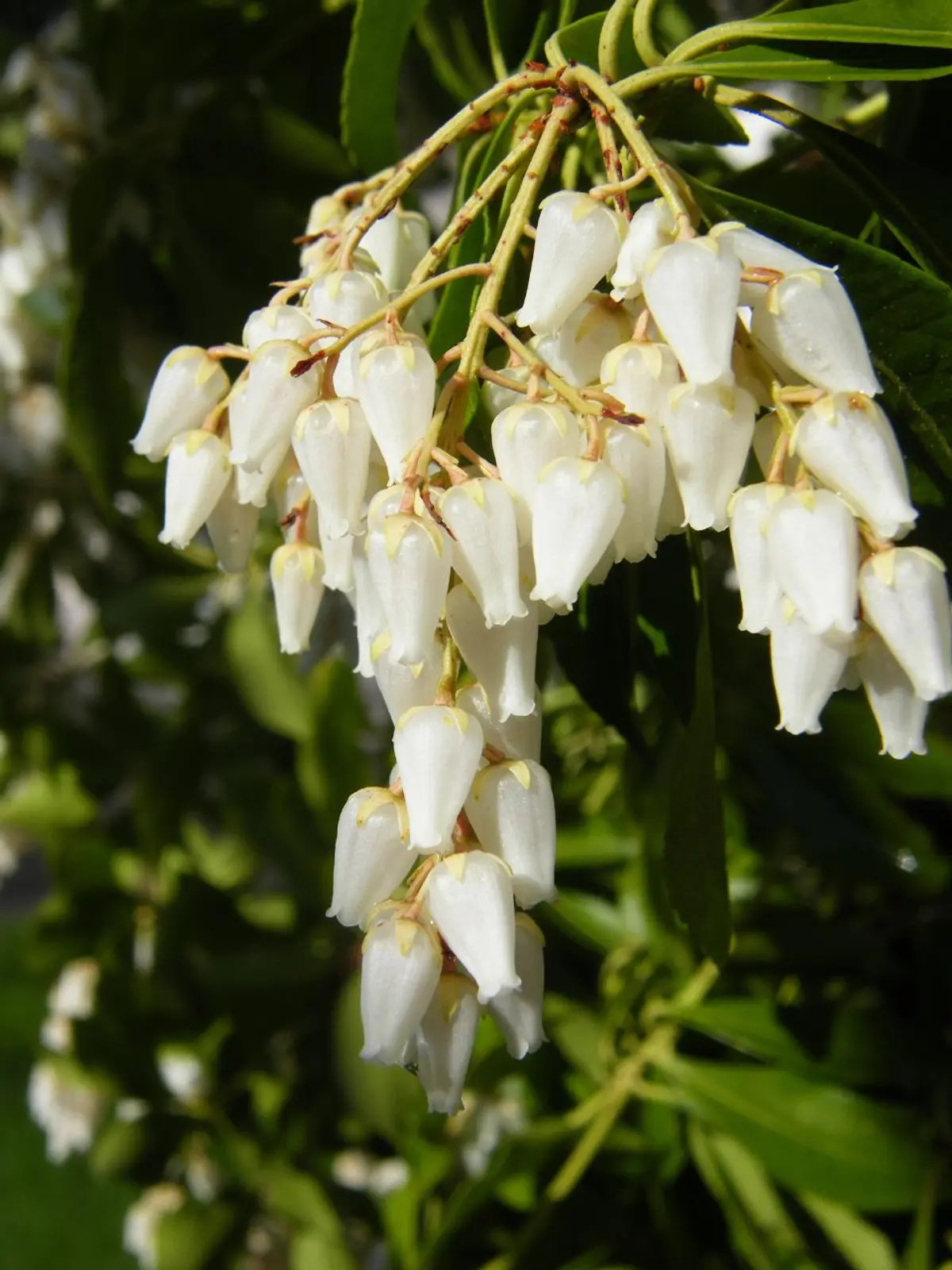
Japanese Pieris
Pieris japonica
- Broadleaf evergreen
- Spring bloom
- Fragrant flowers
- Deer resistant
- Specimen
A broadleaf evergreen shrub prized for coppery-red new growth and drooping chains of fragrant, white urn-shaped flowers in spring.
Keep reading Show less
Pieris japonica — Japanese pieris, also called Japanese andromeda or lily-of-the-valley shrub — is a slow-growing broadleaf evergreen in the heath family (Ericaceae). Native to the mountain thickets of southeast China, Japan, and Taiwan, it forms an upright, rounded, densely branched shrub with year-round interest.
Through the seasons
Its showy flower buds form in late summer and decorate the branch tips through fall and winter, then open in spring into drooping 3–6 inch chains of waxy, white, urn-shaped flowers reminiscent of lily-of-the-valley. New foliage emerges a glossy bronze-red before maturing to leathery dark green, and the leaves stay on the plant all year.
Care tips
Plant it in moist, well-drained, acidic soil enriched with organic matter, in a spot with morning sun and some afternoon shade. Shelter it from harsh winter wind, keep it watered through dry spells, and prune only just after flowering so you don’t sacrifice next spring’s buds.
Heads up: all parts of Pieris japonica are highly poisonous if eaten — keep it away from curious children and pets.
Habitat & form
Where it's from and what to expect.
- Native range
- Southeast China, central to southern Japan, and Taiwan
- Plant type
- Shrub
- Mature size
- Slowly matures to 8–10 ft tall and 6–8 ft wide; dwarf cultivars stay much smaller.
- Bloom
- Drooping 3–6 in. chains of fragrant, white urn-shaped flowers in spring; showy flower buds form the summer before and decorate the shrub through fall and winter.
- Hardiness
- USDA zones 4b–8b.
Care
How to keep it happy.
- Sunlight
- Full sun to partial shade — give it some afternoon shade in hot, southern gardens, and shelter it from drying winter winds.
- Water
- Keep the soil consistently moist, especially while establishing; it dislikes drying out. Mulch to conserve moisture.
- Soil
- Moist but well-drained soil rich in organic matter, with an acidic pH below 6.0.
- Pruning
- Maintenance: low. Deadhead spent flower clusters and lightly shape right after blooming — it flowers on old wood, so pruning later removes next spring's buds.