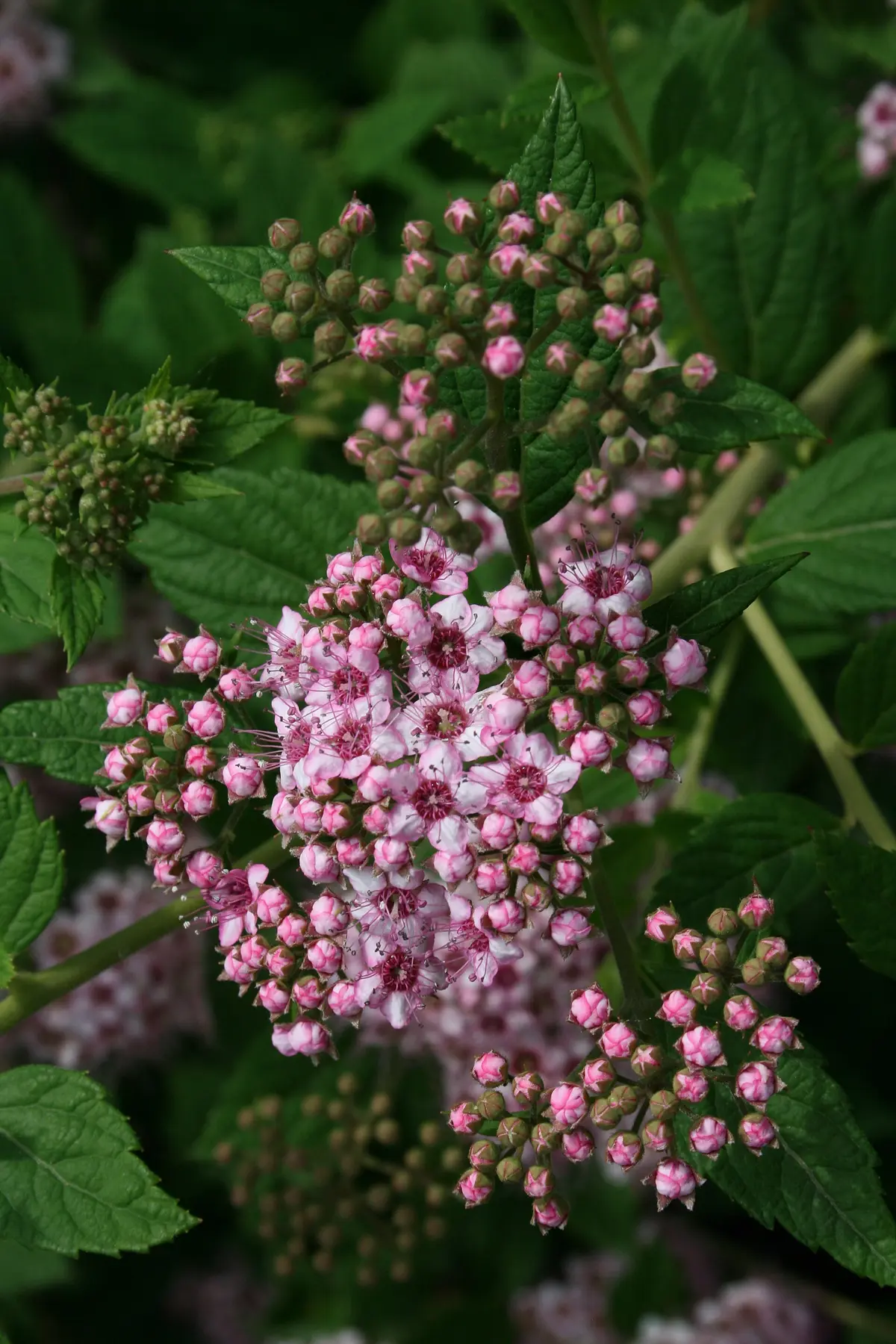
Japanese Spiraea
Spiraea japonica
- Summer bloom
- Pollinator friendly
- Cold hardy
- Low maintenance
- Compact shrub
A tough, compact deciduous shrub smothered in flat-topped clusters of rosy-pink flowers through summer, beloved by butterflies and easy to grow almost anywhere.
Keep reading Show less
Spiraea japonica — Japanese spiraea — is a small, deciduous, mounding shrub from eastern Asia that has long been a garden mainstay for its toughness and its long summer show of pink flowers. It asks almost nothing of the gardener and rewards with months of bloom that hum with bees and butterflies.
A long summer of pink
From early summer onward, the rounded mound is topped with flat clusters of tiny rosy-pink flowers. Trimming the faded heads not only tidies the plant but often coaxes a fresh round of bloom into late summer. Many named forms add bright chartreuse or coppery new foliage to the mix, but the species itself is grown simply for its dependable color and easygoing nature.
Care tips
Give it full sun for the best flowering and almost any soil that drains. It is remarkably forgiving of clay, drought once established, and hard pruning — a late-winter cutback keeps it compact and floriferous. Note that in parts of North America Spiraea japonica can self-seed and spread, so it is best kept deadheaded and sited where stray seedlings are easy to manage.
Fun Fact
Despite being widely planted for its long bloom season, Japanese spiraea is listed as invasive in many U.S. states. It spreads readily from gardens into natural areas and can crowd out native wildflowers along stream banks and forest edges.
Habitat & form
Where it's from and what to expect.
- Native range
- Eastern Asia — Japan, Korea, and China
- Plant type
- Shrub
- Mature size
- 2–4 ft tall and wide, forming a tidy, rounded mound.
- Bloom
- Flat to slightly domed clusters of tiny rosy-pink (sometimes white) flowers from early to late summer; shearing spent blooms encourages a second flush.
- Hardiness
- Very adaptable — USDA zones 4–8.
Care
How to keep it happy.
- Sunlight
- Full sun for the heaviest flowering; tolerates light shade with fewer blooms.
- Water
- Average moisture; water during dry spells, but established plants tolerate short droughts well.
- Soil
- Adaptable to most soils as long as they drain reasonably; tolerates clay and a wide pH range.
- Pruning
- Maintenance: low. Cut back hard in late winter or early spring to keep it dense; deadhead in summer to prolong bloom.