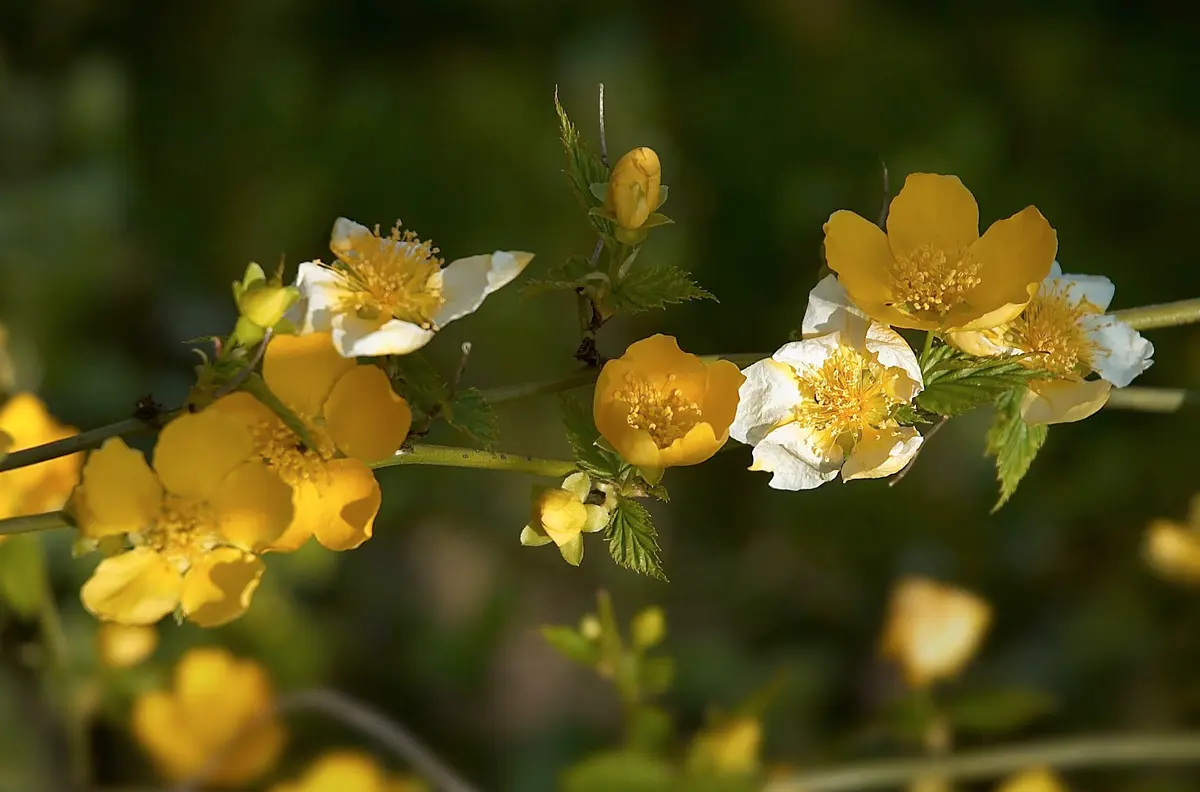
Japanese Rose
Kerria japonica
A tough, shade-loving deciduous shrub with bright yellow spring flowers along graceful green stems that stay colorful all winter.
Keep reading Show less
Kerria japonica — Japanese rose or Easter rose — is a graceful deciduous shrub from China and Japan, prized for its arching green stems and cheerful yellow spring flowers. It is one of the few shrubs happy to bloom well in shade, making it a reliable choice for the tricky spots other flowering shrubs skip.
Spring gold in the shade
In mid-spring, slender arching canes are lined with bright yellow, rose-like flowers about an inch or two across. Named cultivars offer double “pompon” blooms or variegated foliage, but the straight species is prized for its simplicity and its willingness to flower in partial to full shade where most other flowering shrubs sulk.
Care tips
Plant it in loamy, well-drained soil and give it shade from the hottest afternoon sun, which otherwise bleaches the flowers. It is drought tolerant once established and largely trouble-free, but it does sucker and spread over time — plan to prune out old canes and unwanted suckers right after flowering, since next year’s blooms form on this year’s wood. Even without leaves, the bright green stems add welcome color to the winter garden.
Fun Fact
Even bare in winter, Japanese rose earns its keep — its slender stems stay bright green year-round, giving the garden a jolt of color long after the yellow spring flowers are gone.
Habitat & form
Where it's from and what to expect.
- Native range
- China and Japan
- Plant type
- Shrub
- Mature size
- 3–7 ft tall, spreading 6–10 ft or more by suckering; some cultivars reach 8–10 ft.
- Bloom
- Bright yellow, 1–2 in. flowers in mid-spring, with occasional sporadic rebloom in summer.
- Hardiness
- USDA zones 4–9, hardy to roughly -30°F.
Care
How to keep it happy.
- Sunlight
- Partial to full shade; flowers fade quickly in strong afternoon sun.
- Water
- Medium moisture while establishing; drought tolerant once settled in. Avoid soggy, poorly drained soil.
- Soil
- Loamy, well-drained soil of moderate fertility; tolerates sand or clay if drainage is decent. Slightly acidic to neutral pH.
- Planting distance
- 6–8 ft apart, based on mature spread (it suckers freely, so allow room to spread or plan to control it).
- Propagation
- Softwood cuttings in early summer
- Pruning
- Maintenance: low. Prune right after flowering — it blooms on old wood. Remove old or leggy canes at ground level and pull suckers to control spread.
- Pet safety
- Non-toxic