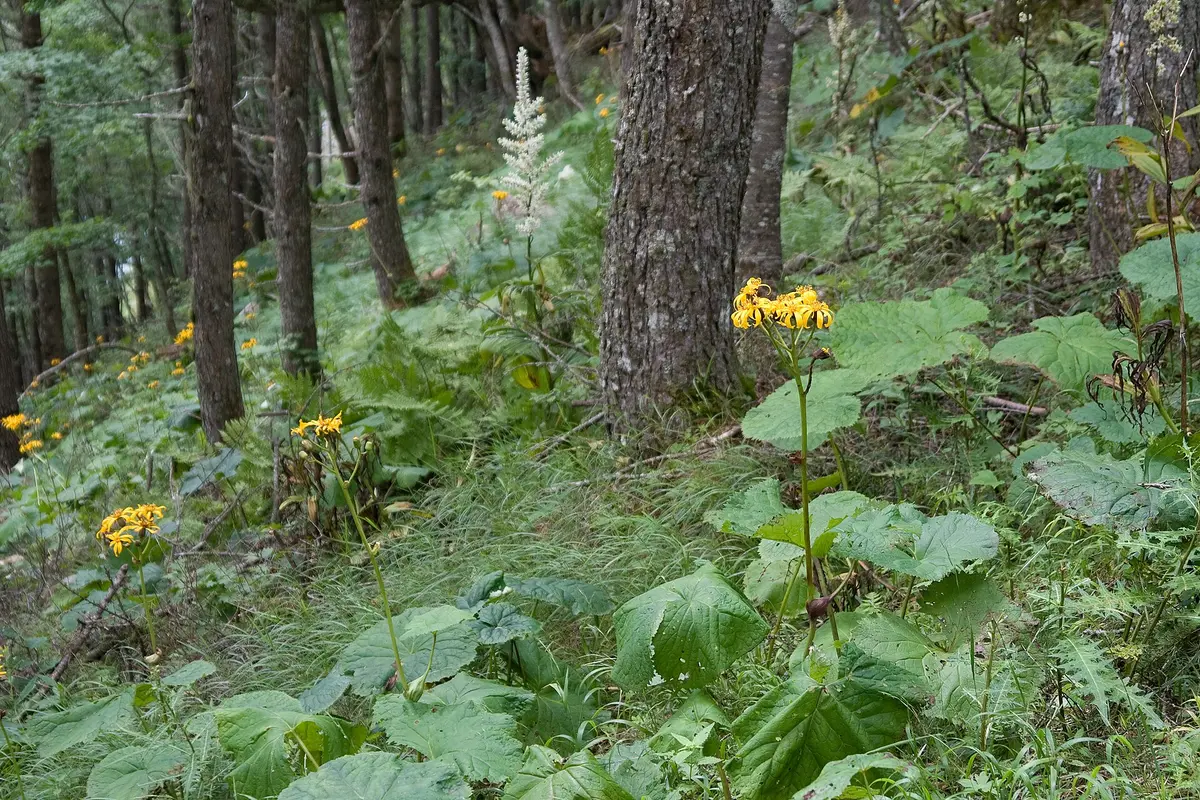
Leopard Plant 'Othello'
Ligularia dentata 'Othello'
A moisture-loving shade perennial with dramatic dark-backed leaves and yellow-orange daisy flowers on tall stems in midsummer.
Keep reading Show less
Ligularia dentata ‘Othello’ is a bold-leaved perennial from China and Japan. It forms a broad clump of rounded leaves, with reddish-purple undersides, veins, and stems that make a striking contrast in a shady, moisture-rich garden.
Foliage and flowers
New foliage emerges purplish red and matures to brownish green above with purple undersides. In July and August, tall stems carry loose clusters of yellow-orange, daisy-like flowers above the leaves.
Care tips
Give ‘Othello’ humusy soil that stays moist to wet and a sheltered spot in part to full shade. It wilts in hot sun and can suffer if the soil dries out, so water deeply during hot or dry spells. Remove spent flower stalks and cut back old foliage after frost.
Sources: Missouri Botanical Garden, RHS, species toxicology study.
Fun Fact
'Othello' is grown for its foliage as much as its flowers: new leaves emerge purplish red, then mature to brownish green above and purple beneath.
Habitat & form
Where it's from and what to expect.
- Native range
- China and Japan (species)
- Plant type
- Perennial
- Mature size
- 2–3 ft tall and 1.5–2.5 ft wide.
- Bloom
- Yellow-orange daisy-like flowers bloom in July and August above the foliage.
- Hardiness
- USDA zones 3–8.
Care
How to keep it happy.
- Sunlight
- Part shade to full shade; afternoon shade is important in hot climates.
- Water
- Medium to wet; keep the soil consistently moist and water deeply in hot weather.
- Soil
- Humusy, organically rich soil that never dries out.
- Planting distance
- 18–30 in. apart, based on mature spread.
- Propagation
- Divide established clumps in spring or after flowering to preserve the cultivar.
- Pruning
- Remove spent flower stalks and cut back old foliage after frost.
- Pet safety
- Potentially toxic
Keep pets from chewing.