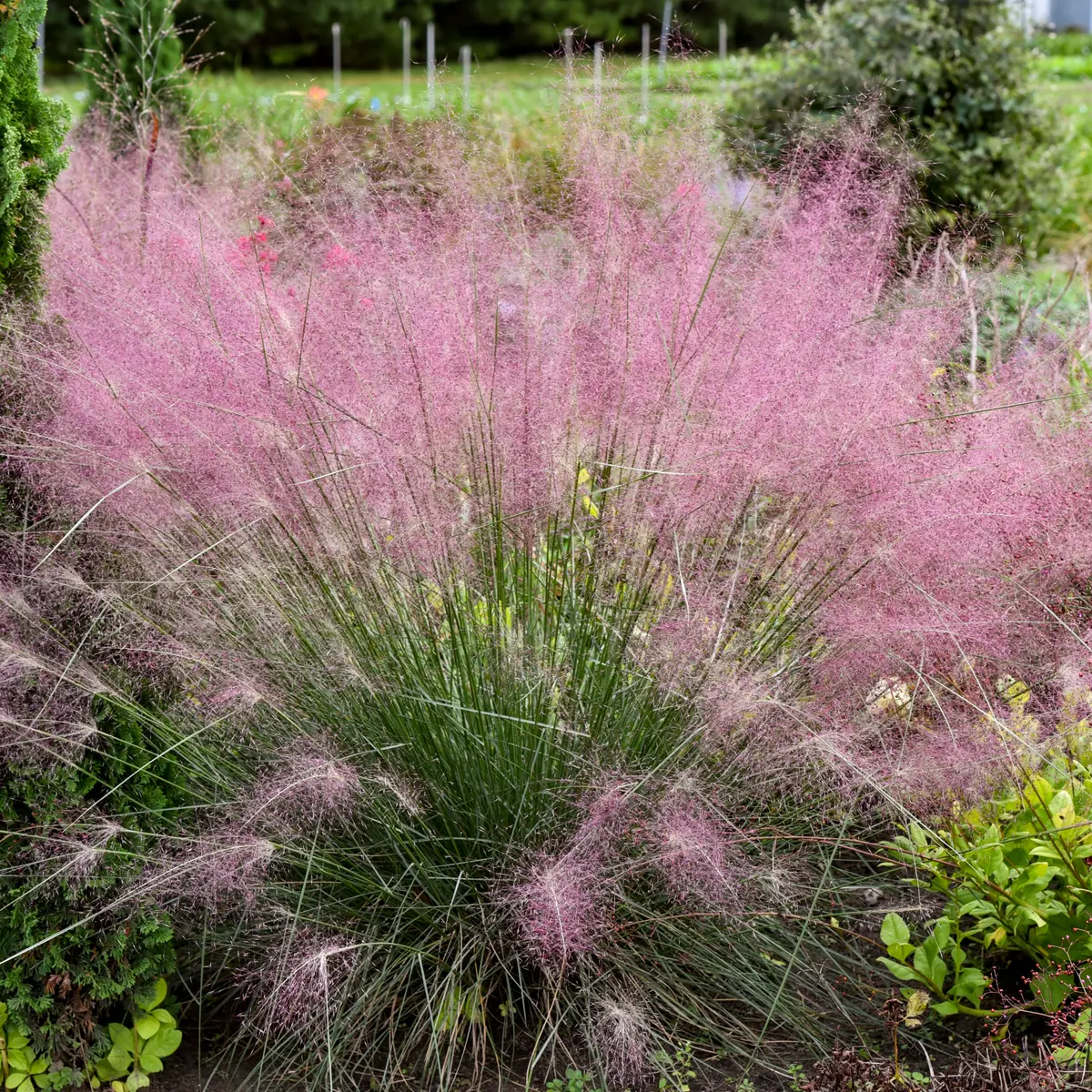
Pink Muhly Grass 'Undaunted'
Muhlenbergia reverchonii 'Undaunted'
A compact native muhly grass that erupts into airy ruby-pink fall plumes above a fine-textured clump of dark green blades.
Keep reading Show less
Muhlenbergia reverchonii ‘Undaunted’ is a selected form of seep muhly, a warm-season bunchgrass native to rocky ground in Oklahoma and Texas. It forms a dark green, fine-textured fountain of narrow leaves, then steals the show in late summer and fall when the entire plant softens into a hazy pink cloud of flowers.
This cultivar is prized because it combines the airy beauty gardeners love in muhly grasses with better cold hardiness than many other pink-flowering species. The plumes open rosy pink to ruby pink, then fade to tawny tones that still look beautiful through winter. Plant it where low autumn light can backlight the bloom for the full smoky, glowing effect.
Give ‘Undaunted’ full sun and excellent drainage, especially in winter. Lean, rocky, or sandy soil suits it just fine, and once rooted in it is very drought tolerant. Heavy, soggy soil is the real enemy. Leave the clump standing through winter for texture, then shear it down just before spring growth starts again.
Fun Fact
'Undaunted' was selected from 'Autumn Embers' for better cold hardiness, which is why it succeeds farther north than many other pink muhly grasses.
Habitat & form
Where it's from and what to expect.
- Native range
- Central Oklahoma to central Texas (southern Great Plains)
- Plant type
- Perennial · Ornamental grass
- Mature size
- Roughly 1.5–2.5 ft tall and 2–4 ft wide.
- Bloom
- Airy pink to ruby-pink plumes from late summer through fall, aging tawny for winter.
- Hardiness
- USDA zones 5–9.
Care
How to keep it happy.
- Sunlight
- Full sun for the best plume show; light part sun is acceptable.
- Water
- Dry to medium moisture; drought tolerant once established, though regular water can make it a bit larger.
- Soil
- Sandy, rocky, or otherwise sharply drained soil is ideal; tolerates poor soil but dislikes winter-wet ground.
- Fertilizer
- No routine fertilizer for healthy, established plants.
- Planting distance
- 24–48 in apart, based on mature spread and how quickly you want clumps to knit together.
- Propagation
- Divide clumps in spring.
- Pruning
- Leave the tan plumes standing for winter interest, then cut the clump back close to the ground in late winter or early spring before new growth begins.
- Pet safety
- Unknown
Prevent chewing.