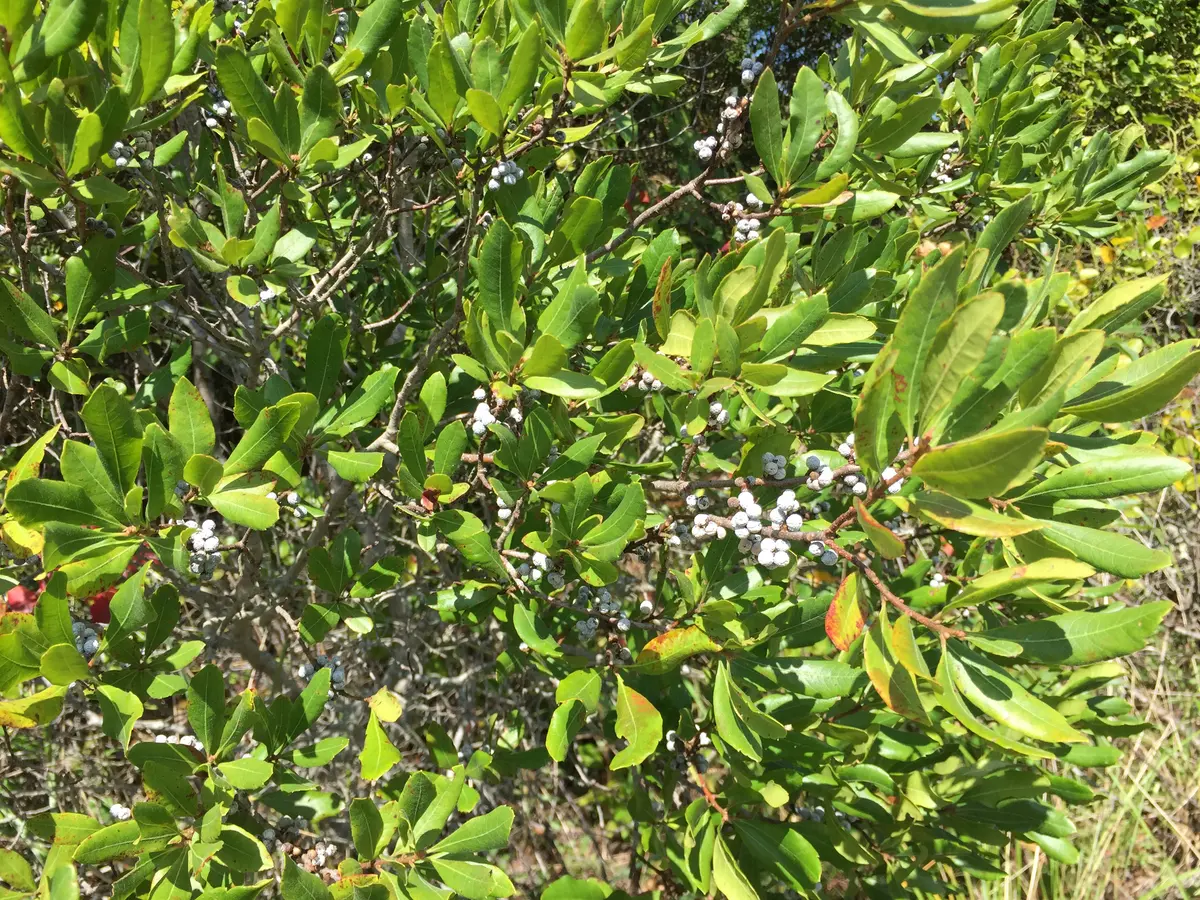
Northern Bayberry
Morella pensylvanica
A rugged, salt- and drought-tolerant native shrub with aromatic leaves and clusters of waxy, silvery-gray berries prized for candle-making.
Keep reading Show less
Northern bayberry is a dense, rounded, deciduous-to-semi-evergreen shrub native to sand dunes, coastal thickets, and woodland edges from Newfoundland south to North Carolina. It’s an exceptionally tough, low-fuss shrub — the kind of plant that thrives on neglect in the very conditions (poor sand, salt spray, wind) that would stress most garden shrubs.
Through the seasons
The grayish-green to dark green leaves are leathery and aromatic, releasing a spicy, bay-like scent when crushed. Male and female flowers appear on separate plants as small, non-showy yellowish-green catkins in spring — you need at least one male nearby for the females to set fruit. By late summer, pollinated female plants are studded with small, waxy, silvery-gray berries that persist on the bare branches well into the following spring, making this a valuable winter food source for birds.
Care tips
Bayberry is remarkably adaptable: it tolerates drought, wet spots, poor and sandy soils, road salt, and coastal winds, and it even fixes its own nitrogen through a symbiotic relationship with soil bacteria. It suckers readily to form informal colonies, which makes it a great choice for hedges, screens, mass plantings, or erosion control on a slope — just give it room to spread, or plan to remove unwanted suckers occasionally.
Heads up: This shrub is dioecious — male and female flowers grow on separate plants. If berries (and the classic bayberry-candle wax) are the goal, plant at least one male for every few females.
Fun Fact
The waxy coating on its berries is what gives real bayberry candles their name and scent — colonists once boiled the fruit to skim off the fragrant wax.
Habitat & form
Where it's from and what to expect.
- Native range
- Eastern North America, from Newfoundland to North Carolina
- Plant type
- Shrub
- Mature size
- 6–10 ft tall and wide, spreading by suckers to form colonies.
- Bloom
- Inconspicuous yellowish-green catkins in spring; female plants produce small, waxy, grayish-white berries in late summer that persist into winter.
- Hardiness
- USDA zones 3–7.
Care
How to keep it happy.
- Sunlight
- Full sun to part shade — more fruit forms with more sun.
- Water
- Drought tolerant once established; also tolerates occasional wet sites.
- Soil
- Adaptable to poor, sandy, or acidic soils; avoid alkaline sites, which can cause yellowing.
- Planting distance
- 5–8 ft apart for a hedge or mass planting.
- Propagation
- By seed, or by digging rooted suckers/root cuttings in fall or spring.
- Pruning
- Needs little pruning. Since fruit and next year's flowers form on old wood, prune right after flowering if shaping is needed, and remove unwanted suckers any time to control spread.
- Pet safety
- Non-toxic