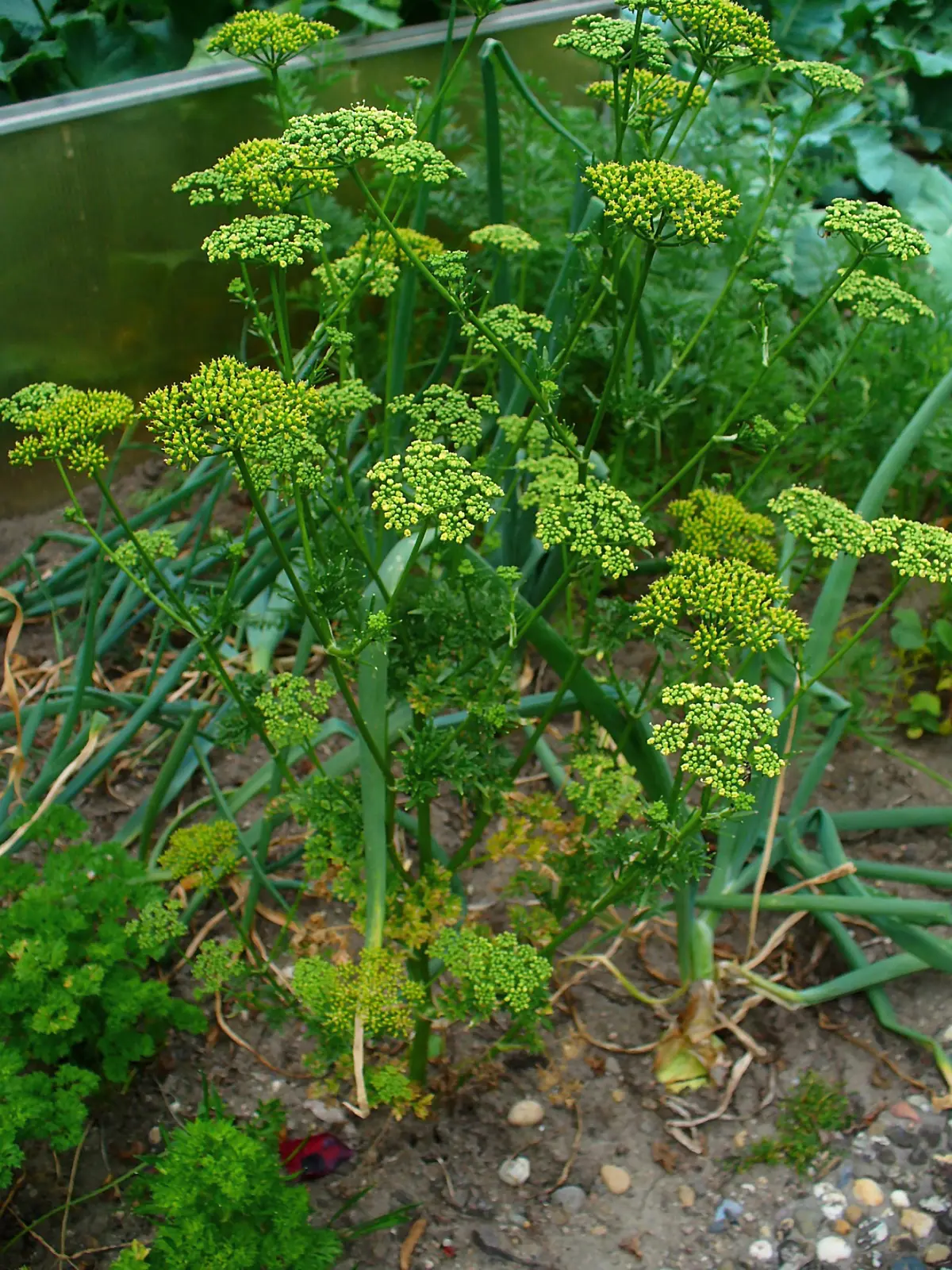
Parsley
Petroselinum crispum
A Mediterranean culinary herb grown worldwide as a biennial — fresh, bright, and indispensable in the kitchen, and an important host plant for black swallowtail butterflies.
Keep reading Show less
Parsley (Petroselinum crispum) is a biennial herb native to the Mediterranean, grown worldwide both as a culinary staple and an ornamental edging plant. It forms a neat rosette of bright green, deeply divided leaves in its first year, and sends up tall flower stalks in the second. Plants prefer cool weather and perform best in spring and fall; in hot climates afternoon shade helps delay bolting.
Sow seeds directly outdoors 3–4 weeks before the last frost, or start indoors 6–8 weeks earlier. Germination is notoriously slow — up to 3–4 weeks — and soaking seeds overnight speeds things up considerably. Because parsley is a biennial, plants allowed to overwinter will flower in their second year, after which leaf quality declines. Most gardeners treat it as an annual and replant each spring. Harvest by snipping the oldest outer stems at the base to encourage continuous new growth from the center. Parsley is also an important host plant for black swallowtail butterfly caterpillars, and its second-year flowers attract beneficial insects to the garden.
Fun Fact
The genus name Petroselinum comes from the Greek 'petros' (rock) and 'selinon' (celery), as the plant was found growing wild on rocky Greek hillsides. Ancient Greeks used parsley not as food but as a ceremonial plant — adorning tombs and victory wreaths — and the phrase 'needing only parsley' meant someone was at death's door. It was the Romans who introduced it as a culinary herb across their empire.
Habitat & form
Where it's from and what to expect.
- Native range
- Mediterranean region, southern Europe
- Plant type
- Biennial
- Mature size
- 8–12 in tall in first year; up to 2–3 ft with flower stalks in second year
- Bloom
- Greenish-yellow compound umbels appear in summer of the second year. Flowers attract beneficial insects including hoverflies and parasitic wasps.
- Hardiness
- Zones 5–9 (biennial, overwinters); grown as an annual in colder zones
Care
How to keep it happy.
- Sunlight
- Full sun to partial shade (6–8 hours; benefits from afternoon shade in hot climates).
- Water
- Average to moderate; keep soil consistently moist but not waterlogged. Mulch around plants to retain moisture and suppress weeds. Water at the base to reduce fungal disease.
- Soil
- Fertile, moist, well-drained; slightly acidic to neutral pH (6.0–7.0). Rich loamy soil produces the best leaf quality. Soaking seeds overnight before sowing speeds germination, which can take 2–4 weeks.
- Planting distance
- 6–8 in apart.
- Propagation
- Readily grown from seed
- Pruning
- Harvest outer stems at the base to encourage new growth from the center. Remove flower stalks promptly as they appear to prolong the leaf harvest — leaf quality declines once flowering begins.
- Pet safety
- Mildly toxic
Seeds/oil highest concern; small culinary amounts generally low-risk