Weeping Blue Spruce
Picea pungens 'Pendula'
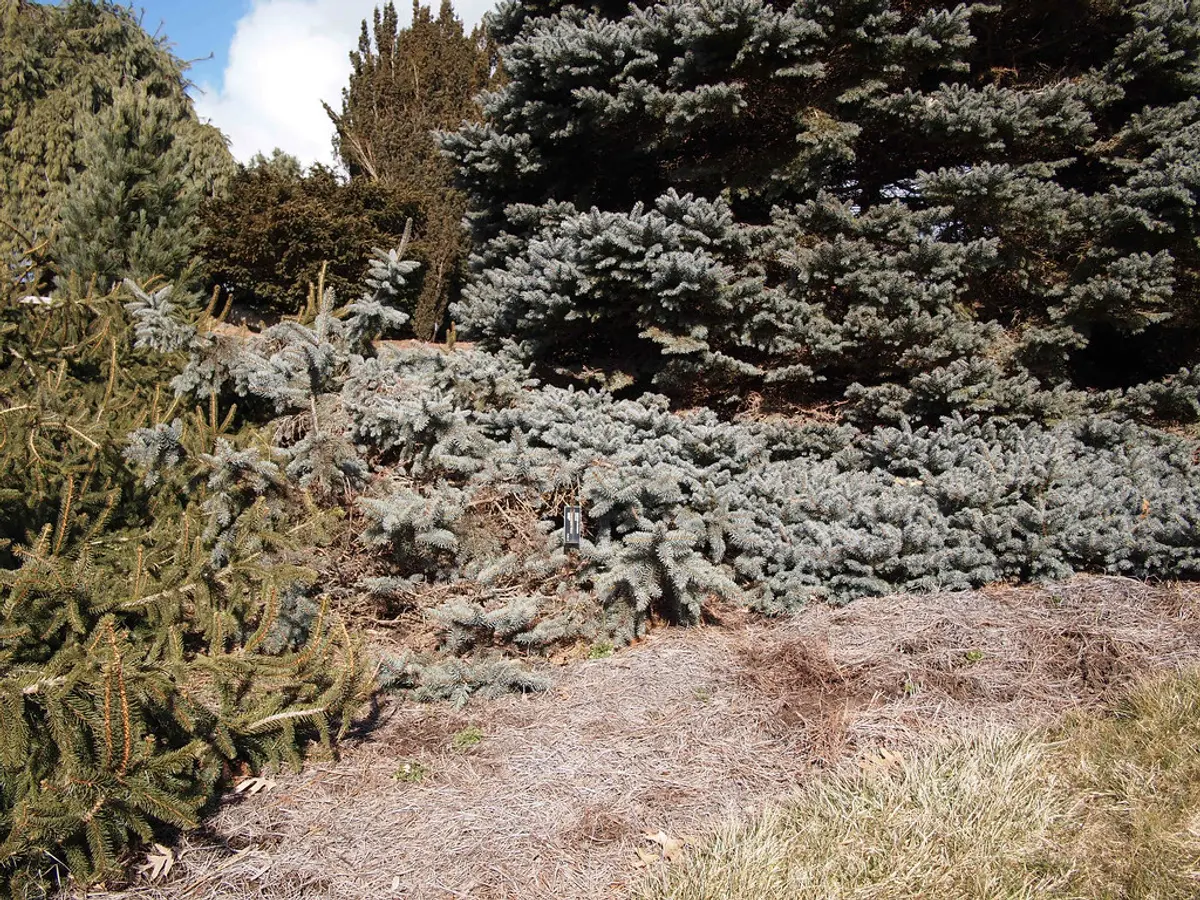
A weeping blue spruce with cascading branches, grown upright with staking or left low and sprawling.
Keep reading Show less
Picea pungens ‘Pendula’ — the weeping blue spruce — is a striking, sculptural form of the Colorado blue spruce whose branches cascade and drape downward. No two specimens look quite alike: trained up a stake it becomes a tall, narrow column of silvery-blue weeping branches, while left to its own devices it can sprawl into a low, ground-hugging mound.
A living sculpture
The icy blue needles carry the same waxy bloom as the species, and the pendulous branches give every plant a one-of-a-kind silhouette. Because its eventual size and shape depend almost entirely on how the central leader is staked and trained, it is a favorite for gardeners who want a dramatic focal point with personality.
Care tips
Plant it in full sun in well-drained soil and decide early how you want it to grow: stake the leader upright for a narrow weeping spire, or let it ramble for a sprawling form. It is exceptionally cold-hardy and drought-tolerant once established, but will not tolerate soggy roots. Prune only to guide its form and to remove any damaged branches.
Fun Fact
Staking the central leader determines its height; without support, it grows as a sprawling groundcover.
Habitat & form
Where it's from and what to expect.
- Native range
- Garden cultivar of the species native to the Rocky Mountains, western North America
- Plant type
- Tree · Shrub · Perennial · Conifer
- Mature size
- Highly variable depending on staking — staked forms typically reach 6–10 ft tall; unstaked forms trail to 1–2 ft tall by 6–10 ft wide.
- Bloom
- None — grown for its evergreen silvery-blue needles and weeping form rather than flowers.
- Hardiness
- Very cold-hardy — USDA zones 2–8.
Care
How to keep it happy.
- Sunlight
- Full sun for the best blue color and healthiest growth.
- Water
- Water regularly while establishing; mature trees are drought-tolerant but dislike waterlogged soil.
- Soil
- Well-drained soil of most types; tolerates a range of pH but resents standing water.
- Fertilizer
- No routine fertilizer for healthy, established plants.
- Planting distance
- 6–10 ft apart, based on mature spread.
- Propagation
- Graft onto spruce rootstock in late winter or early spring to preserve its weeping form.
- Pruning
- Maintenance: low. Stake a leader to set the height, then prune only to guide form and remove damaged growth in spring.
- Pet safety
- Unknown
Prevent chewing.