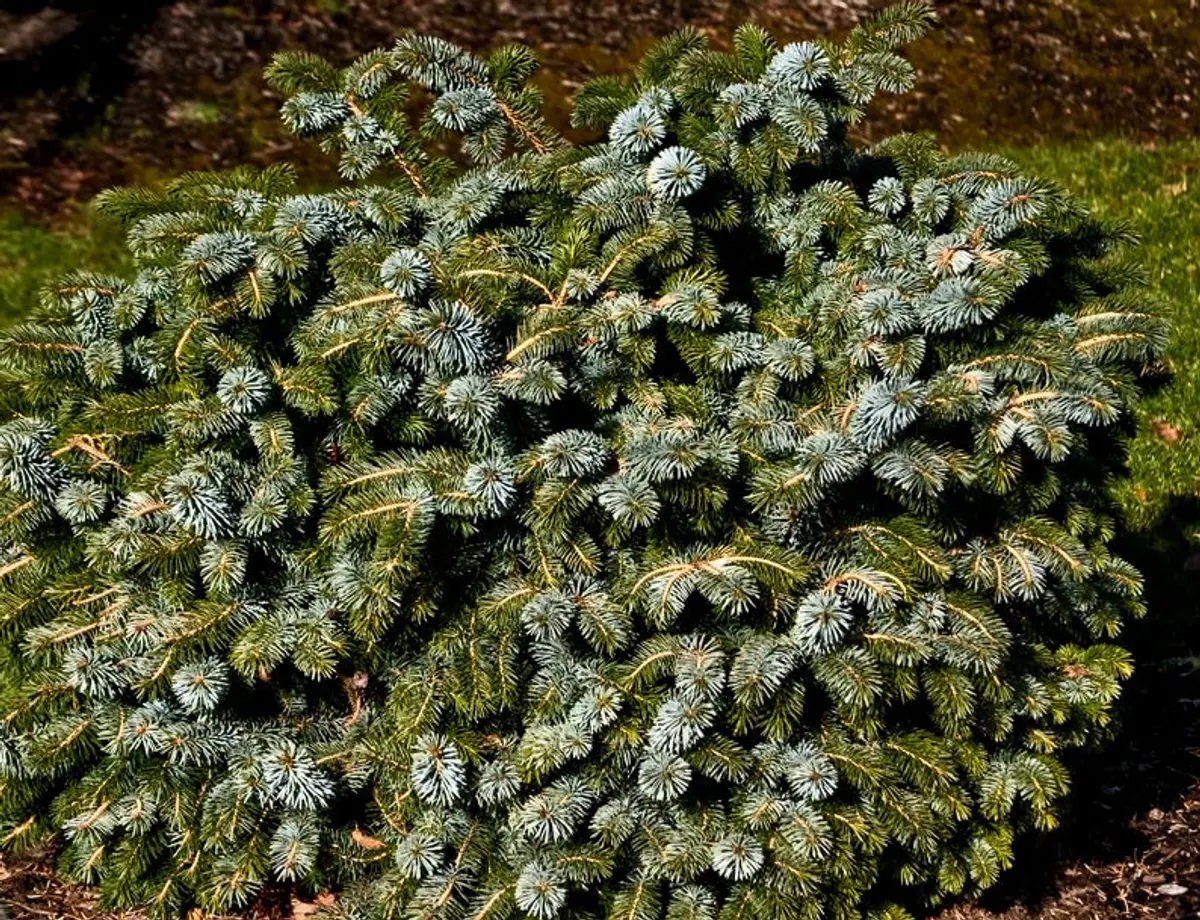
Sitka Spruce 'Silberzwerg'
Picea sitchensis 'Silberzwerg'
A very slow-growing dwarf Sitka spruce with two-tone silvery-blue and dark green needles.
Keep reading Show less
Picea sitchensis ‘Silberzwerg’ is a dwarf form of Sitka spruce — a species that, in the wild, ranks among the tallest conifers on the planet — bred down into a dense, slow-growing mound for small gardens and containers. Its claim to fame is its foliage: each needle is a striking two-tone, silvery-blue on the upper surface and dark green beneath, giving the whole plant a shimmering, frosted look that shifts with the light and the angle you view it from.
A tiny fraction of a giant
In the wild, Sitka spruce grows along a narrow strip of the Pacific coast from Alaska to northern California, rarely straying far from the ocean’s moderating influence, and can exceed 200 feet. ‘Silberzwerg’ inherits none of that scale — it creeps along at just 3 to 6 inches a year, taking on a broad, upright habit and reaching only about 8 feet tall and 6 feet wide after decades in the garden, making it a genuine dwarf conifer rather than simply a “slow” one.
Care tips
Plant in full sun in moist, well-drained, slightly acidic soil for the densest growth and best color; it will tolerate some afternoon shade but grows looser there. Water regularly while it establishes, keep it out of soggy, poorly drained spots, and otherwise leave it be — pruning is limited to removing any dead or damaged wood. Watch for spruce aphids, adelgids, and spider mites, which can occasionally trouble this species.
Fun Fact
'Silberzwerg' means 'silver dwarf'; wild Sitka spruces can grow more than 200 feet tall.
Habitat & form
Where it's from and what to expect.
- Native range
- Garden cultivar of the species native to the Pacific coast of North America, from south-central Alaska to northern California
- Plant type
- Shrub · Perennial · Conifer
- Mature size
- Extremely slow, growing only 3–6 in. per year; reaches roughly 8 ft tall and 6 ft wide after many years in the garden — a tiny fraction of the wild species' size.
- Bloom
- None — grown for its evergreen, two-tone needles rather than flowers.
- Hardiness
- USDA zone 5.
Care
How to keep it happy.
- Sunlight
- Full sun for the densest growth and best needle color; tolerates partial shade.
- Water
- Regular water while young; more drought-tolerant once established, but appreciates consistent moisture in hot weather.
- Soil
- Moist, well-drained soil, slightly acidic to neutral (pH about 6.5–7.5). Dislikes heavy, poorly drained ground.
- Fertilizer
- No routine fertilizer for healthy, established plants.
- Planting distance
- 5–6 ft apart, based on mature spread.
- Propagation
- Semi-hardwood cuttings
- Pruning
- Maintenance: very low. Remove only dead or damaged wood; no routine shaping needed.
- Pet safety
- Unknown
Prevent chewing.