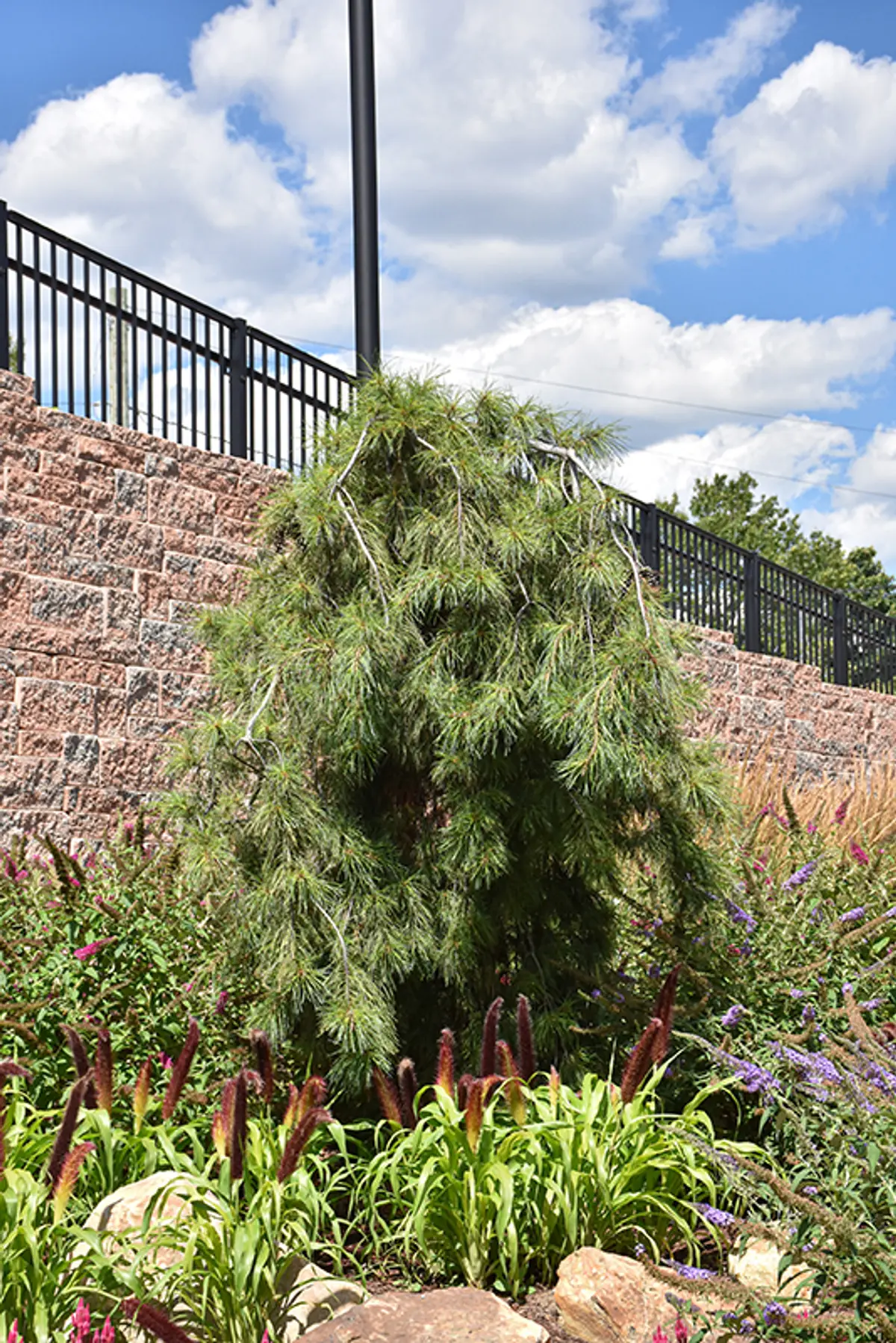
Weeping White Pine 'Angel Falls'
Pinus strobus 'Angel Falls'
A dwarf, weeping form of eastern white pine with long, soft blue-green needles that cascade like a green waterfall — usually staked while young to shape its height.
Keep reading Show less
Pinus strobus ‘Angel Falls’ is a weeping cultivar of eastern white pine, a North American conifer in the pine family (Pinaceae). Where the species grows into a towering forest tree 50–80 ft tall, ‘Angel Falls’ is a garden-scaled selection prized for its cascading habit: long, soft, blue-green needles in bundles of five drape from pendulous branches like a green waterfall.
A living sculpture
Young plants are typically staked to a desired height, after which the weeping branches are allowed to spill downward, creating a distinctive fountain or curtain shape. Left unstaked, it sprawls as a low, mounding groundcover instead — either way it makes a striking accent or specimen planting.
Care tips
Give it full sun and well-drained, acidic soil for the healthiest color and form; it is intolerant of urban pollution and alkaline soil, both of which can cause the needles to yellow. Otherwise it is a low-fuss conifer: water during establishment and dry spells, and prune only the current season’s candle growth if you want to control size.
Habitat & form
Where it's from and what to expect.
- Native range
- Northeastern North America (species); cultivar selection
- Plant type
- Conifer
- Mature size
- Slow to medium growth; reaches roughly 8–10 ft tall with an 4 ft spread at maturity, though ultimate height depends heavily on how the weeping leader is staked and trained.
- Bloom
- Grown for its cascading blue-green needles and weeping habit, not flowers; non-flowering conifer.
- Hardiness
- USDA zones 3–8.
Care
How to keep it happy.
- Sunlight
- Full sun for the best form and needle color.
- Water
- Average water once established; tolerates both dry spells and moist soil, but never let it sit in standing water.
- Soil
- Adaptable to most soil types but prefers acidic, moist, well-drained soil; avoid alkaline sites, which cause chlorosis.
- Planting distance
- 4–6 ft apart, based on mature spread (varies with how the weeping leader is trained).
- Propagation
- Cuttings
- Pruning
- Low maintenance. Only trim back the current season's new growth (candles) if size control is wanted; remove dieback as needed. Stake and train the leader while young to establish height.
- Pet safety
- Non-toxic