Giant Solomon's Seal
Polygonatum biflorum var. commutatum
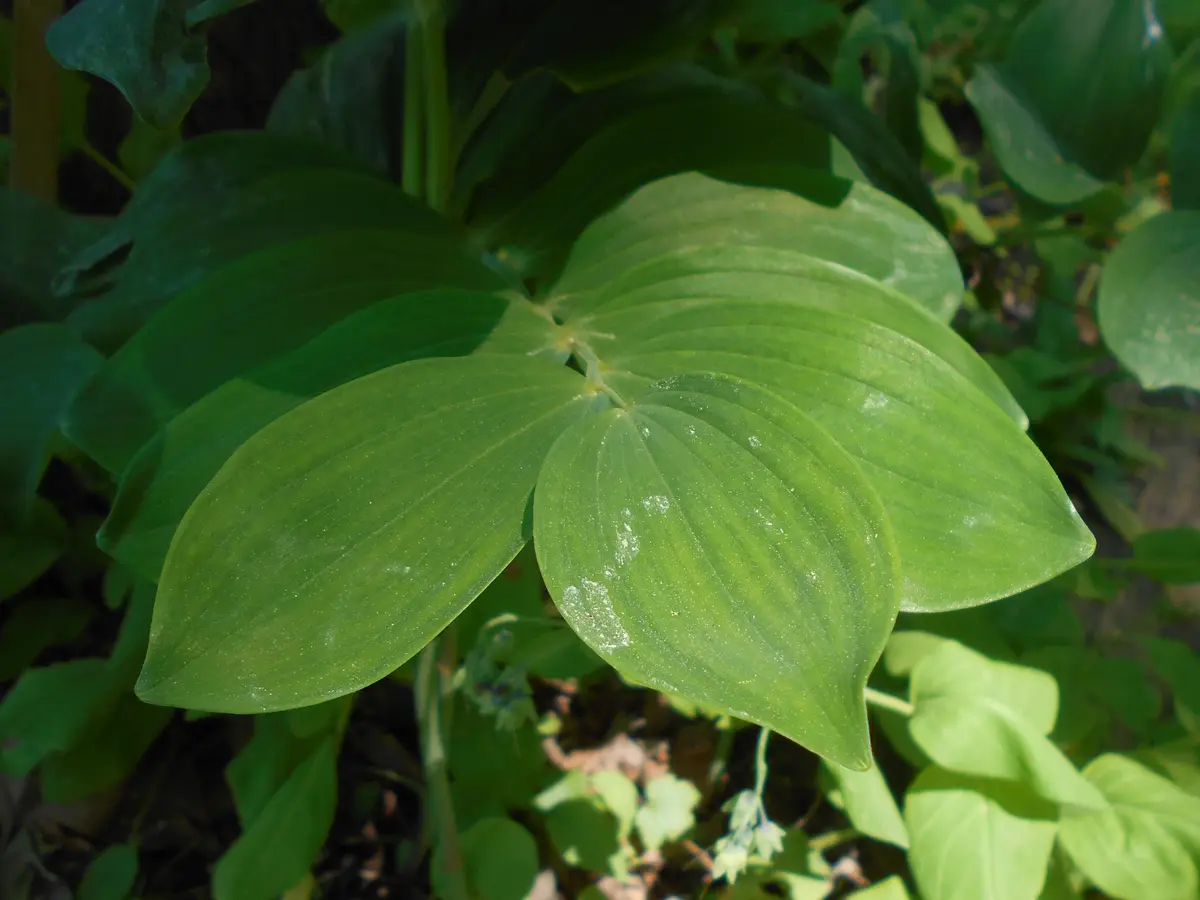
A bold native woodland perennial with tall, arching stems lined with broad leaves and rows of dangling, greenish-white bell-shaped flowers.
Keep reading Show less
Polygonatum biflorum var. commutatum — giant Solomon’s seal — is a native herbaceous perennial of moist eastern woodlands and the largest of the Solomon’s seals, reaching 3 to 5 feet and occasionally as much as 7. Tall, gracefully arching stems carry broad, parallel-veined leaves with rows of greenish-white, bell-shaped flowers dangling beneath them in late spring.
Woodland presence
This is a plant for the back of a shady border, a woodland or rain garden, or a spot where it can naturalize. Just give it plenty of room — it spreads slowly by rhizomes and grows larger than other Solomon’s seals. In fall the flowers give way to showy blue-black berries (inedible to people, but loved by birds).
Care tips
Plant it in average, moist to wet soil in partial to full shade; it does best with a little sun. It has no serious pest or disease problems and asks for very little once established.
Fun Fact
The name 'Solomon's Seal' comes from the flat, circular scars left on the rhizome each year when the stem dies back. They look strikingly like embossed wax seals — the kind used on royal documents — and some say the pattern resembles King Solomon's legendary six-pointed star.
Habitat & form
Where it's from and what to expect.
- Native range
- Eastern and central North America
- Plant type
- Perennial
- Mature size
- 3–6 ft tall (occasionally to 7 ft) and 2–4 ft wide; spreads gradually by rhizomes.
- Bloom
- Clusters of 2–10 greenish-white, bell-shaped flowers hang beneath the stems in May–June, followed by showy blue-black berries in fall.
- Hardiness
- USDA zones 3–9.
Care
How to keep it happy.
- Sunlight
- Partial to full shade, though it does best with some sun. Tolerates deep shade.
- Water
- Medium to wet; keeps best in consistently moist soil.
- Soil
- Average soil with good drainage that stays moist.
- Planting distance
- 12–18 in apart; clumps spread and merge into larger colonies over time.
- Propagation
- Divide rhizomes in spring or fall
- Pruning
- Maintenance: minimal — let the foliage die back and cut the spent stems to the ground in fall. Lift and divide the rhizomes in fall to rejuvenate or contain the clump.
- Pet safety
- Mildly toxic
All parts toxic, especially berries and rhizomes