Solomon's Seal 'Prince Charming'
Polygonatum 'Prince Charming'
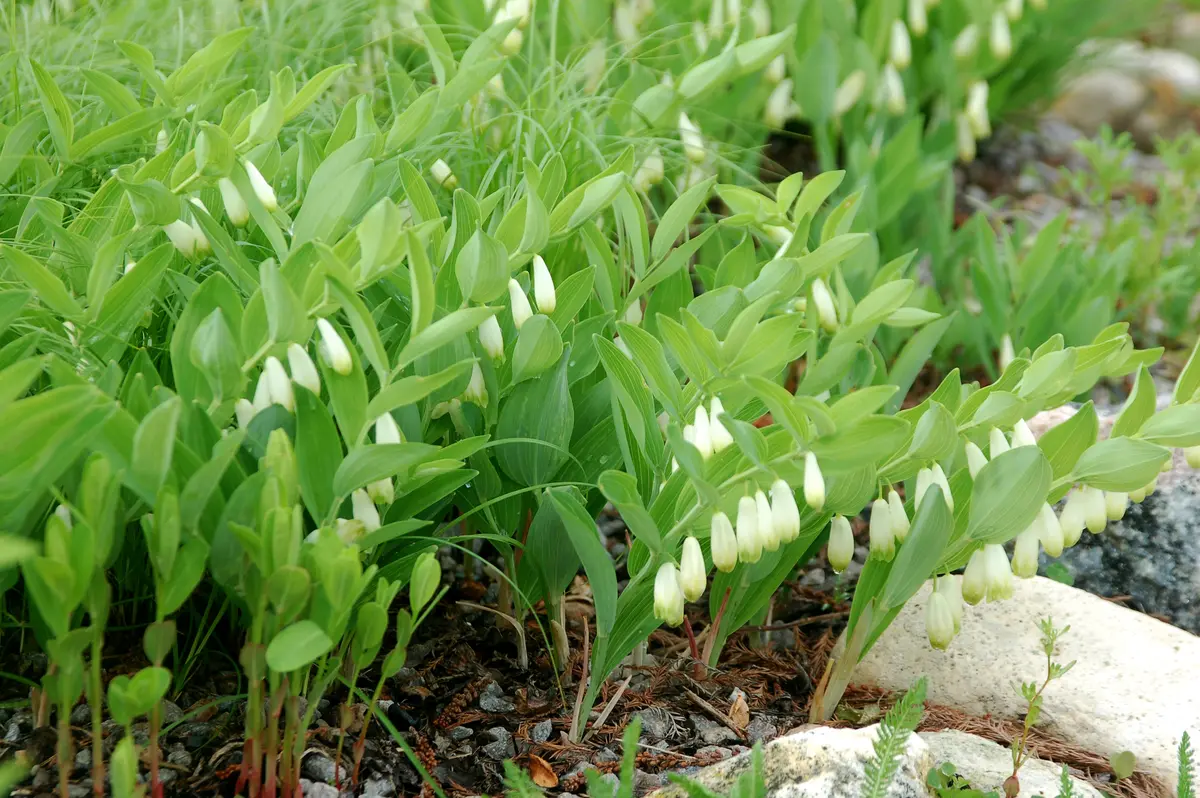
A low, spreading Solomon's seal with arching blue-green foliage, dangling creamy-white spring flowers, and golden autumn leaves.
Keep reading Show less
‘Prince Charming’ is suited to the front of a shaded border, where its hanging flowers can be seen rather than hidden behind taller plants. It spreads into a dense, low colony, contrasting with ferns and larger woodland perennials.
The blue-green foliage remains useful after flowering, then turns gold before dying back for winter. Watch for slugs around new shoots, and divide only when you want to move or contain the clump.
Care sources: Missouri Botanical Garden: ‘Prince Charming’, Intrinsic Introductions: breeder description and division timing, University of Wisconsin Extension: Solomon’s seal culture and propagation.
Fun Fact
Old stems leave circular scars on the rhizome, giving Solomon's seal its common name.
Habitat & form
Where it's from and what to expect.
- Native range
- Garden hybrid selected in Illinois; parentage is not confirmed
- Plant type
- Perennial
- Mature size
- 6–12 in. tall, spreading by rhizomes to 2–3 ft wide and forming larger colonies over time.
- Bloom
- Dangling green-tipped, creamy-white tubular flowers in May–June, followed by berries that darken to blue-black.
- Hardiness
- USDA zones 4–7.
Care
How to keep it happy.
- Sunlight
- Part shade to full shade, preferably morning or dappled sun with protection from hot afternoon sun.
- Water
- Keep the soil evenly moist, especially during establishment and dry spring weather. Avoid stagnant, waterlogged soil.
- Soil
- Cool, humus-rich, moderately fertile soil with good drainage; retain moisture without leaving the rhizomes in standing water.
- Mulching
-
Leaf mould or finished garden compost
Spring, on moist soil
- Planting distance
- Plant 24–36 in. apart, allowing the rhizomes to fill the gaps; leave room for the colony to expand.
- Propagation
- Divide rhizomes in early spring as growth begins, or in early fall. Replant pieces with healthy buds and keep them evenly moist until established.
- Pruning
- Let the leaves turn yellow and die back naturally, then cut spent stems to ground level in late fall. Remove damaged stems as needed.
- Pet safety
- Potentially toxic
Keep pets from eating the plant or berries; call a veterinarian after ingestion.