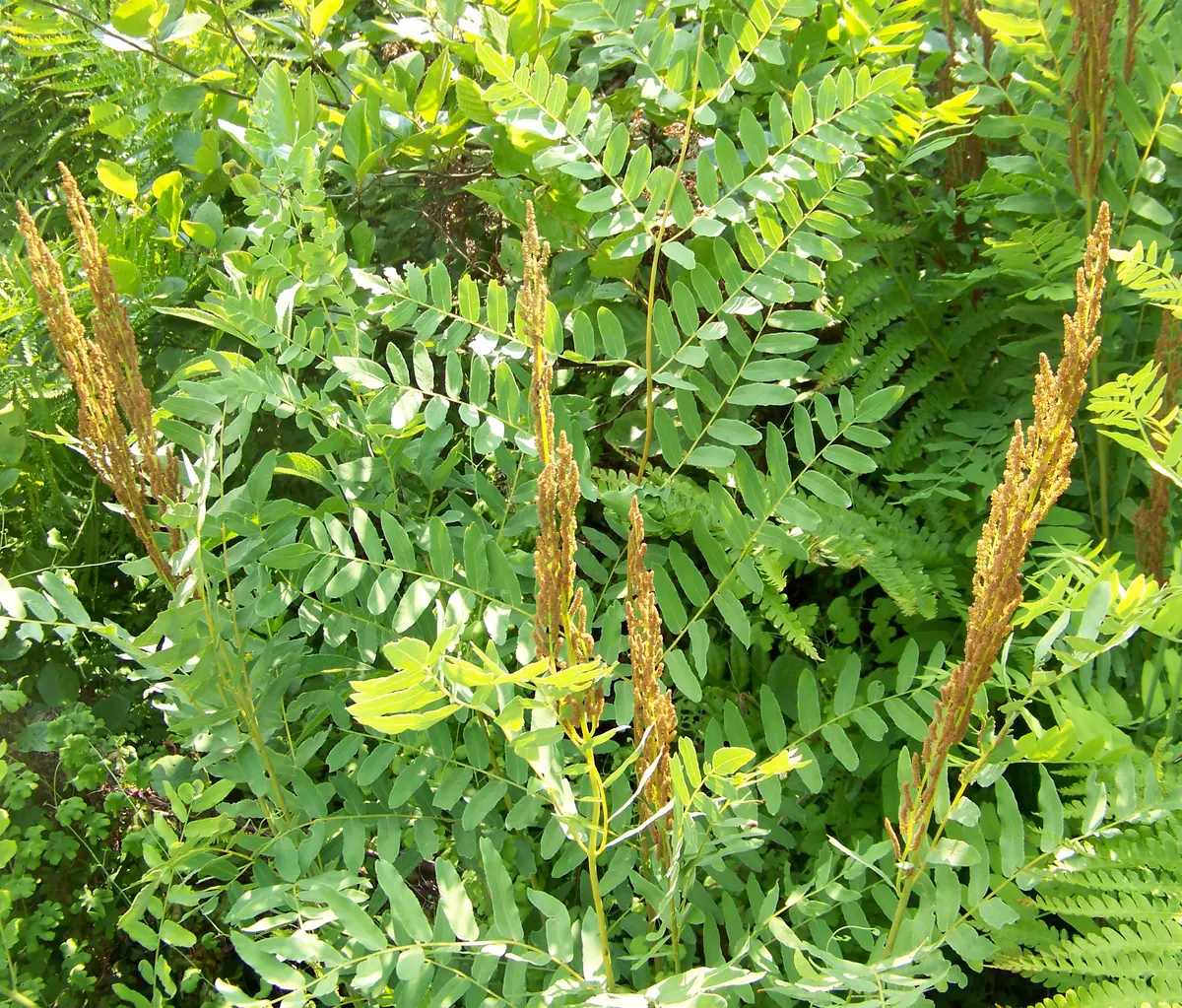
Royal Fern
Osmunda spectabilis
A large, deciduous American fern for damp shade, with graceful fronds that turn golden brown in fall and fertile spikes at their tips.
Keep reading Show less
The American royal fern (Osmunda spectabilis, formerly Osmunda regalis var. spectabilis) is a deciduous fern native to eastern North America. Its broad, finely divided fronds make an elegant clump in wet woodland, streamside, and shaded garden settings.
A fern for moist shade
Royal fern grows best in rich, acidic soil that stays consistently moist or wet. It usually forms a 2–5-foot clump, and can grow taller where moisture is abundant. The green fronds turn yellow to golden brown in fall; fertile fronds carry distinctive brown, tassel-like spore clusters at their tips.
Care tips
Site it in part to full shade, especially where summers are hot. In a cool climate it can take more sun when its roots remain moist. Cut away old fronds in early spring before the new growth unfurls.
Sources: NC State Extension, RHS: related royal fern, Gardeners’ World: related royal fern.
Fun Fact
Royal fern's fertile fronds form tassel-like clusters of spore cases at their tips, which can make the plant look as if it is flowering.
Habitat & form
Where it's from and what to expect.
- Native range
- Eastern North America
- Plant type
- Perennial · Fern
- Mature size
- 2–5 ft tall and 2–3 ft wide; can grow taller in constantly moist soil.
- Bloom
- Non-flowering; fertile fronds carry brown spore clusters at their tips.
- Hardiness
- USDA zones 3–9.
Care
How to keep it happy.
- Sunlight
- Part shade to full shade; tolerates more sun in cool climates if kept consistently moist.
- Water
- Consistently moist to wet soil; do not let it dry out.
- Soil
- Rich, humus-filled, acidic soil; adapts to less fertile soil if moisture is reliable.
- Planting distance
- 2–3 ft apart, based on mature spread.
- Propagation
- Divide established clumps in early spring or autumn, or sow spores as soon as ripe.
- Pruning
- Remove old fronds in early spring before new growth emerges.
- Pet safety
- Unknown
Keep pets from chewing.