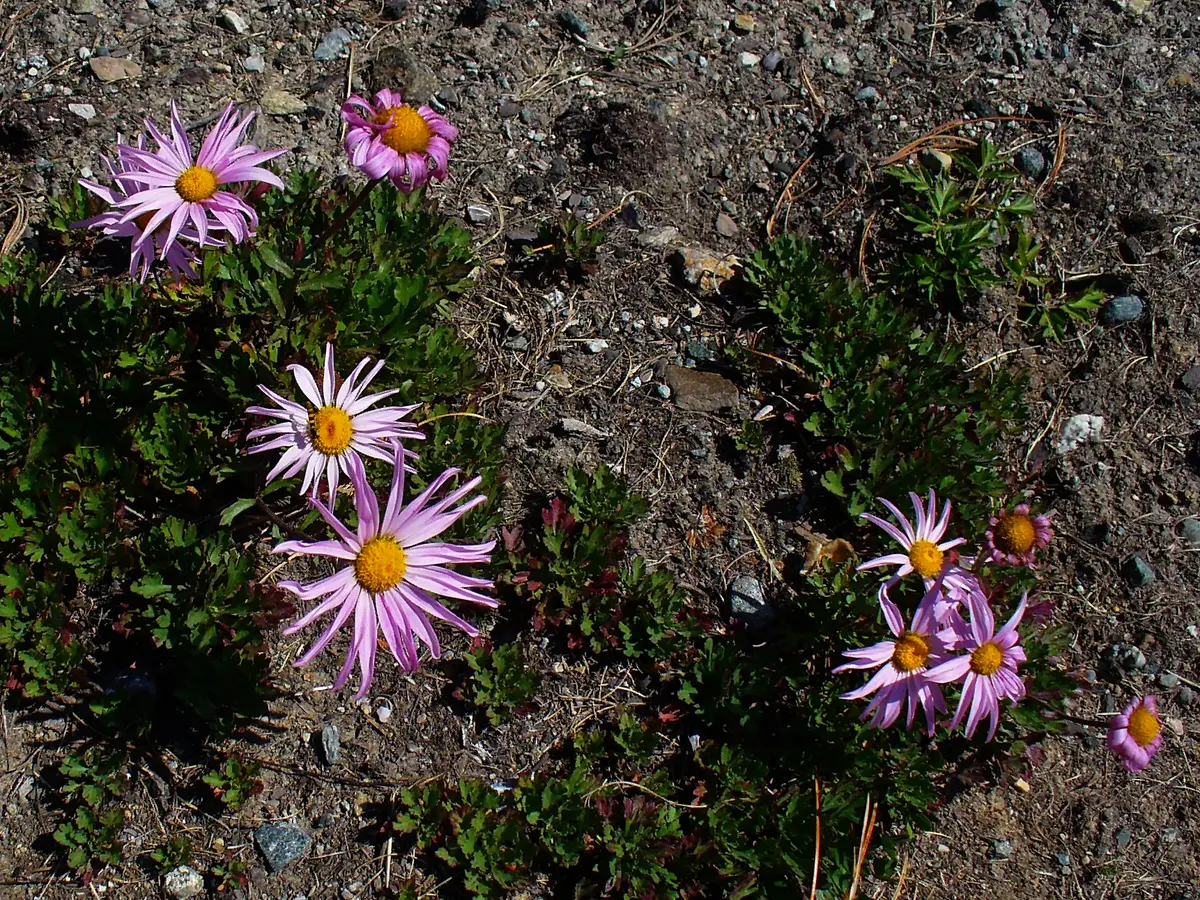
Single Mum 'White Bomb'
Chrysanthemum weyrichii 'White Bomb'
A tough, spreading species mum that carpets itself in simple white daisies late in the season, doubling as a weed-smothering groundcover for sunny slopes and borders.
Keep reading Show less
Chrysanthemum weyrichii ‘White Bomb’ is a species mum, not a florist mum — a low, spreading perennial that carpets itself in simple white daisies just as most of the garden is fading for the season.
A spreading species mum
While florist mums are usually treated as short-lived fall annuals, this species mum is a genuinely hardy, spreading perennial. It creeps by rhizomes into a dense mat of dark green foliage, doubling as a weed-suppressing groundcover for sunny slopes and border edges long before it flowers.
Care tips
Plant in full sun in average, well-drained soil; it tolerates a wide range of soil pH and is drought-tolerant once established, though regular water keeps it looking its best. Deadhead to prolong the late-season bloom, and cut back and divide in spring if it spreads further than wanted — its vigorous, mat-forming habit is a feature, not a flaw, in the right spot.
Fun Fact
Unlike showy florist mums, this species spreads by rhizomes into a dense, weed-smothering mat — useful for erosion control on slopes as much as for its simple, late-season daisies.
Habitat & form
Where it's from and what to expect.
- Native range
- Garden cultivar of the species native to Japan, Korea, and the Russian Far East
- Plant type
- Perennial
- Mature size
- Low, spreading mat, 6–12 in. tall and 12–24 in. wide.
- Bloom
- White daisy flowers with yellow centers from late summer into fall.
- Hardiness
- USDA zones 4–8.
Care
How to keep it happy.
- Sunlight
- Full sun.
- Water
- Average, regular water; do not let the soil stay soggy. Drought-tolerant once established.
- Soil
- Average, well-drained soil; sandy or loamy soil is ideal, and it tolerates a wide pH range.
- Planting distance
- 12–18 in apart, based on mature spread.
- Propagation
- Divide in early spring
- Pruning
- Deadhead to prolong bloom; cut back and divide in spring as needed to control spread.
- Pet safety
- Mildly toxic
All parts toxic (flowers, leaves, stems, roots)