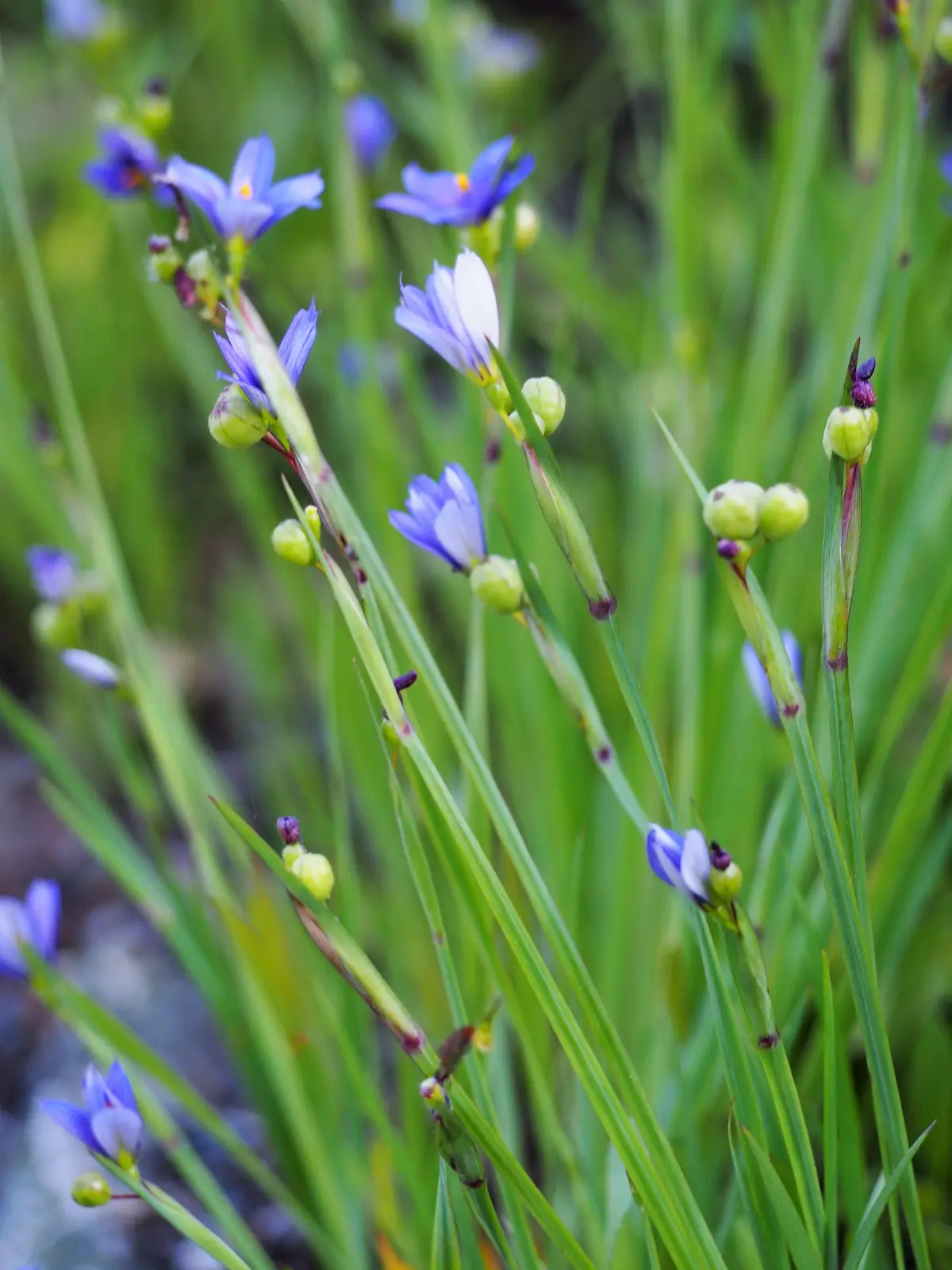
Blue-eyed Grass
Sisyrinchium angustifolium
A charming native with grass-like foliage and small, star-shaped blue-violet flowers with sunny yellow centers, perfect for the front of a border or a naturalized meadow.
Keep reading Show less
Sisyrinchium angustifolium, or blue-eyed grass, is a diminutive native perennial that looks every bit like a fine-bladed grass — until it surprises you with small, star-shaped blue-violet flowers with cheerful yellow centers. It’s a lovely, low-key addition to the front of a border, a rock garden, or a naturalized meadow planting.
A native masquerading as a grass
Despite the name and grass-like foliage, blue-eyed grass is actually a member of the iris family. It naturalizes readily from seed, forming loose drifts over time in meadows, along stream banks, and in moist open woodlands across its native range in eastern and central North America.
Care tips
Plant in full sun to partial shade in average, medium-moisture soil. It tolerates occasional dry spells once established but performs best with consistent moisture. Shear the clumps back lightly after the first flush of flowers fades to tidy the foliage and often coax out a second round of bloom, and let seed heads mature if you’d like it to spread naturally.
Fun Fact
Despite its grassy good looks and common name, blue-eyed grass isn't a grass at all — it's a member of the iris family, and its tiny six-petaled flowers only open fully on sunny mornings, closing up again by afternoon.
Habitat & form
Where it's from and what to expect.
- Native range
- Meadows, moist woodlands, and stream banks of eastern and central North America
- Plant type
- Perennial
- Mature size
- Compact clumps, about 8–12 in. tall and wide.
- Bloom
- Small, star-shaped blue-violet flowers with yellow centers from mid-spring through summer.
- Hardiness
- USDA zones 4–9.
Care
How to keep it happy.
- Sunlight
- Full sun to partial shade.
- Water
- Average water needs; appreciates consistent moisture but tolerates brief dry spells once established.
- Soil
- Average, medium-moisture, well-drained soil.
- Planting distance
- 6–12 in apart.
- Propagation
- Divide in early spring
- Pruning
- Shear back lightly after the main flush of bloom to tidy the foliage and encourage a second flush; self-seeds readily.
- Pet safety
- Non-toxic