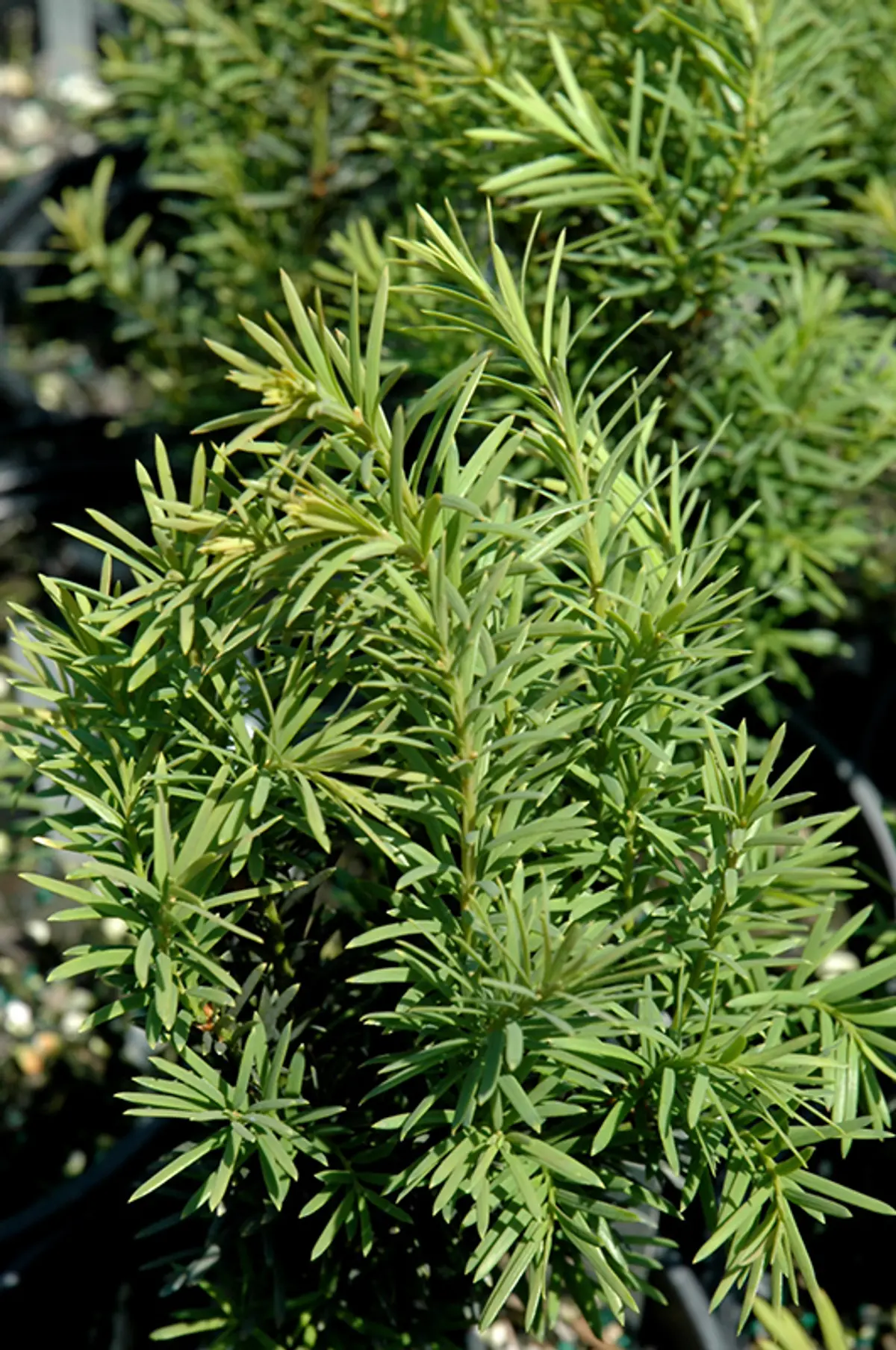
H.M. Eddie Yew
Taxus x media 'H.M. Eddie'
A dense, narrowly columnar evergreen shrub with dark green needles — a low-maintenance vertical accent that takes hard pruning and shade equally well.
Keep reading Show less
Taxus x media is a hybrid yew — a cross between English yew (Taxus baccata) and the winter-hardy Japanese yew (Taxus cuspidata), first bred by Massachusetts horticulturist T.D. Hatfield in the early 1900s. ‘H.M. Eddie’ is a narrowly columnar selection, forming a dense, upright evergreen shrub prized as a vertical accent, hedge, or screen.
A tough, shapeable evergreen
Dark green needle-like foliage emerges light green in spring and holds its color through winter. The columnar form and fine texture make it a natural fit for formal hedges, topiary, and foundation plantings, and it is one of the few conifers that thrives in deep shade as readily as full sun.
Care tips
Plant in well-drained soil — wet feet are the main threat to this otherwise tough shrub. It tolerates urban pollution, drought once established, and hard pruning at almost any time of year, making it an easy, low-maintenance choice for shaping. Note that all parts of yew are toxic if ingested, so site it thoughtfully around children and pets.
Habitat & form
Where it's from and what to expect.
- Native range
- Garden hybrid (Taxus baccata x Taxus cuspidata)
- Plant type
- Conifer
- Mature size
- Slow growing to about 10–12 ft tall and 3 ft wide, columnar habit.
- Bloom
- Grown for evergreen foliage, not flowers; female plants may produce small red, fleshy arils in fall if a male pollinator is nearby.
- Hardiness
- USDA zones 4–7.
Care
How to keep it happy.
- Sunlight
- Full sun to full shade; keep out of hot, reflected afternoon sun in exposed sites.
- Water
- Average, evenly moist conditions; drought tolerant once established but will not tolerate standing water or wet feet.
- Soil
- Well-drained sandy or loamy soil; not particular about pH. Poor drainage leads to root rot.
- Planting distance
- 3–5 ft apart for a hedge, based on mature spread.
- Propagation
- Stem cuttings
- Pruning
- Very low maintenance — tolerates severe pruning at almost any time of year and takes well to shaping into hedges or topiary.
- Pet safety
- Highly toxic
Needles/leaves, bark/wood, seeds toxic; only red fleshy aril safe