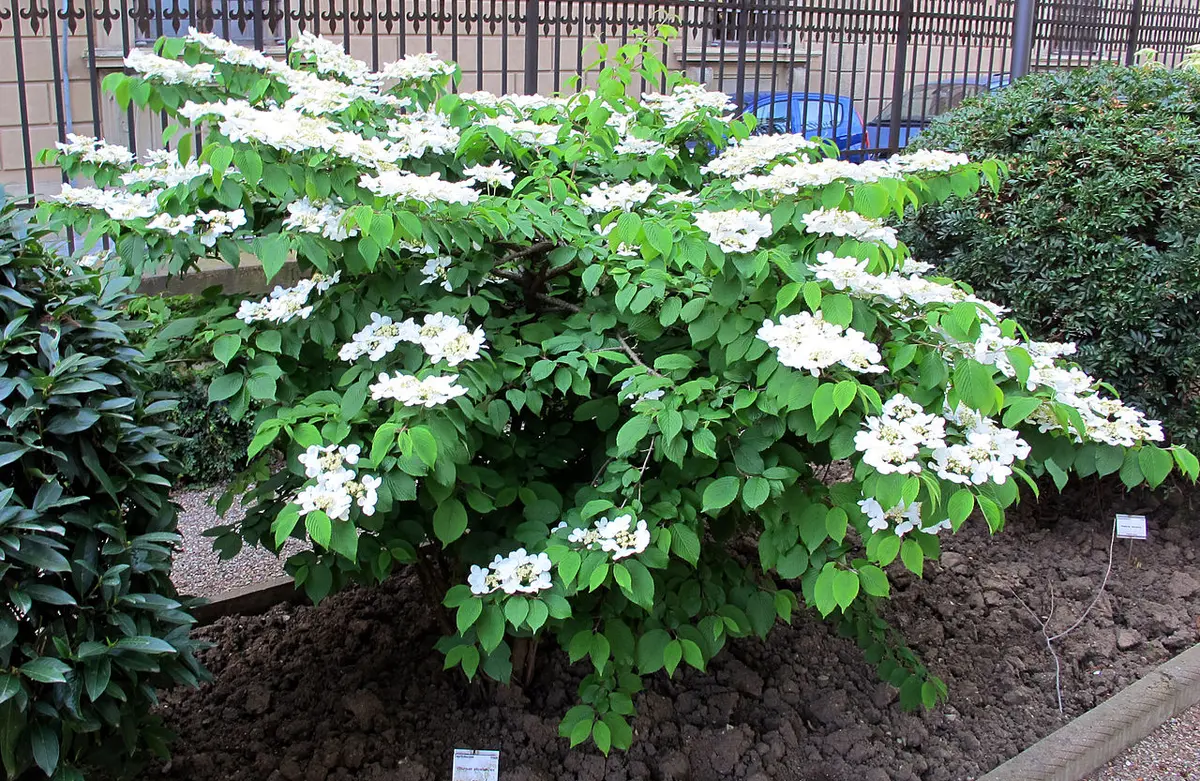
Japanese Snowball
Viburnum plicatum
A large deciduous shrub famous for the showy, white pom-pom flowers that line its branches each spring.
Keep reading Show less
The Japanese snowball is a large, rounded deciduous shrub in the viburnum (Viburnaceae) family, prized for the rows of round, white “pom-pom” flower clusters that appear along its tiered, horizontal branches in spring. It grows quickly, stays low-maintenance, and forms a dense, multi-stemmed mound that works beautifully as a specimen, a hedge, or a screen.
Through the seasons
In spring the branches are lined with showy white cymes up to a few inches across. The deeply veined, pleated dark-green leaves give it a handsome texture through summer, then shift to rich purple and burgundy tones in fall.
A note on varieties
Two forms are commonly sold:
- Japanese snowball bush — sterile, showy 2–3” snowball-like flower clusters and no fruit.
- Doublefile viburnum — flatter, fertile flower clusters along distinctly tiered branches that can produce small, egg-shaped fruits.
Butterflies and other pollinators visit frequently, especially the fertile forms.
Care tips
Plant it where it has room to spread, in moist but well-drained soil. If you need to prune, do it right after flowering — next year’s blooms form on new growth.
Heads up: Viburnum plicatum is considered invasive in parts of the U.S. If that’s a concern in your area, look for less-aggressive cultivars (such as ‘Mary Milton’) or a native alternative like winterberry (Ilex verticillata) or arrowwood viburnum.
Fun Fact
The snowball-like flowerheads are made of sterile flowers, so this form does not produce berries.
Habitat & form
Where it's from and what to expect.
- Native range
- Japan, China, and Taiwan
- Plant type
- Shrub · Perennial
- Mature size
- 8–15 ft tall and 10–18 ft wide at maturity.
- Bloom
- Clusters of white flowers in spring; foliage turns purple to burgundy in fall.
- Hardiness
- USDA zones 5–8.
Care
How to keep it happy.
- Sunlight
- Full sun to partial shade — 6+ hours of direct sun is ideal, but it tolerates 2–6 hours.
- Water
- Likes consistently moist soil; water regularly while establishing. Quite drought tolerant once mature.
- Soil
- Adaptable to clay, loam, or sand. Prefers a moist, well-drained loam with acidic to neutral pH.
- Fertilizer
- No routine fertilizer for healthy, established plants.
- Planting distance
- 8–10 ft apart as a specimen; allow more room (up to 15–18 ft) if it reaches its full mature spread.
- Propagation
- Softwood cuttings in summer
- Pruning
- Shape just after flowering; it blooms on old wood. For renewal, remove up to one-third of the oldest stems at ground level each year.
- Pet safety
- Unknown
Prevent chewing.