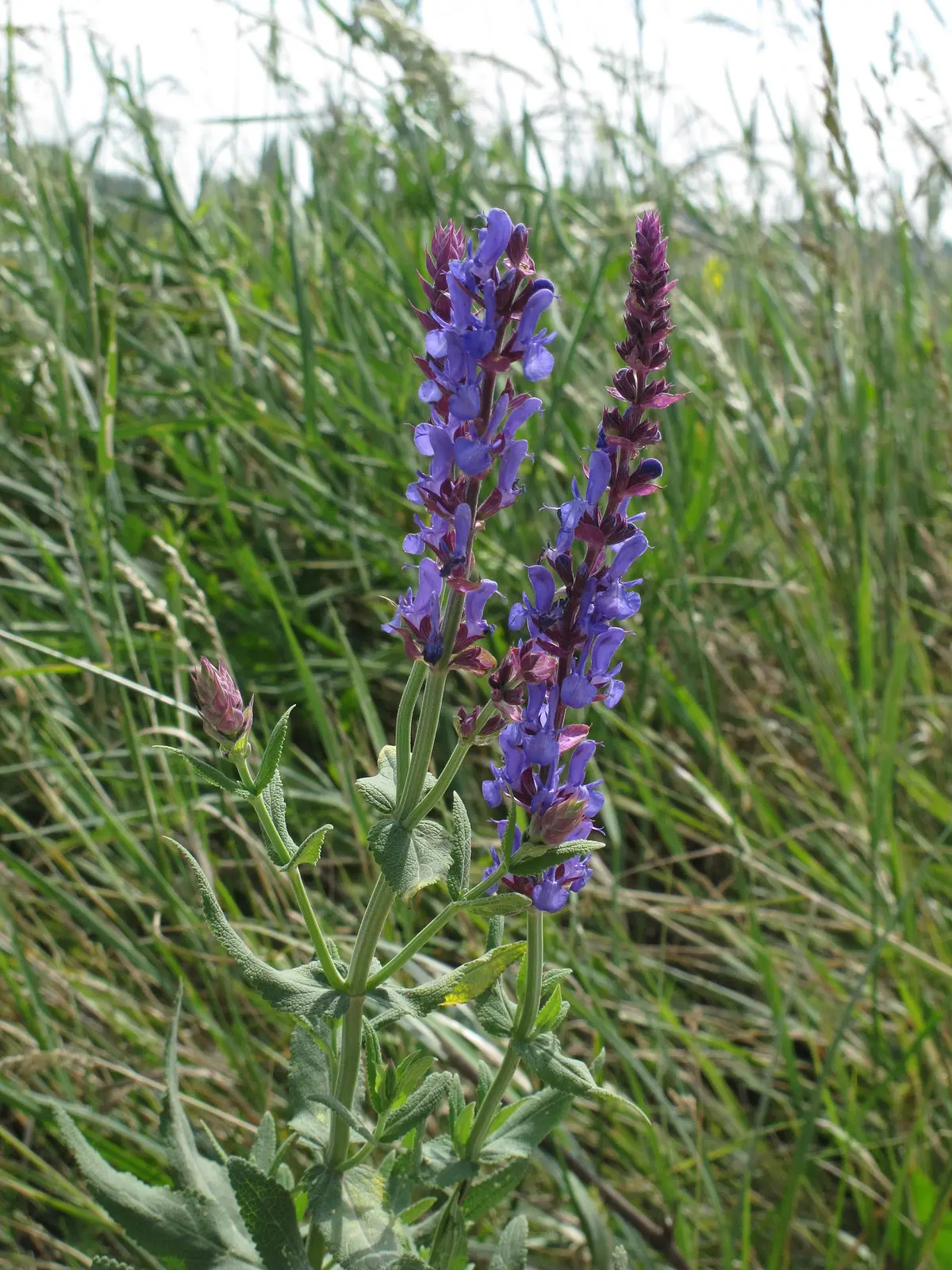
Woodland Sage
Salvia nemorosa
- Summer bloom
- Pollinator friendly
- Cold hardy
- Drought tolerant
- Cottage garden
A clump-forming hardy perennial sending up dense spikes of violet-blue flowers in early summer — a magnet for bees that reblooms readily when deadheaded.
Keep reading Show less
Salvia nemorosa — woodland sage, sometimes called Balkan clary — is a hardy, clump-forming perennial from the grasslands of central Europe and western Asia. It is one of the most reliable and longest-blooming perennials for a sunny border, and its flower spikes are irresistible to bees, butterflies, and hummingbirds.
A summer-long parade of spikes
In late spring the basal clump throws up dense vertical spikes packed with small violet-blue flowers. The display lasts for weeks, and a quick shear once the first flush fades will reliably bring a second — and often a third — round of bloom right through summer. The aromatic foliage is generally left alone by deer and rabbits.
Care tips
Woodland sage wants full sun and soil that drains freely; it actually performs best in lean, dryish ground and sulks in rich, wet conditions. Once established it shrugs off drought. Deadhead spent spikes to keep it blooming, and cut the whole clump back in late fall or early spring to make way for fresh growth.
Fun Fact
The genus name Salvia comes from the Latin salvere, meaning 'to be healthy' or 'to save' — a name given by Roman physicians who used salvias medicinally. Salvia nemorosa has a long history of folk use as an anti-inflammatory, applied externally to wounds and skin irritations.
Habitat & form
Where it's from and what to expect.
- Native range
- Central Europe to western Asia
- Plant type
- Perennial
- Mature size
- 18–24 in tall and about as wide, forming a neat basal clump.
- Bloom
- Upright spikes of violet-blue (sometimes pink or white) flowers from late spring into summer; shearing back spent spikes brings a strong rebloom.
- Hardiness
- Cold-hardy — USDA zones 4–8.
Care
How to keep it happy.
- Sunlight
- Full sun for sturdy, upright spikes and the heaviest flowering.
- Water
- Moderate; drought-tolerant once established and dislikes soggy soil.
- Soil
- Well-drained, average to lean soil; thrives in poor, dry ground and resents wet feet.
- Pruning
- Maintenance: low. Cut spent flower spikes to encourage reflowering; cut the clump back in late fall or early spring.